
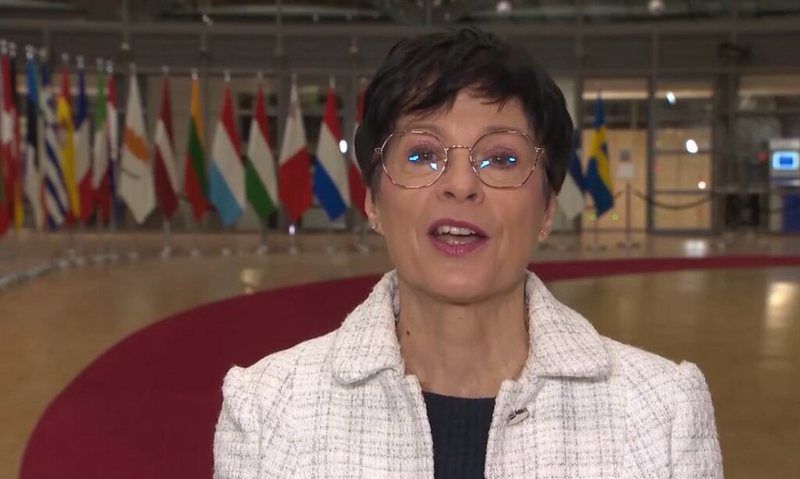
In Albanian, the word kos has a simple meaning: a sour dairy product, diluted and white, often used to cool things down. In Brussels, Kos serves a different purpose: to cool down political reality with carefully measured praise.
While Albania’s deputy prime minister faces criminal proceedings for corruption, while the director of AKSHI, Karçanaj, is arrested for participation in a structured criminal group involved in multimillion-euro tenders, and while SPAK’s investigations are expanding deep into the core of Edi Rama’s administration, a statement arrives from Brussels that borders on irony: the opening of EU chapters is described as “proof of the leadership of the Rama government.”
In reality, the evidence emerging from prosecutors does not speak of leadership, but of a system built on capture, clientelism, and industrial-scale abuse of public funds. And this is precisely where the contradiction becomes glaring: while Albania arrests the people who manage state money, technology, and procurement, European officials applaud the conductor of the orchestra.
SPAK is striking areas that were once considered untouchable. AKSHI, the nerve center of digitalization and public tenders, is now associated not with innovation, but with schemes that are anything but digital—schemes with the hallmarks of organized crime. The deputy prime minister is no longer just a senior cabinet figure, but a subject of criminal investigation. These are not peripheral details; they are the pillars of executive power.
And yet, at this exact moment, Commissioner Kos chooses to speak of “governmental merit.” In the Albanian context, this sounds like praising the captain while the ship is taking on water from every side—not because justice is working thanks to the government, but because it is working despite it.
Recent assessments from the Trump administration have been unusually blunt: Europe is facing a leadership crisis, where bureaucrats detached from political reality distribute sterile praise while systemic corruption persists on the ground. Albania is a textbook example of this disconnect.
If the arrest of a deputy prime minister, the dismantling of networks inside AKSHI, and investigations into structured criminal groups within the state are labeled “successes of leadership,” then there is a serious problem of definition. Either leadership is now measured in handcuffs, or praise has been diluted into something as thin and sour as kos itself.
In the end, the irony is brutal and unavoidable: SPAK is pushing Albania closer to the European Union by arresting people from the government, while parts of the European establishment risk distancing themselves from reality by praising that same government. And between these two worlds, Albanian citizens are no longer willing to swallow diluted propaganda served as reform.