
The clash between Benjamin Netanyahu and Donald Trump over the issue of F-35 fighter jets for Turkey is bringing a new tension between the two allies to the surface. According to the Israeli prime minister’s public statements, such a sale would undermine the military balance in the region, while Trump, on the other hand, has left open the possibility of bringing Ankara back into discussions over the program.
Netanyahu opposes review of the ban
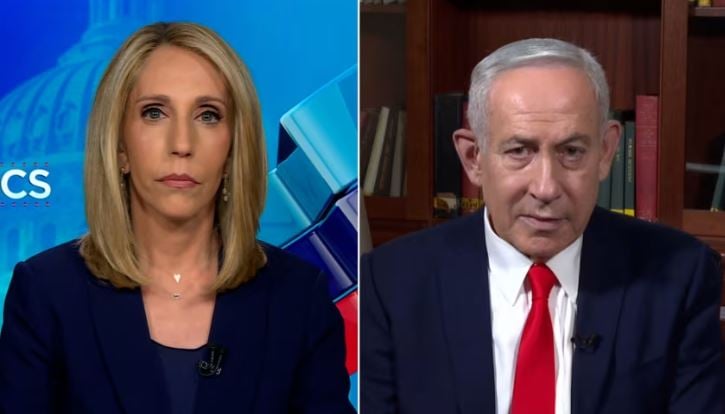
In an interview with CNN, Netanyahu openly opposed the possibility of the US administration selling F-35 fighter jets to Turkey. According to him, such a decision would have serious consequences for regional security and would upset the military balance in the Middle East.
The Israeli prime minister said he had personally conveyed his concern to the US president and asked him not to approve the move. In his view, equipping Turkey with the most advanced American aircraft would increase the risk for the region, not its stability.
Strong accusations against Erdogan and Ankara
Netanyahu also linked his opposition to the strained relationship between Israel and Turkey. He described Turkish President Recep Tayyip Erdogan as not being an exemplary US ally and claimed that Ankara poses a direct threat to Israel.
His remarks come after relations between the two countries deteriorated even further. Last week, according to reports cited in the source material, Turkish Foreign Minister Hakan Fidan called Israel a burden on humanity, while the Israeli side denounced this as incitement to genocide.
Trump leaves the door open to Turkey
Trump, meanwhile, has signaled that his administration is considering the possibility of reviewing the earlier ban that excluded Turkey from the F-35 program. The US president, who is in Turkey as part of the NATO summit, described Ankara as an extraordinary ally of the United States.
Trump and Erdogan also held a bilateral meeting in Ankara, where, according to official information included in the source material, relations between the two countries and security issues were discussed. This makes it even clearer that the F-35 debate is not merely technical, but is directly tied to Turkey’s geopolitical weight in the region.
Disagreements without breaking the alliance
Despite this open difference, Netanyahu tried not to present it as a frontal rupture with Trump. He said the US president acts according to what he considers to be America’s interest, while he himself acts according to Israel’s interest, adding that in most cases those interests align.
In the same interview, Netanyahu also commented on the recent ceasefire agreement between the United States and Iran. Although he did not directly attack the US administration, he suggested that he has doubts about whether negotiations can really stop Iran’s nuclear program.
Settler violence and contradictions with reports from the ground
Netanyahu also spoke about the increase in violence by Israeli settlers in the West Bank, downplaying the perpetrators as a small group of juvenile delinquents. According to him, the police and army are acting, while the courts are being lenient toward those convicted of violent acts.
But this position runs counter to reports by international organizations and Israeli human rights groups, which speak of a significant rise in incidents in recent months. According to the Israeli organization Yesh Din, 305 cases were recorded in just a one-month period, including attacks on Palestinian civilians, property damage and land seizures.
The clash over the F-35 shows that even within the US-Israel axis there are tangible disagreements when it comes to Turkey and the military balance in the Middle East.
Whether Washington will actually move toward revisiting the decision on Ankara remains to be seen. But for now, the public signals suggest that Netanyahu is trying to stop that scenario at the political stage.