
Germany has publicly pointed the finger at Russia over the drone incident recorded last month at Leipzig/Halle airport, a hub of military and logistical importance. Alongside the political accusation, Berlin has also moved to concrete diplomatic measures, announcing the closure of the Russian consulate in Bonn.
Berlin links the incident to Russian “hybrid operations”
According to the official German version, Russia was behind the August 4 drone attack at Leipzig/Halle airport in the east of the country.
German Interior Minister Alexander Dobrindt said the event follows the “established pattern of Russian hybrid operations in Europe.” He also warned that there is an expectation that Germany could again be the target of a similar attack.
What happened at Leipzig/Halle airport
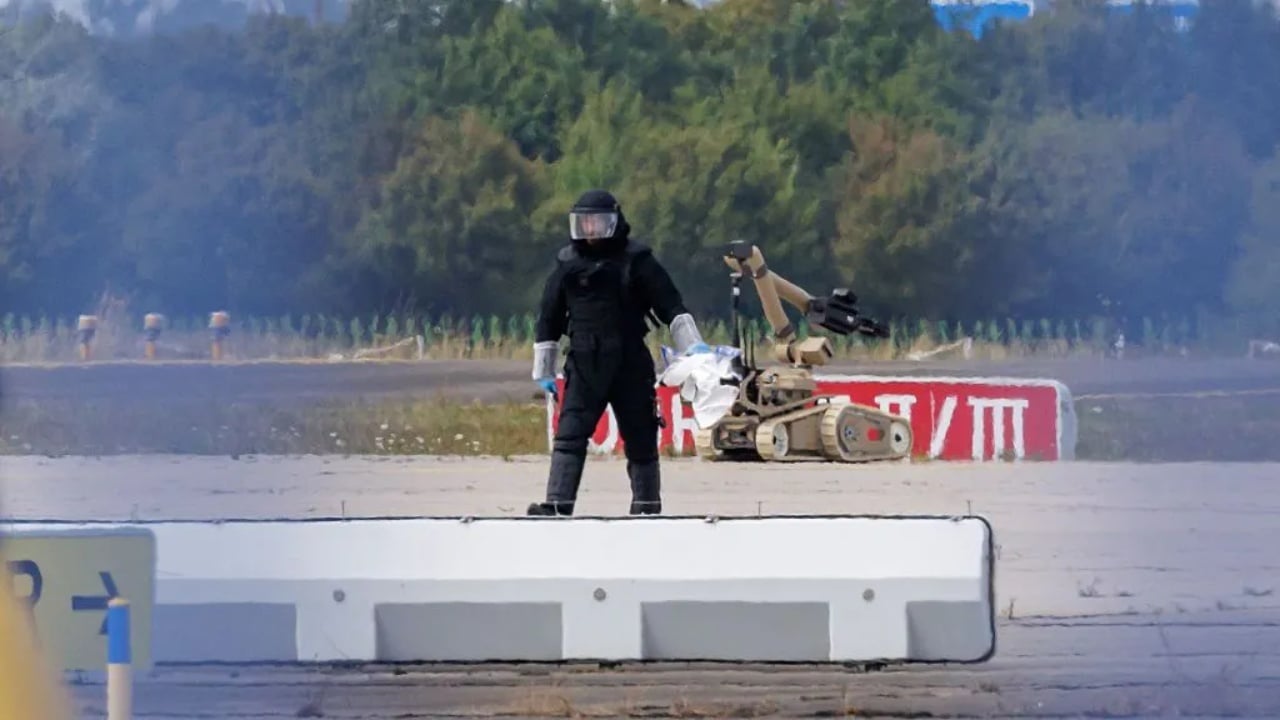
On August 4, a drone equipped with an explosive device was discovered at the airport near Ukrainian transport aircraft. The device did not explode, while the detonator is suspected to have malfunctioned.
Investigators also suspect a second episode in the same incident: another drone may have collided with a transport aircraft located nearby. So far, German authorities have made public their suspicions and assessment, while Moscow has denied the accusations of involvement.
Why the airport is considered a sensitive target
Leipzig/Halle airport is not an ordinary civilian site. It is used by the German military and NATO allies for the transport of military equipment.
At the same time, the airport serves as a base for the Ukrainian company Antonov Airlines, which carries out a significant part of air cargo transport for Ukraine. This makes the incident more politically and militarily sensitive than an isolated security event.
From political accusation to diplomatic measure
In a development directly linked to this escalation, German Foreign Minister Johann Wadephul announced that he will order the closure of the Russian consulate in Bonn.
He also announced the termination of the contract for “Russian House” in Berlin. The institution has been criticized by some observers, who claim it has been used for espionage activities and the spread of Russian propaganda.
The case marks another point of tension in relations between Berlin and Moscow, with accusations that are no longer remaining only at the rhetorical level.
For now, German authorities have presented their political and security assessment, while Russia’s alleged responsibility remains disputed by Moscow.