
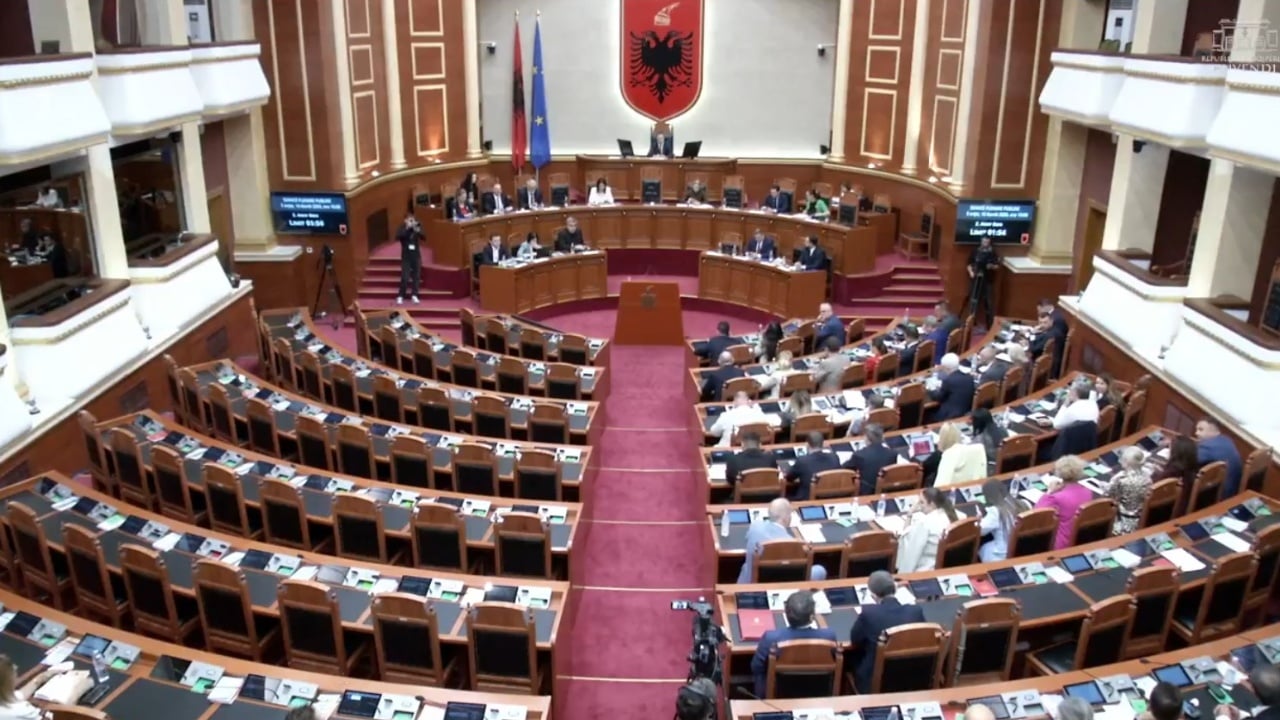
Parliament returns to work on September 8 with the unresolved conflicts of the previous session and an early test of strength between the majority and the opposition. At the center is the new territorial map, an issue with direct political weight for the 2027 local elections and for the balance between the sides in the parliamentary chamber.
The territorial map, the first test of the session
According to the majority’s plan, the 2027 local elections are intended to be held under a new administrative division with 46 municipalities. The majority wants to pass the new map as early as the beginning of October, while the opposition insists that a reform of this nature cannot rest only on the formal votes of numbers in Parliament.
PD: without consensus, the issue goes to the Constitutional Court
PD MP Ivi Kaso has brought renewed attention to the old legal debate over territorial reform, arguing that the essence of the clash is not linked only to procedure, but to the need for substantial consensus among the main political forces. According to him, if such a reform is turned simply into an instrument of the next majority, it risks being used for electoral advantage.
The opposition does not have the votes to block approval of the map in Parliament. Under these conditions, its strategy is shifting to an appeal to the Constitutional Court, with the claim that one-sided decision-making undermines the standard that should accompany changes at this level.
Local referendums as a political response
In addition to the constitutional route, the Democrats are also outlining another scenario: holding local referendums in 15 local units that oppose merging with larger municipalities. The opposition itself acknowledges that this option has difficulties and complexity, but is presenting it as a political instrument to challenge the reform.
In essence, the PD considers the new map a one-sided product that, according to its version, aims to influence the outcome of the 2027 local elections. This makes the clash more than a technical debate over administrative boundaries: it is a battle for political control of the electoral terrain.
Cooperation on the Electoral Code, clash over territory
Although the political pact on territorial reform appears strained, this has not blocked communication between the sides on the new Electoral Code. According to information made public, the Socialists and Democrats have found common language on electoral reform.
This creates a clear contrast at the start of the new session: where interests clash directly over the map of local power, consensus disappears; where negotiation remains open, the sides continue to keep channels of communication in place.
Ceremonial sitting and protest at Parliament’s doors
The opening of Parliament’s work was postponed until Tuesday, while on the morning of September 8 the Conference of Chairpersons will meet to approve the work calendar. Legal changes to increase the salaries of magistrates are also included on the agenda, another topic expected to be followed closely.
The afternoon plenary sitting is expected to be ceremonial in nature, with the main message expected to come from the Speaker of Parliament. But the return of MPs from the holidays is not expected to be calm: protesters have been announced at the entrance to Parliament, with eggs in hand, in a start to the session that signals a tense climate from the first day.
The new session thus begins with a file that directly affects how local power is built and how the electoral game is managed. Beyond the usual rhetoric, the clash over the territorial map appears set to be one of the main political fronts of the first weeks in Parliament.