
Sali Berisha used the Strasbourg podium to level strong political accusations against Edi Rama’s government, calling for international intervention and pressure. In his speech at the Parliamentary Assembly of the Council of Europe, the head of the Democratic Party linked emigration to what he called a “narco-state,” while also focusing on the historic weight of the Albanian diaspora.
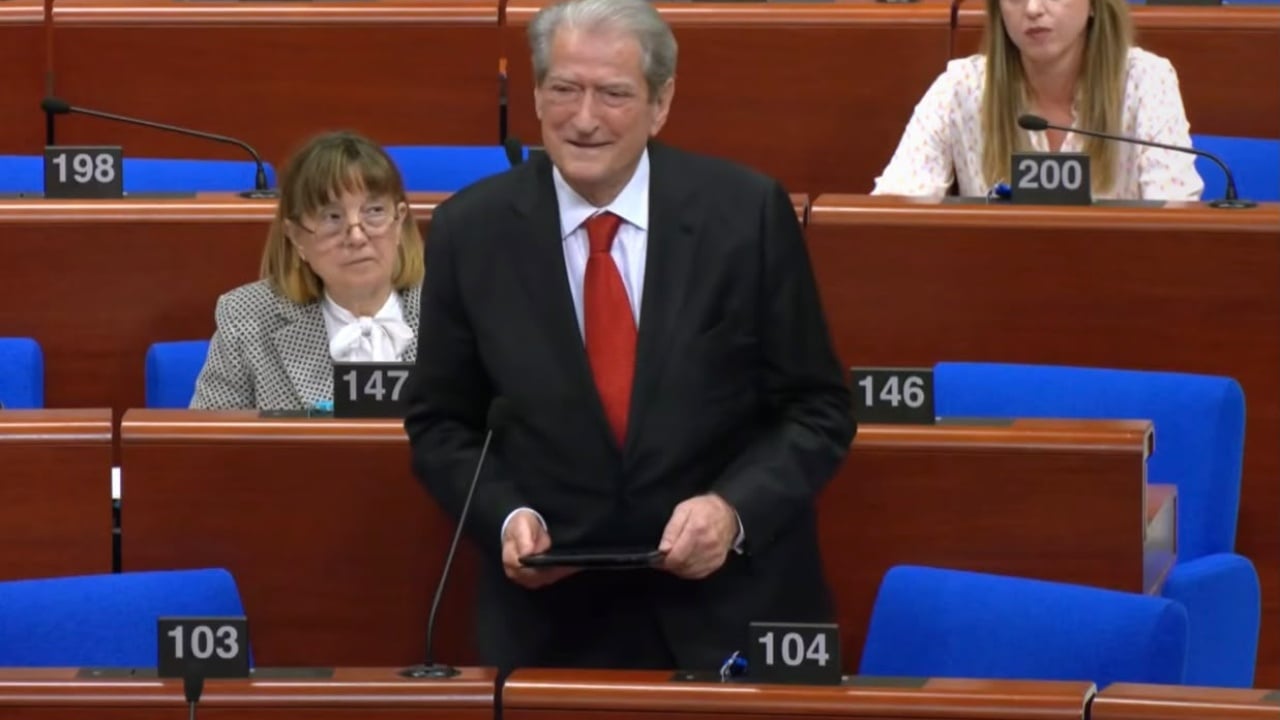
Political accusations from the Council of Europe podium
From Strasbourg, Berisha called for an international stance on the government in Tirana, which he attacked with the term “narco-state.” According to him, this is the main reason Albanians are leaving the country.
In his remarks, the opposition leader portrayed the situation in Albania as a crisis that, according to his political version, requires a response beyond the country’s borders. He directed the accusation straight at Prime Minister Edi Rama and the Socialist majority.
Claims about emigration and crime
Berisha said emigration is a direct consequence of what he calls the “Albanian narco-state.” Along the same lines, he claimed that Albania is the leading exporter of cannabis and that Albanian drug cartels are major transporters of cocaine in Europe.
These are accusations he voiced in an international forum, at a time when the political clash in Tirana continues to rely in part on narratives about crime, the state and the departure of citizens.
The diaspora at the center of his speech
A significant part of Berisha’s speech was devoted to the Albanian diaspora, which he presented as a decisive factor for the country’s survival, freedoms and cultural development.
According to him, no nation should be prouder of its diaspora than Albanians. But in parallel, he said the country is facing serious consequences from emigration, which he said is producing a bleak picture for Albania’s democratic future.
The debate in Strasbourg and the reference to “democratic hollowing”
In his speech, Berisha also referred to a study by Justin Gest covering 149 countries, saying that emigration can bring “democratic hollowing” and serious consequences for countries of origin.
His intervention took place as part of discussions in the Parliamentary Assembly of the Council of Europe on the role of diasporas and migrants in developing social cohesion and democratic engagement. In that forum, Berisha used the topic to advance his political accusations against the Albanian government.
His speech in Strasbourg once again placed the debate on emigration, the diaspora and the crisis of political representation on an international stage, but Berisha’s claims remain part of the sharp political confrontation between the opposition and the government in Tirana.