Another major project in central Tirana is being pushed forward by the government, this time with five shortlisted proposals for the “Tirana Fountain Tower” in the area known as Taiwan. Although it is presented as a private development on private property, the government itself acknowledges that the intervention will have a direct impact on the entire area around Rinia Park.
Five projects for a sensitive point in the city
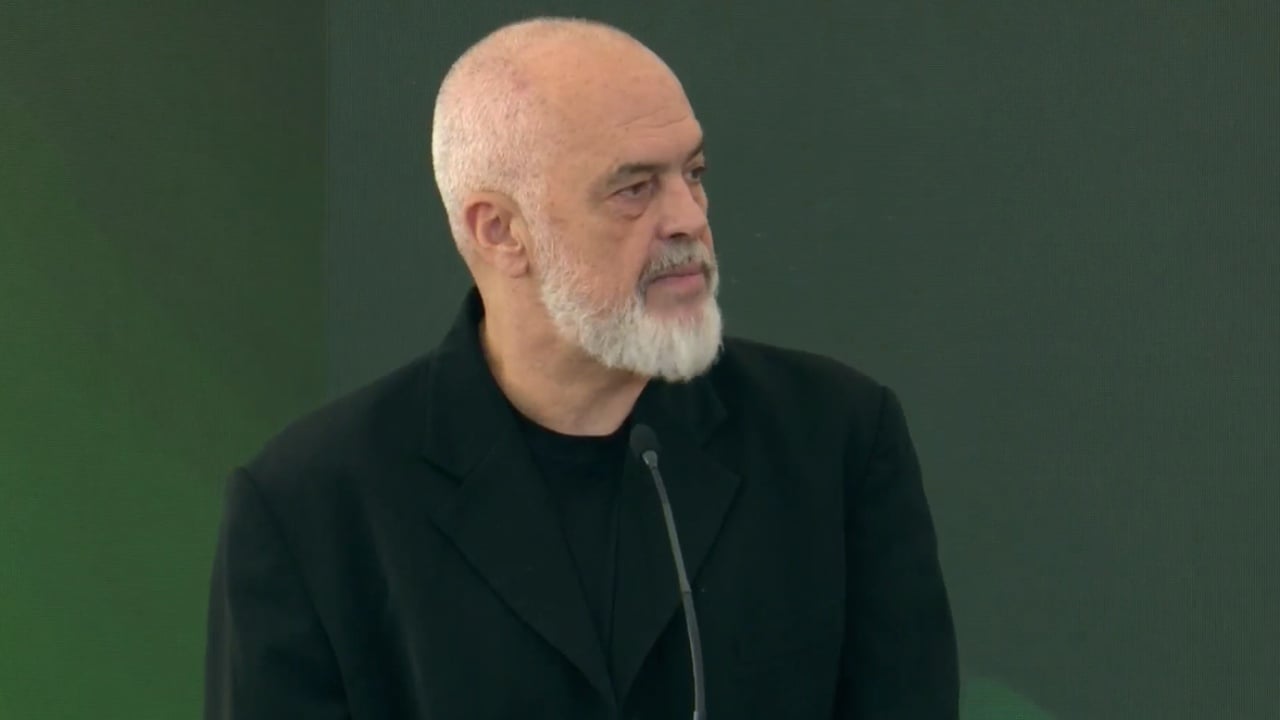
Prime Minister Edi Rama took part in the presentation of the five shortlisted projects in the competition for the development of the “Tirana Fountain Tower.” The intervention concerns one of the most frequented and most debated areas of the capital, where any transformation affects not only the specific property but also the city’s relationship with public spaces.
According to the version presented by Rama, for projects of this nature the aim is to support professionals with experience in urban planning, architecture, and construction, on the grounds that these are developments with a particular impact on the city.
The government presents it as a private development with a public effect
In his remarks, Rama stressed that the project is a private enterprise and is being developed on private property. But he also acknowledged the other side of the issue: the construction is expected to have a significant impact on the entire surrounding area, since the site lies in the heart of Rinia Park.
This makes the debate broader than the formal boundaries of the property. When a private intervention affects one of Tirana’s most sensitive urban nodes, the question is no longer only aesthetic or technical, but is also directly linked to how public interests are managed in the city center.
Rama revisits the history of “Taiwan” and the symbolism of the area
During the presentation, Rama also dwelt on the history of the building and the area known as Taiwan. He linked this space to the communist period, saying that at one time sitting in a cafe was seen as a threat to the regime and that places to spend free time were limited.
According to him, the structure at Rinia Park got the name “Taiwan” from the citizens themselves, because its shape reminded them of Chinese architecture. Later, during the period of privatization and urban transformation, the building changed function and volume, leading up to the new project that is now being put back on the table.
From the existing building to the new tower
Rama said the current building needs to be transformed in order to respond to a city that, according to him, has far greater needs and ambitions than in past decades. With this argument, the government is moving forward the process for the reconception and reconstruction of the area.
According to the announcement made at the event, the international competition aims to determine how this property will be developed further. However, beyond the language of urban ambition, it remains essential what weight the public interest will have in a project that affects one of Tirana’s best-known spaces.
In essence, the government is presenting the project as a combination of private investment and urban impact managed through a competition. But the fact that the intervention enters the heart of Rinia Park makes the issue far more sensitive than an ordinary construction development.
The real debate is not only about the shape of the tower that may rise at Taiwan, but about the standard being set for the use of spaces with public importance in the center of Tirana.