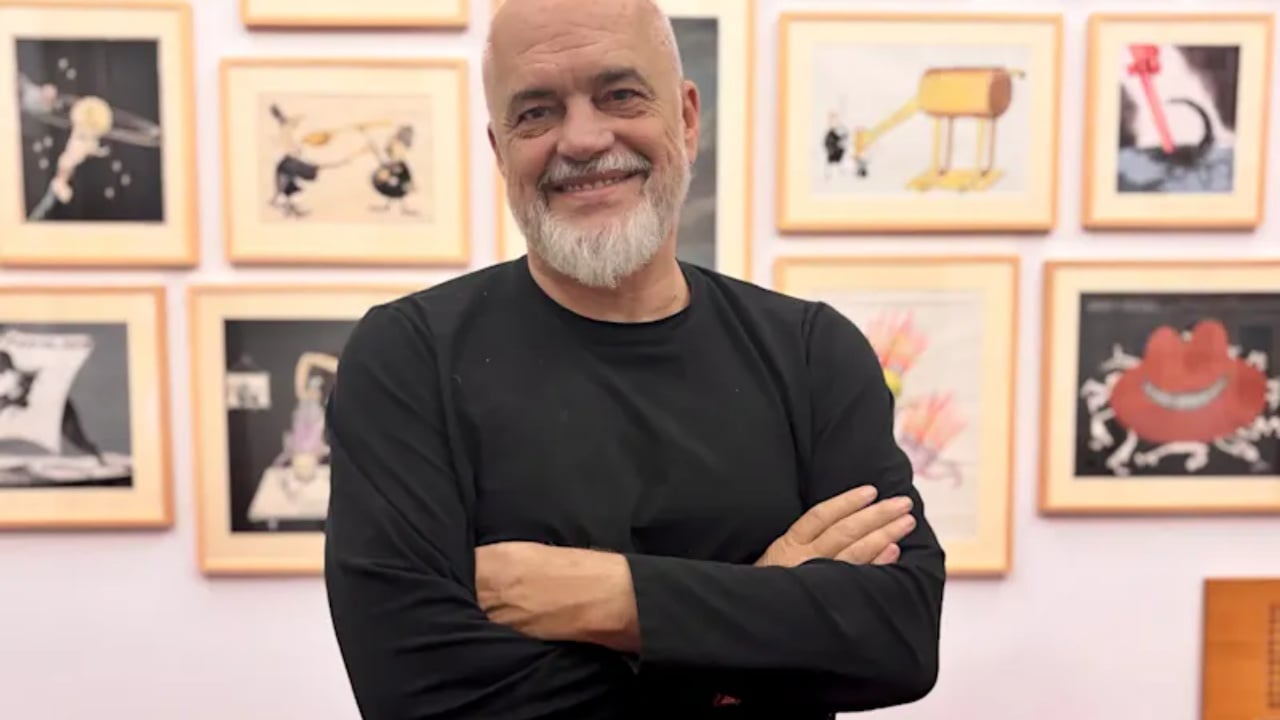
Prime Minister Edi Rama used strong language about the European Union’s approach to enlargement, saying in an interview with WELT that what is being promised to Ukraine about membership is a “lie.” Along the same lines, he called on German Chancellor Friedrich Merz and Brussels to show more political courage toward the Western Balkans.
A call for the “courage of Helmut Kohl”
According to the statements given to the German media outlet, Rama linked the enlargement debate to a historic moment for Europe, citing former Chancellor Helmut Kohl’s decision after the fall of the Berlin Wall.
He argued that Europe must regain that kind of political resolve and not treat enlargement only as a technical process with chapters and conditions, but as a strategic issue for the continent itself.
The Western Balkans as a “hole” in the middle of Europe
In the interview, Rama described the Western Balkans as a void in the heart of Europe, warning that keeping the region outside the EU creates space for risks and other influences.
In his view, leaving the countries of the region in limbo exposes them to Russian influence, radicalization and criminality. To illustrate this, he used strong metaphors for a region that is unprotected and vulnerable.
The message on Ukraine and criticism of the EU’s promises
The strongest point of the interview was Rama’s statement on Ukraine. He said that, in his assessment, the promise of membership through the usual path is unworkable and called it a “lie.”
According to him, a more realistic solution would be to bring Ukraine immediately closer to the European table and pursue a performance-based process that would lead it toward full membership. The statement comes at a time when EU enlargement continues to remain more of a political promise than a concrete timetable.
Faster membership, but with conditions
Rama did not call for abandoning conditions for aspiring countries. On the contrary, he said the EU should demand even more “homework,” while at the same time showing political readiness to bring in more quickly the countries that want to become part of the union.
In the same interview, he suggested that the current enlargement model is not producing enough security or credibility, especially when public promises are not accompanied by realistic paths to membership.
The veto also in the crosshairs
In the part concerning the functioning of the EU, Rama acknowledged that enlargement also carries the risk of new blockages in decision-making. Nevertheless, he spoke in favor of abolishing the right of veto within the union.
According to him, it is unreasonable for a single member to be able to block everything at a time when the EU faces geopolitical and economic competition from China, the United States and India.
The interview comes at a stage when rhetoric on enlargement has returned forcefully in Europe, but the gap between political words and the real mechanisms of accession remains open.
Rama’s remarks add public pressure on the EU, while at the same time exposing the ambiguity of the enlargement project itself, where big promises often collide with lengthy procedures, vetoes and political calculations.