
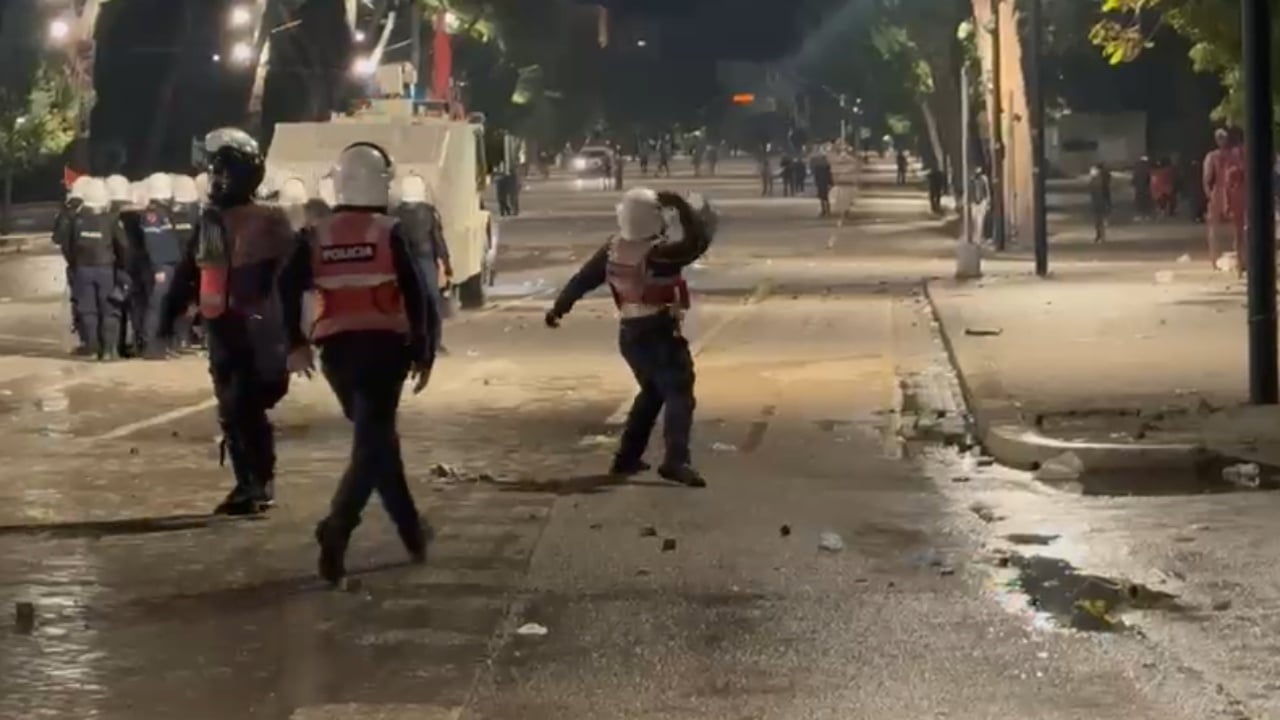
A video from the protest near the Prime Minister’s Office has raised serious questions about the way police responded on the ground. The footage shows an officer picking up a stone and throwing it toward the protesters, before being stopped by a colleague.
Fourth day of clashes in the capital
Tensions between police and protesters continued on the fourth day of the protest in Tirana, centered in the area near the Prime Minister’s Office. The situation remains heated, while large numbers of police officers can be seen on the ground facing the crowd.
Footage published from the scene focuses attention not only on the clash between the sides, but also on the conduct of officers at a sensitive moment for public order.
What the footage shows
In the video, a police officer can be seen picking up a stone and throwing it toward the protesters. Immediately afterward, a colleague approaches and stops him, not allowing him to repeat the action.
The footage does not provide more context about what happened before or after this moment, but the scene itself raises strong doubts about whether officers on the ground respected the limits of their conduct.
Questions over institutional responsibility
In such cases, the focus does not rest only on the individual act, but also on the chain of command and control during a high-tension protest. When an officer becomes involved in such an action, the issue moves from an isolated incident to institutional responsibility.
So far, in the information made public, there has been no official clarification about the episode captured on video. The absence of a response only increases public interest in how the protest was managed and in the standard expected of law enforcement forces.
The incident comes at a time when the protest climate in the capital remains tense and every action by police on the ground is under heightened public scrutiny.
Beyond the dynamics of the protest, footage of this episode shifts the debate to the limits of police action and the need for accountability when conduct on the ground falls outside the standard expected of institutions.