
Amid tensions at the protest, a brief pause in the clashes brought into focus a heated debate between several young people and a police officer. At the center of the accusations was the way law enforcement intervened, as protesters demanded to be allowed to demonstrate without being beaten.
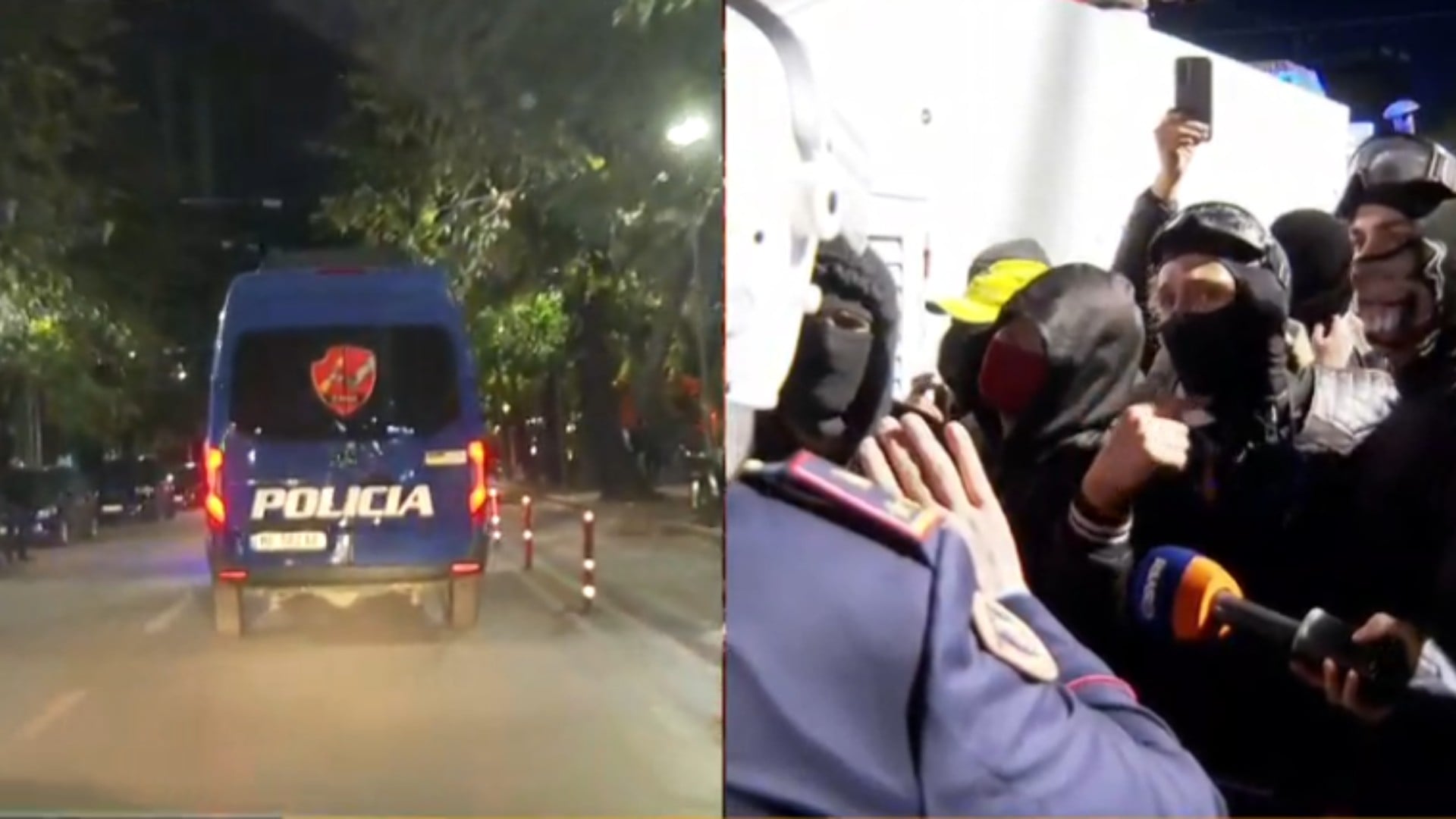
A brief “truce” between gas and stones
At one moment during the protest, police and protesters temporarily halted their confrontation and moved closer for face-to-face communication. The scene did not show a calming of the situation, but rather tension shifting from the street to words, with the sides confronting each other directly after violent episodes.
This direct contact came after stones had been thrown and gas had been used on the ground, making the debate even more politically and institutionally serious: not only what happened during the protest, but also how it was managed by the police.
Direct accusations against police: “Don’t strike us when we are on the ground”
One of the law enforcement leaders was seen speaking with several masked youths, who asked to be allowed to protest without being subjected to violence. They openly voiced dissatisfaction with the officers and their leadership, also calling for resignations.
In their exchange, the young people said: “They have stripped you of your dignity, resign. They are not beating people anymore, they got tired. We too have gone 30 hours without food. Why do you strike us when we are on the ground?”
They went on to say that they could be taken in by police, but not beaten “without mercy,” insisting that they do not want the destruction of Tirana or an escalation of violence.
Fear of escalation and a call to avoid a serious crisis
The protesters’ message was twofold: on the one hand, strong opposition to the police intervention; on the other, an effort to show that they were not seeking uncontrolled escalation.
“We do not want blood, we do not want a second 1997,” they said, placing the debate beyond the immediate episode and raising serious questions about the management of protests in a heated climate.
The police version and an unusual gesture amid the tension
According to the official version of the police representative on the ground, the protest was supposed to be held peacefully and without attacks on businesses, institutions and law enforcement officers. That position remains the usual institutional line in such situations, while the protesters’ claims of violence require full and verifiable clarification.
At the end of this pause, the protesters gave water to police officers. The gesture created a sharp contrast with the earlier scenes of tension, but without undoing the accusations raised at the scene about how protesters were treated.
The verbal confrontation between the youths and the police shifted the focus from physical clashes to institutional responsibility on the ground.
When calls such as “arrest us, but don’t beat us on the ground” are heard at a protest, the issue no longer remains only public order, but also the line the police must not cross.