
The fourth day of the student protest found part of Tirana’s universities with empty lecture halls and the teaching process almost suspended. On the ground, student attendance was minimal and mainly linked to registrations, while the support of some lecturers is being seen more and more openly.
Empty lecture halls at several faculties
At several of Tirana’s faculties, the teaching boycott continued this Thursday, leaving lecture and seminar rooms almost without students.
Observations at the Polytechnic University, the Faculty of Economics, the Faculty of Medicine and the Faculty of Law show the absence of the teaching process, while calls for boycott and protest are noticeable on university premises.
The same situation was also reported at the Faculty of History and Philology as well as at the Faculty of Foreign Languages, where classes were not held normally.
Few students, mainly for registrations
Only a limited number of students appeared on university premises, mainly to complete registration procedures in the Bachelor’s and Master’s cycles.
Many of them avoided public statements, but off camera some admitted they went to the faculty only to submit documentation. This shows that physical presence in the buildings has not translated into a return to normal academic life.
Mark Marku: absences will not be counted
At the Faculty of History and Philology, support for students has also been expressed through a decision not to penalize absences in seminars.
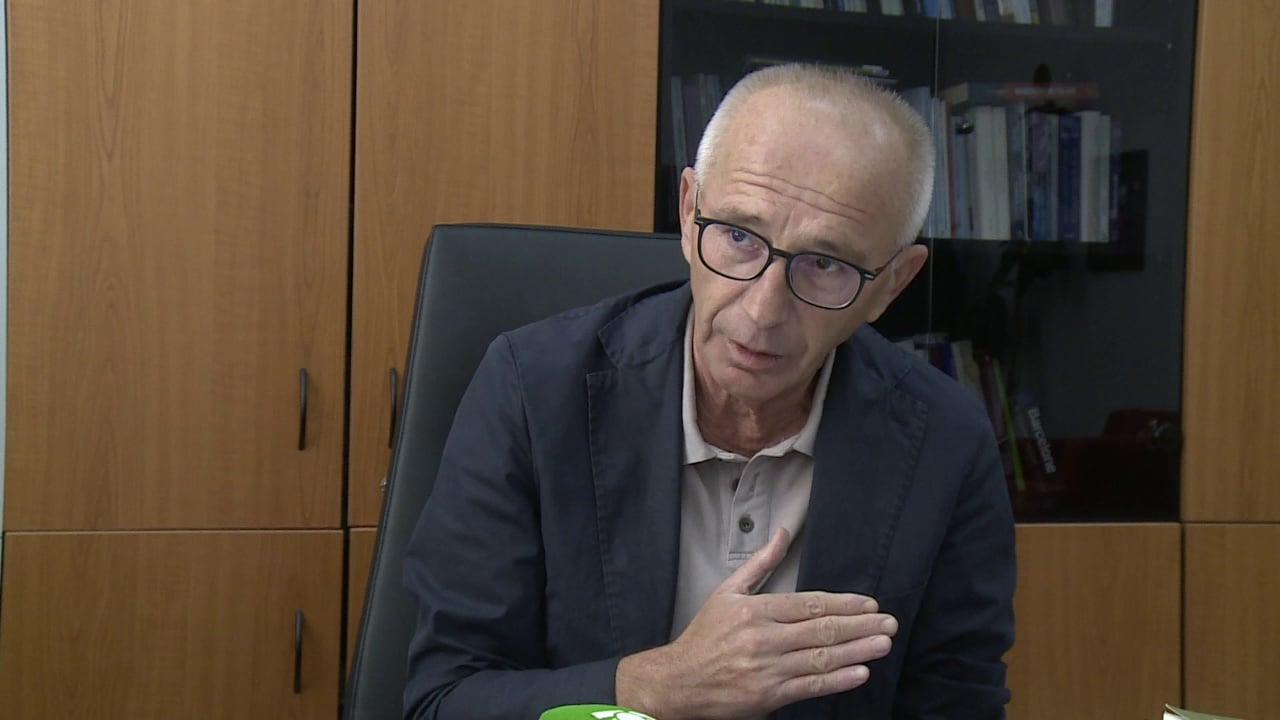
Dean Mark Marku said that, in his view, lecturers have an ethical obligation to support students and that he himself made the decision as early as the second day of the protest not to record absences, arguing that equal conditions should be created for everyone.
Other lecturers at this faculty have also expressed support for the protest through public positions on social media and participation in gatherings.
Distancing from violent acts
While the protest has spread beyond Tirana, episodes of attacks on non-public institutions and businesses have also been reported, raising concern about escalation.
Regarding these developments, Marku clearly distanced himself from the violence, stating that he does not believe students from his faculty are the perpetrators of these acts and calling for the protest not to veer into confrontation.
According to him, violence is condemnable in every case and could become a cost for the protesters themselves, as it risks changing public perception of their cause.
Concern over security at universities
Beyond support for the students’ demands, concern over security is also growing at universities, especially after tensions and injuries reported in recent days.
Universities have historically been spaces where reactions against injustices begin, but the climate created by recent incidents is putting the debate not only on the protest’s demands, but also on the boundaries between civic reaction and violence.
With lecture halls empty, teaching de facto suspended, and partial support from academic staff, the student protest is entering a phase in which its weight is measured not only by the number of people in the streets, but also by the real blockage of university life.
What remains clear is that normality at the faculties has not returned and tension over the way this movement is unfolding remains high.