
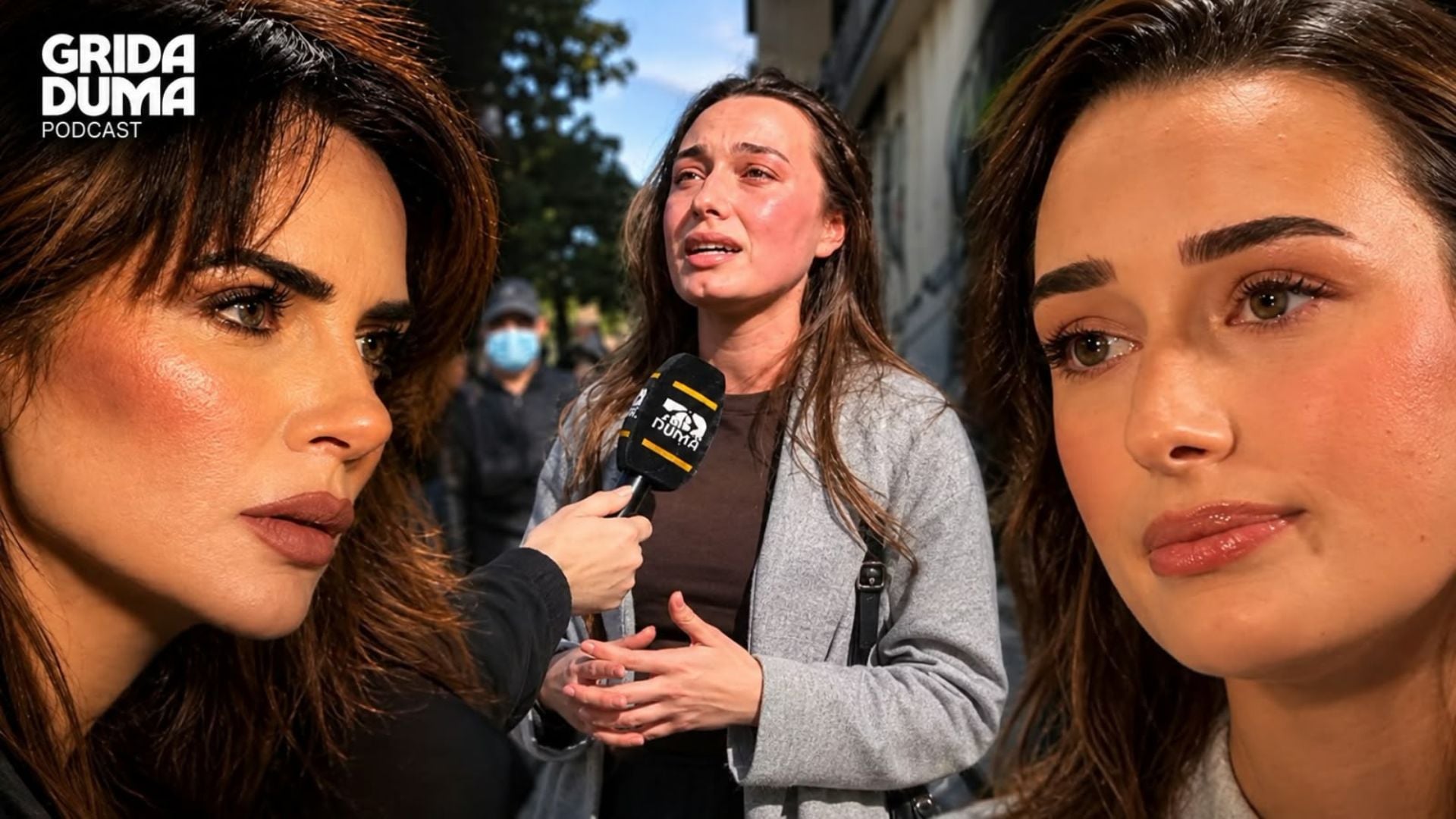
Through tears and in direct terms, a 22-year-old student described the economic pressure, lack of prospects and anger that, according to her, is pushing some young people to take to the streets in protest. Her account highlights not only the cost of living in Tirana, but also distrust toward institutions and the job market.
An account of a life that does not add up
Samanda Toçka spoke about the economic difficulties and the struggle to support herself in the capital, while her family is scattered abroad.
She said that from a salary of 500,000 old lek, about 400,000 went toward rent, a ratio that shows how tight the budgets of many young people in Tirana really are.
“I work seven days a week,” she said, linking that pace to the impossibility of having a normal life and spending time with her family.
The protest, the confrontation with police and the message of anger
In her account, the 22-year-old also focused on the protest and the tension with police, insisting that the young people’s motive was not violence, but the demand to be heard.
“We do not want to burn anything! They have not listened to us!” she said, summing up a sense of disappointment that goes beyond a single protest episode.
Her statement comes at a time when clashes between citizens and law enforcement are often addressed only from the official point of view, while little is heard about the social and economic reasons that drive young people into the streets.
Work, public administration and doubts about meritocracy
Samanda also raised another concern familiar to many young people: getting into public administration and the feeling that a diploma is not enough.
According to her, during efforts to find work in public administration, personal connections seemed more important than qualifications. This is a claim that further feeds distrust over how hiring works in the public sector.
When the perception of merit is replaced by networks of connections, the hardest blow falls precisely on the generation trying to build its life in the country.
“I don’t know how a government is formed” and the gap in representation
One of the strongest lines in her account was her statement: “I am 22 years old, I do not know how a government is formed! Nothing is invisible!”
Beyond the emotional phrasing, this sentence exposes the distance between young people and politics, as well as the feeling that decision-making takes place far from them.
Her account is not limited to a personal story. It touches on a broader concern: the fear that work, study and effort are not turning into security, housing or real opportunities for the future in Albania.
At its core, her story centers on the question many young people ask every day: how do you build a normal life when a salary barely covers the rent, while institutions are perceived as distant and closed?
This is the social tension that is often lost behind official statements, but that emerges clearly in accounts like this.