
The next NATO summit in Tirana remains shrouded in uncertainty, even though the government has presented the capital as the reconfirmed host. At the same time, the Ministry of Defense is seeking greater engagement from the Alliance in response to what it describes as a rise in interference and disinformation in the online space.
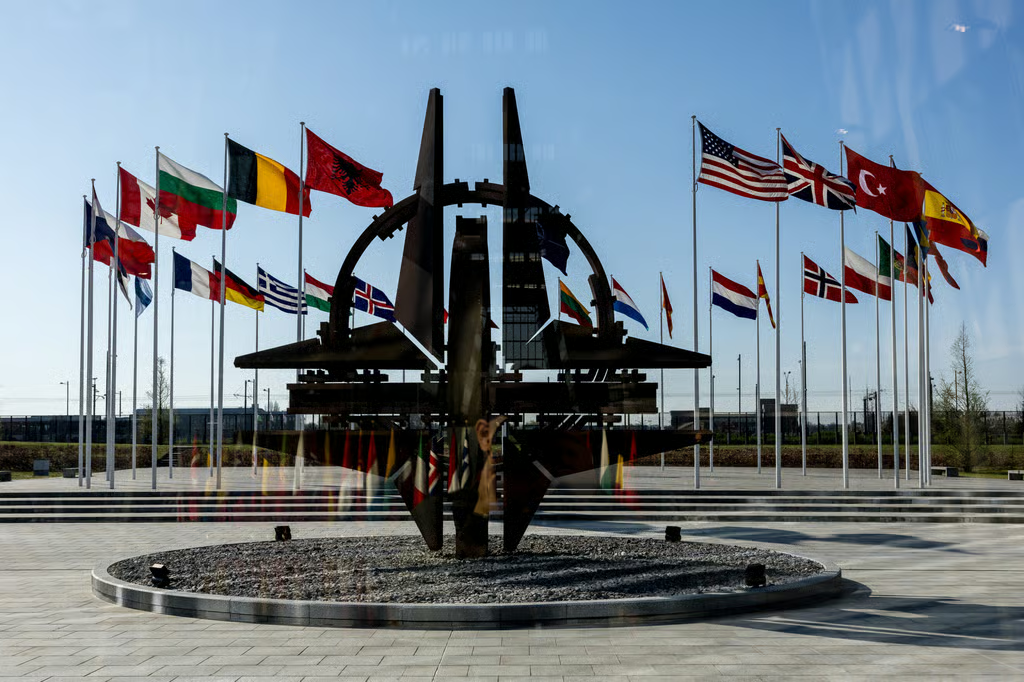
Official Tirana speaks of reconfirmation, but without a clear date
The possibility of Tirana hosting the next NATO summit has been accompanied by questions over how it will be organized, including alternatives such as postponement or holding it in a virtual format.
On November 3, the Ministry of Defense announced that after Prime Minister Edi Rama’s meeting with NATO Secretary General Mark Rutte, Tirana had been reconfirmed as the host city. However, the date of the summit has still not been set, leaving a significant gap in the official narrative.
Request for NATO experts in Albania
Defense Minister Ermal Nufi has asked for NATO experts to be sent to Albania to help institutions identify and counter suspected interference in the digital space.
In an interview with POLITICO, he and Montenegrin counterpart Dragan Krapović called for increased Alliance support for Western Balkan countries through specialized teams against disinformation campaigns and suspected Russian interference.
According to Nufi, over the past year there has been an increase in social media campaigns that fuel hatred and anger in society. He also said that organizations with indirect ties to Russia have been identified and called on NATO to establish clearer cooperation protocols among member states, as well as response teams for countries in need.
Government claims of foreign influence and challenges to them
The debate over foreign interference in the online space has also turned into an internal political clash. Prime Minister Edi Rama has accused Russia and Iran of being behind the incitement of anti-corruption protests that have continued since May.
Those claims have not gone unchallenged. Communication expert Blerjana Bino, co-founder of the SCiDEV research center in Tirana, told POLITICO that although Russian-linked social media campaigns on various issues have been documented before, there is no evidence supporting the claim that Moscow is behind the protests in Albania.
According to her, the attempt to shift public discontent toward scenarios of external interference risks delegitimizing the legitimate grievances of the protesters. For their part, Russia and Iran have denied any involvement in these developments.
How NATO teams work and what obstacles exist
Hybrid threat response teams are a mechanism NATO has developed since 2018. According to former Alliance Assistant Secretary General for Emerging Security Challenges Antonio Missiroli, these teams usually consist of around 12 experts made available by member states.
Their role is to monitor threats, coordinate the institutional response and strengthen the capacities of countries facing hybrid attacks. NATO previously sent such teams to Montenegro in 2019 and to Lithuania in 2021. In Albania, an Alliance team arrived in 2022 after Iranian cyberattacks against government systems and digital services.
According to a NATO official, the Alliance is ready to provide further support when requested by member states. However, sending a new team requires consensus among allies. Three NATO diplomats cited by POLITICO have signaled willingness to consider the request, but also caution that such support should not be used for domestic political purposes.
Strong support for NATO, but open debate over the political use of security
A NATO poll conducted in the spring and obtained by POLITICO shows that 95% of respondents in Albania support the country’s place in the Alliance. In Montenegro, that figure stands at 52%, the lowest level among member states.
Against this backdrop, the Albanian government is trying to place summit preparations, cybersecurity and the narrative of foreign influence on the same plane. But the lack of a date for the summit, together with debates over the evidence and the political use of these claims, keeps the issue far from full clarity.
Albania officially remains in waiting for the NATO summit, but without a publicly announced schedule. Until then, the request for support against disinformation and the controversy over its use in the domestic political debate are expected to remain at the center of discussion.