
The Economy Committee has approved several changes to the 2027 fiscal package, expanding the list of products expected to benefit from a reduced 6% VAT rate. The list now includes water, menstrual personal hygiene products and children’s hygiene products, while the debate once again highlighted the clash between social need and the limits that the government says are imposed by directives and fiscal policy.
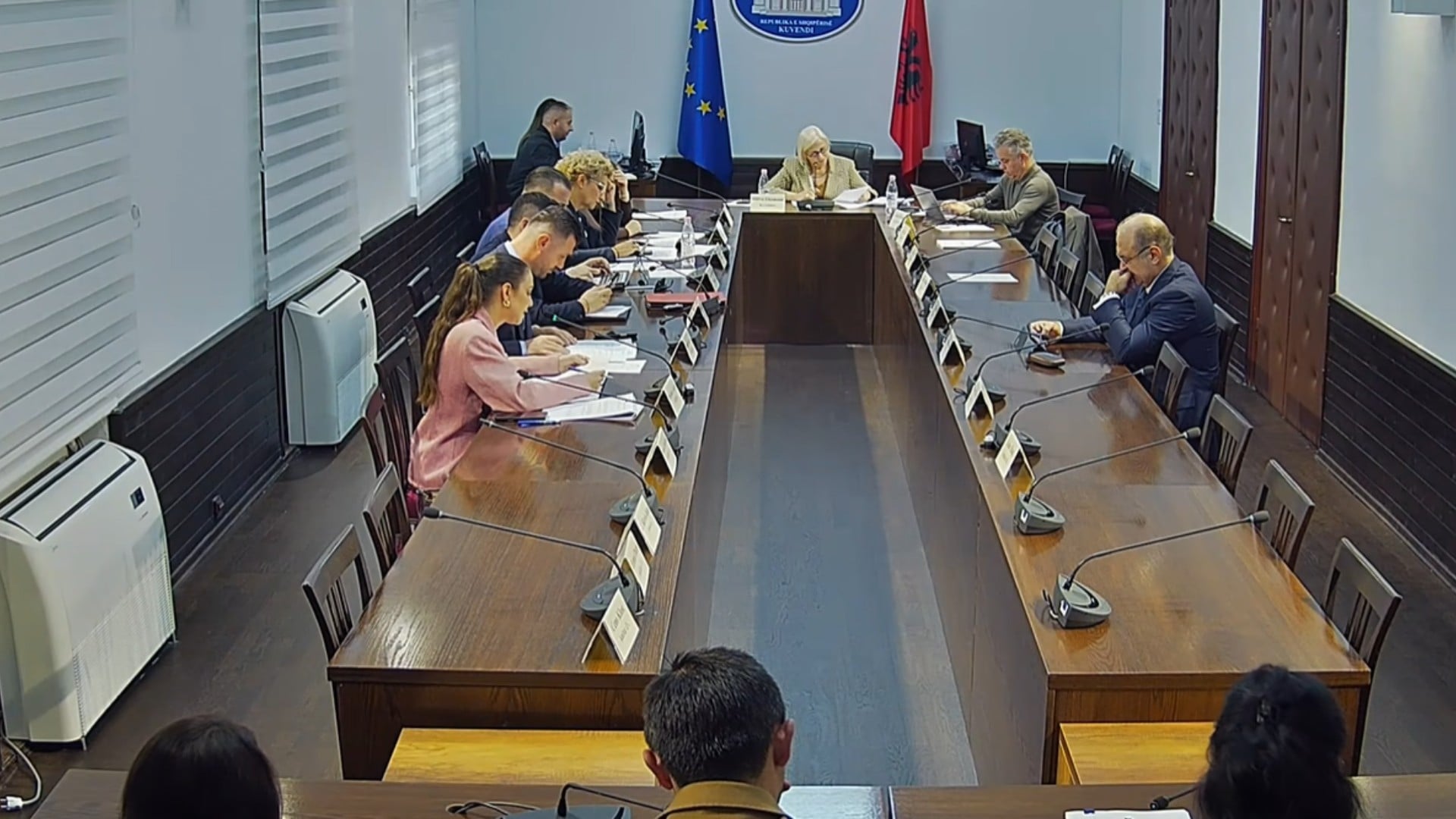
What was approved in the Economy Committee
According to the committee’s decision, the changes to the 2027 fiscal package expand the category of products treated with reduced VAT. Included on this list are water, menstrual personal hygiene products and children’s hygiene products.
The vote passed with support from the opposition as well, but the discussions showed that political agreement has not erased the questions over how the list of beneficiaries is being drawn up and on what criteria the tax relief is being granted.
Clash over water and the real cost for families
The most debated point was the inclusion of water. Socialist MP Erion Braçe called for the reduced VAT to be applied to bottled water as well, treating it as a basic product rather than a secondary good.
In the discussion, he also raised direct criticism of the reality of water supply, questioning the official narrative about investment in the network. His argument was that for many families, bottled water is not a luxury but a daily necessity. The opposition also supported the idea that treating food products without including water leaves out a key element of the cost of living.
The government kept reservations and relied on directives
On behalf of the Ministry of Finance, Deputy Minister Endrit Yzeiraj said that the position of the Council of Ministers did not agree with MP Kadeli’s proposal and that the changes must be considered in line with the relevant directives.
On water, the official version was that the government’s “political objective” should be taken into account, with the argument that investments in the network are intended to address the issue differently. In essence, the government indicated that the limits of the list are determined not only by social need, but also by political choices and by the interpretation of the legal framework.
Products for women and children also in focus
During the debate, the issue of the lack of tax relief for women’s and children’s hygiene products was raised again. Braçe called for the inclusion of menstrual hygiene products and diapers, presenting them as a direct cost weighing on families.
From the majority, it was acknowledged that these products affect low incomes, while the discussion also highlighted another issue: the government holds the final say in defining the list. Committee chair Milva Ekonomi clarified that the law gives this competence to the Council of Ministers, increasing the weight of political decision-making on an issue with a direct impact on citizens’ pockets.
The next step moves to Parliament
After approval in the Economy Committee, the changes to the 2027 fiscal package will go to Parliament for a final vote in plenary session.
At this stage, it remains to be seen whether the formula approved in committee will remain the same, or whether the debate over water, diapers and menstrual hygiene will bring further changes in the parliamentary chamber.
The committee’s approval opens the way to the final parliamentary stage, but the discussion showed that beyond being presented as tax relief, the issue directly concerns the government’s priorities and the way the burden of the cost of living is distributed.
That is precisely where it is expected to become clear whether the VAT cut will remain a technical adjustment or turn into a real intervention for basic products that affect families’ daily lives.