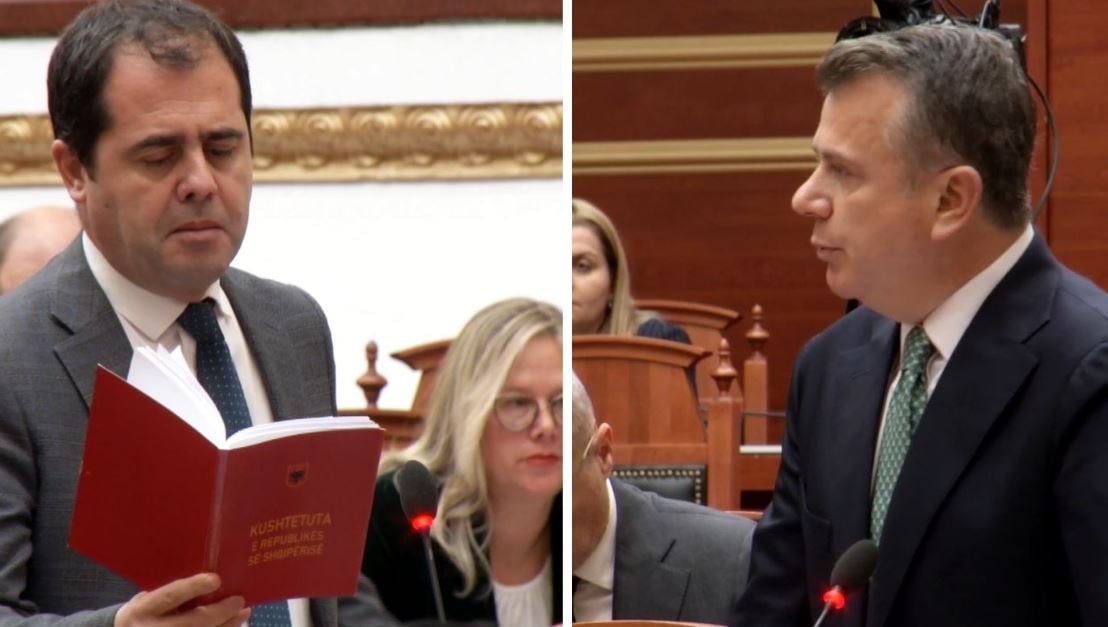
The debate over Electoral Reform has returned to parliament with the same accusations that have accompanied it for months: the opposition is seeking more time, while the majority is holding the line on closing the deadline. This time, the clash erupted after Oerd Bylykbashi requested an extension of the commission’s mandate, which under the current calendar ends on Nov. 30.
Bylykbashi seeks extension, majority shuts the door
Oerd Bylykbashi, the Democratic Party co-chair of the Special Commission on Electoral Reform, requested during the plenary session that the commission’s deadline be extended. The request comes at the end of this parliamentary mechanism’s mandate, at a time when the sides still have no agreement on the pace or the substance of the work.
On the other side, Socialist Party parliamentary group head Taulant Balla clearly rejected the possibility of an extension. According to him, the Democrats have been notified several times about the expiration of the deadline and there is no reason for the commission to be extended again.
Procedure was used as a political filter
Speaker of Parliament Niko Peleshi reminded Bylykbashi that the request had not been submitted in line with procedure. That immediately shifted the debate from the substance of the reform to the formal rules of the session, a familiar pattern in parliament whenever the sides do not agree on content.
Balla accompanied that position with political tones, saying the commission had been set up on an old and non-functional formula, but that the opposition had been given broad powers in co-leadership. According to the majority’s version, the Nov. 30 deadline remains non-negotiable and the agenda linked to EU processes should not be held hostage.
The clash moved to ODIHR and election reports
Bylykbashi strongly objected to the refusal, referring to the OSCE/ODIHR. According to him, ODIHR itself has asked for clarification on whether the commission’s deadline can be extended or is final, and therefore the majority’s refusal translates into a message that this institution’s assistance is not welcome.
The Democratic Party lawmaker went further with political accusations, claiming that the majority finds a weak ODIHR report more convenient than limiting the use of the state in elections. He also said the opposition has submitted the OSCE/ODIHR recommendations, while, according to him, nothing concrete has been brought forward by the majority.
Majority speaks of boycott, opposition of obstruction
From the podium, Balla blamed the opposition for dragging out the process, recalling previous boycotts and portraying the request for an extension as a belated move. In essence, the majority is maintaining a hard line: work within the deadline or the commission closes.
Beyond the exchange of accusations, it remains clear that the reform continues to be treated more as an instrument for political battle than as a process aimed at electoral standards. That makes the Nov. 30 deadline not merely a matter of the calendar, but another test of the lack of real consensus between the sides.
The clash in parliament confirms that Electoral Reform remains blocked between procedure, accusations and day-to-day political calculations.
So far, the majority’s position is firm: there will be no extension of the deadline, despite the opposition’s request and its references to the OSCE/ODIHR.