
Tirana went through a day of high tension on November 28, as a protest that began in the morning deteriorated into prolonged clashes with police, turning the center of the capital into a confrontation zone for hours. The preliminary toll made public by the authorities speaks of 35 people injured, while images and reports from the ground showed the use of tear gas, water cannons and the spread of incidents in several parts of the city.
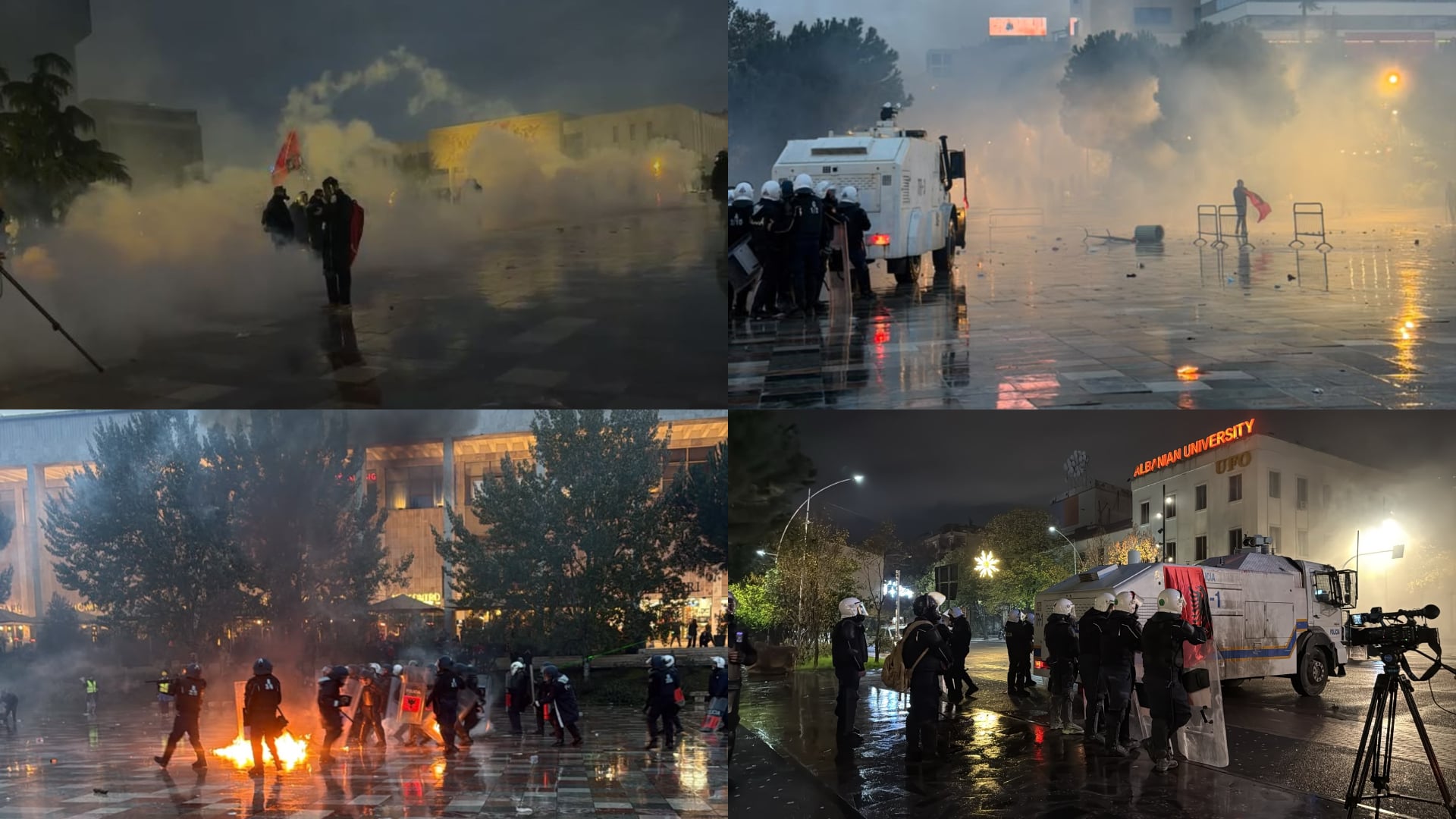
Clashes that lasted all day
The gathering began at around 10:00 a.m. and continued for approximately 10 hours, amid repeated tensions between protesters and police forces.
During the day, the use of tear gas and water cannons by police was reported, while protesters threw stones and Molotov cocktails at officers.
From the Prime Minister’s Office to Skanderbeg Square
According to reports, the first tensions appeared near the Prime Minister’s Office before later moving to Skanderbeg Square as well.
The clashes did not remain confined to one location, but spread to several areas of the capital, increasing insecurity in central Tirana on a symbolic day such as November 28.
Reports of damage and heavy intervention
Damage to state institution buildings was also reported during the unrest, in a situation that once again highlighted how high-risk gatherings are managed in the capital.
The official version points to an escalation of violence on the ground, while footage from central Tirana showed a strong police presence and continued intervention to disperse the crowd.
Official toll: 35 people sought medical help
According to the Ministry of Health’s toll, 35 people presented at hospital facilities to receive medical assistance.
Among the injured, according to that toll, were police officers, protesters, journalists, passersby and a security employee.
Until the close of the protest, central Tirana remained tense, with visible consequences from the long clashes between protesters and police.
The November 28 event raises serious questions again about the level of force used on the ground and about the failure to prevent a public gathering from deteriorating into prolonged violence.