
Footage released by the opposition has opened another point of tension over how police intervene in protests. In the video, Democratic Party MP Kliti Hoti is seen moving toward a cordon of officers and, moments later, is hit, according to the opposition’s account, by a rubber bullet in the back area.
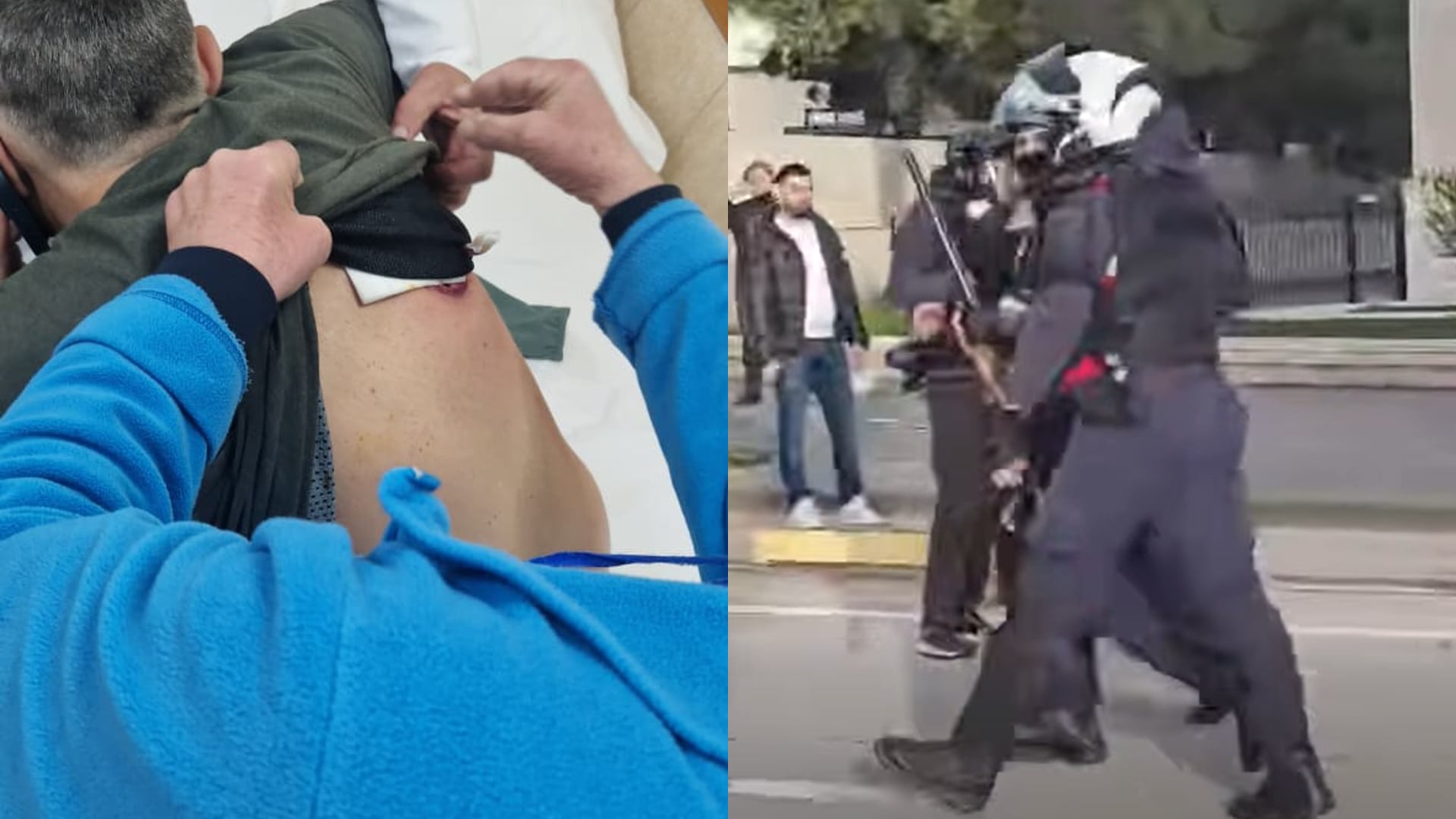
What the released footage shows
In the publicly shared video, Hoti appears to be running toward the officers during the clash at the protest. Immediately afterward, a shot is heard and the MP falls to the ground, injured.
The footage was first published by PD parliamentary group chairman Gazment Bardhi, while another angle of the incident was also shared by PD vice chairman Belind Këlliçi.
Political accusations against the police and the government
Gazment Bardhi described the incident as a serious act against an MP in the exercise of his duty, warning of legal responsibility. Belind Këlliçi, meanwhile, leveled direct political accusations against the government and the prime minister over what the opposition portrays as an escalation of violence.
These are political accusations made by opposition leaders, while at this stage there appears to be no publicly cited clarification from the State Police on the specific circumstances in which the MP was hit.
The claim of intervention over the detention of protesters
According to the version presented by the opposition, the MP had approached the officers to inquire about the detention of protesters, which the opposition describes as arbitrary abductions. It is at this moment, they claim, that he was shot and then fell to the ground.
This claim remains part of the opposition’s narrative, while the absence of a detailed institutional response leaves unanswered the key question: under what conditions was force used against an elected representative.
Points requiring public clarification
The incident raises several issues requiring verification: who gave the order to use rubber bullets, whether intervention protocols were followed, and whether the officers identified the person struck as an MP.
Equally important is transparency about the chain of command during the clash. When police intervention affects an MP in the middle of a protest, the matter does not remain only political, but becomes a test of institutional accountability.
So far, the public debate has been dominated by videos and the opposition’s accusations, while the police’s official version of the incident has not been made known with the same level of detail.
In the absence of a full institutional clarification, the published footage remains the main element fueling doubts over the proportionality of the force used in the protest.