
Tensions between the United States and Iran remain high, with another sign of confrontation over control of the Strait of Hormuz. According to Iranian officials’ version, Washington has violated the ceasefire, while Tehran is openly pushing for recognition of what it calls the “new Iranian order” in one of the most sensitive corridors of global oil trade. At the same time, the cancellation of the Pentagon chief’s announced visit to Israel has added to the uncertainty in the region.
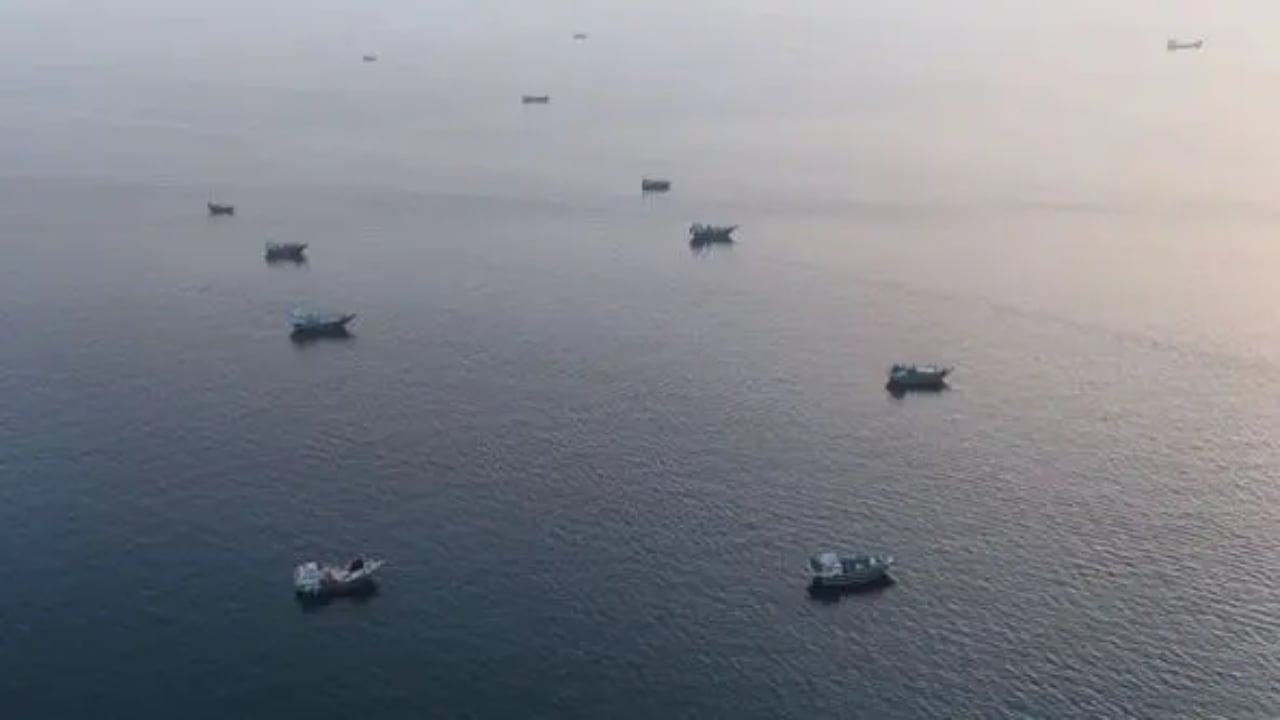
Tehran hardens its tone over passage through Hormuz
Iranian Parliament Speaker Mohammad Bagher Ghalibaf accused the United States of violating the ceasefire in several ways. Among his claims was what he presented as a breach of the “new Iranian rules” in the Strait of Hormuz.
Senior Iranian lawmaker Ebrahim Azizi further declared that, in his view, “there is no other alternative” but recognition of the “new Iranian order” in this strategic maritime corridor. The language suggests Tehran is trying to turn a political claim into a binding standard for navigation in the area.
What the June 17 memorandum provided for
According to the memorandum of understanding reached on June 17, Iran had committed to guaranteeing the safe passage of commercial ships for 60 days, without additional fees.
But in practice, Iranian authorities have required every vessel to coordinate with Tehran during transit. They have also warned that the use of maritime corridors designated by the International Maritime Organization, without Iran’s approval, is “unacceptable and entirely dangerous.”
An open fault line between Washington and Tehran
Security in the Strait of Hormuz remains one of the most debated issues in negotiations between the United States and Iran. The two sides have different interpretations of control and navigation rules in this strategically significant area.
Beyond the public statements, the dispute is directly tied to real control over an artery through which a considerable share of the world’s oil trade passes. That makes any unilateral change in the rules not only a regional issue, but one with broader economic and security consequences.
The canceled Israel visit and official silence
In this climate, the BBC reported that U.S. Defense Secretary Pete Hegseth canceled the visit he had been expected to make to Israel. He was in Turkey for the NATO summit with President Donald Trump, while the visit to Israel had not been officially confirmed by either side.
According to international media, the meeting had been expected to include discussion of Israel’s concern over the possible sale of F-35 fighter jets to Turkey. Israeli Prime Minister Benjamin Netanyahu had previously said such a deal would be a mistake.
So far, neither Washington nor Tel Aviv has provided an official explanation for the cancellation of the visit, leaving open the question of whether this was a routine scheduling change or a broader signal of tensions behind the scenes.
For now, what is known is that Hormuz remains a pressure point where political statements are being accompanied by attempts to impose rules on the ground.
While official clarification is still lacking on U.S. moves and on the cancellation of the visit to Israel, uncertainty in the region is only deepening.