
At the NATO summit, Lithuania and Estonia chose to turn rising military spending into a political and public message. According to materials distributed by their representatives and the alliance’s projections for 2026, the two Baltic countries are presenting themselves as part of the so-called “5% club,” meaning states that reach or exceed the threshold of 5% of GDP for defense.
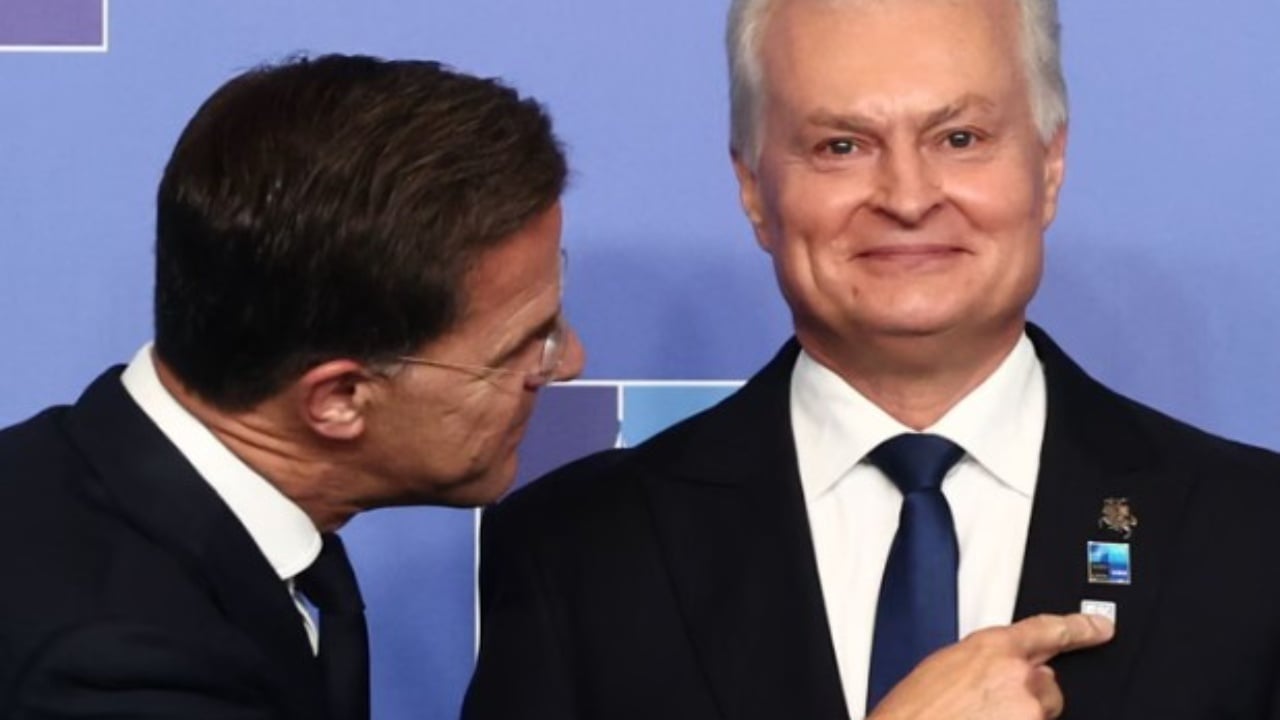
A symbol put on display at the summit
Lithuanian President Gitanas Nausėda drew attention when he appeared with a pin on his jacket bearing the words “5% Club.” According to the version made public by international media and footage from the summit, he showed the symbol to NATO Secretary General Mark Rutte during the welcome ceremony.
paragraphs
Promotion also on social media
Other officials from the region pushed the same message in the public sphere. Estonian Foreign Minister Margus Tsahkna and his Lithuanian counterpart Kęstutis Budrys promoted participation in this “club” through posts on social media.
This type of political communication places the emphasis not only on the figures, but also on their use as an image-building instrument at a summit where pressure to increase military budgets remains high.
What NATO’s 2026 projections show
According to NATO’s projections for 2026, Lithuania is expected to spend 5.33% of GDP on defense, ranking first among member states. Estonia comes second with 5.10%.
On the same list, Latvia ranks third with 4.92%, while Poland is fourth with 4.68%. In other words, the greatest weight of this race in military spending remains with the countries on the alliance’s eastern flank.
The eastern flank raises budgets, Spain remains at the bottom
According to the reasoning made public by the alliance and the respective countries, the increase in military investment is linked to proximity to Russia and the security situation in the region.
In contrast to this line, Spain remains among the countries with the lowest defense spending, at 2% of GDP. This has put Madrid at the center of criticism from U.S. President Donald Trump during the summit.
The message that emerged from the summit is clear: some member states are treating rising military budgets not only as security policy, but also as diplomatic and public capital.
However, beyond the symbolism of the “5% club,” the real debate within NATO remains how sustainable this spending race is and how it will translate into concrete security for the alliance.