
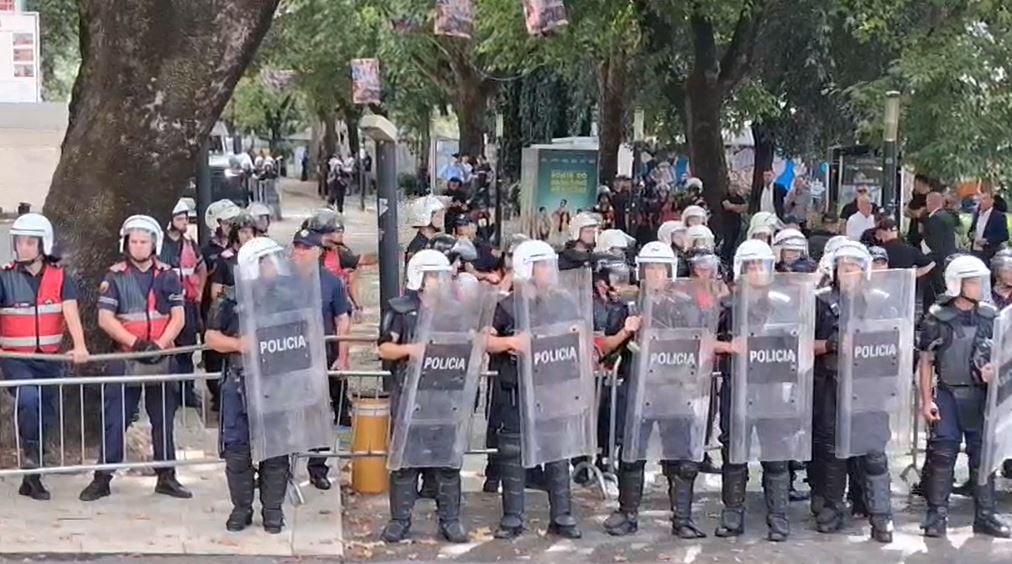
Albania’s Assembly convened on Sunday, July 27, in a public plenary session that began at 10:00 a.m., in a tense climate both inside and outside the chamber. A protest was held in front of the Parliament building, while police were deployed on the ground with security measures to prevent possible incidents.
The session began at 10:00 a.m.
According to the official announcement, the Assembly’s public plenary session began at 10:00 a.m. The meeting took place at a moment of political tension, with attention focused not only on the agenda, but also on the situation outside the institution.
In such cases, the weight of political debate is often accompanied by heightened security measures, turning parliamentary proceedings into a broader matter of public order.
Protest held in parallel with Parliament’s proceedings
While the session was taking place inside the Assembly, a protest was being held in front of the Parliament building. The presence of citizens at the gathering added to the sensitivity of the political day and shifted the focus to how institutions manage assemblies near state buildings.
No further details have been given about how the protest unfolded or about the participants’ specific demands, but the fact that the gathering took place in parallel with the session makes the situation politically significant.
Police deployed security measures
The State Police took security measures to prevent incidents or escalation, according to the official version. In such cases, the justification of order and security is regularly used by the authorities, so attention remains on the proportionality of every action on the ground.
Based on the information made public so far, the police emphasis has been on managing the situation around Parliament, on a day when the protest and the plenary session were taking place at the same time.
Parliamentary day under political and public pressure
The holding of a protest at the same time as the Assembly’s proceedings shows once again that political tension is not remaining inside the Parliament chamber. It is moving into the public space, where the clash between civic reaction and the institutional response becomes more visible.
For the moment, confirmed information remains limited to the start of the session, the holding of the protest, and the police measures. Any claim beyond these facts requires further verification.
The plenary session and the protest outside Parliament placed the political day under double pressure: debate inside the institution and discontent in the streets.
In the absence of full details from the authorities, it remains important that every measure taken on the ground be viewed with critical care and not simply through the official language of security.