
The Danube has receded to record levels in Serbia and Croatia, exposing not only wide sandy banks but also direct consequences for the economy and daily life along the river. From ships stranded in mud to difficulties in fuel supply, the falling water level is turning a climate crisis into a concrete problem for transport, energy, and the ecosystem.
The water retreats, activity stalls
In Novi Sad, in northern Serbia, dozens of boats in a marina have been left stuck in mud after the Danube retreated by hundreds of meters. The scene shows how deep the blow is for navigation and economic activity on the river.
The consequences are not limited to the movement of watercraft alone. The Danube’s low level is affecting entire chains of activity, from transport and fuel supply to fishing and tourism.
Drought in Europe is pushing the river to extremes
Heatwaves and the prolonged drought that have swept across Europe have driven the Danube’s water level in Croatia and Serbia to its lowest point on record this week.
Experts warn that the impact is not only temporary. According to their assessments, the drought could leave long-term consequences for the ecosystem and wildlife in areas that depend on the Danube, the Tisa, and the Sava.
Sunken ships emerge to the surface
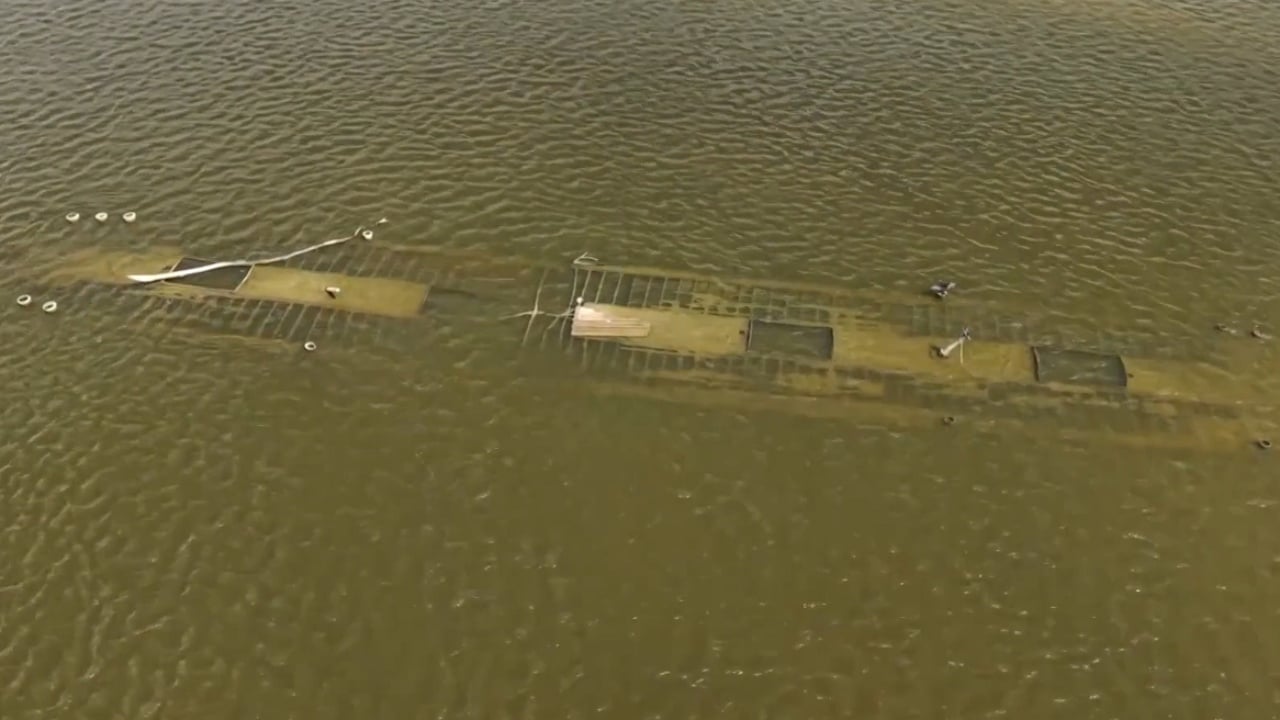
In Croatia, the retreating water has revealed a cargo ship that has been sunk since 1937, a clear sign of the river’s unusual withdrawal.
In eastern Serbia, the rusted remains of a convoy of German ships sunk in 1944 have also surfaced. Beyond their historical weight, these remains now also pose a danger to navigation.
Blow to fuel supplies and the local economy
The consequences have also hit the energy sector. According to Serbian Energy Minister Dubravka Djedović-Handanović, fuel imports during July reached only 25% of the monthly target.
According to the official account, tankers have been forced to sail at only 30% to 40% of capacity because of the low water level. This shows that the problem is no longer only environmental, but also economic and logistical.
In Belgrade, too, the effects are visible on the ground: on a pile of rocks exposed in the middle of the river after the water receded, a restaurant owner has placed tables and chairs, a detail that reflects the dramatic change in the Danube’s landscape.
The record drop in the Danube’s water level is highlighting the weakness of infrastructure and the dependence of local economies on extreme weather conditions.
When a river like this stops functioning normally, the consequences go far beyond the sight of exposed banks: they affect trade, energy, tourism, and navigation safety.