The Socialist Party’s proposal for a new territorial division does not stop at administrative maps. If approved in the form submitted to Parliament, the reform could directly hit football clubs that are sustained with money from municipalities, leaving the future of several local teams in doubt.
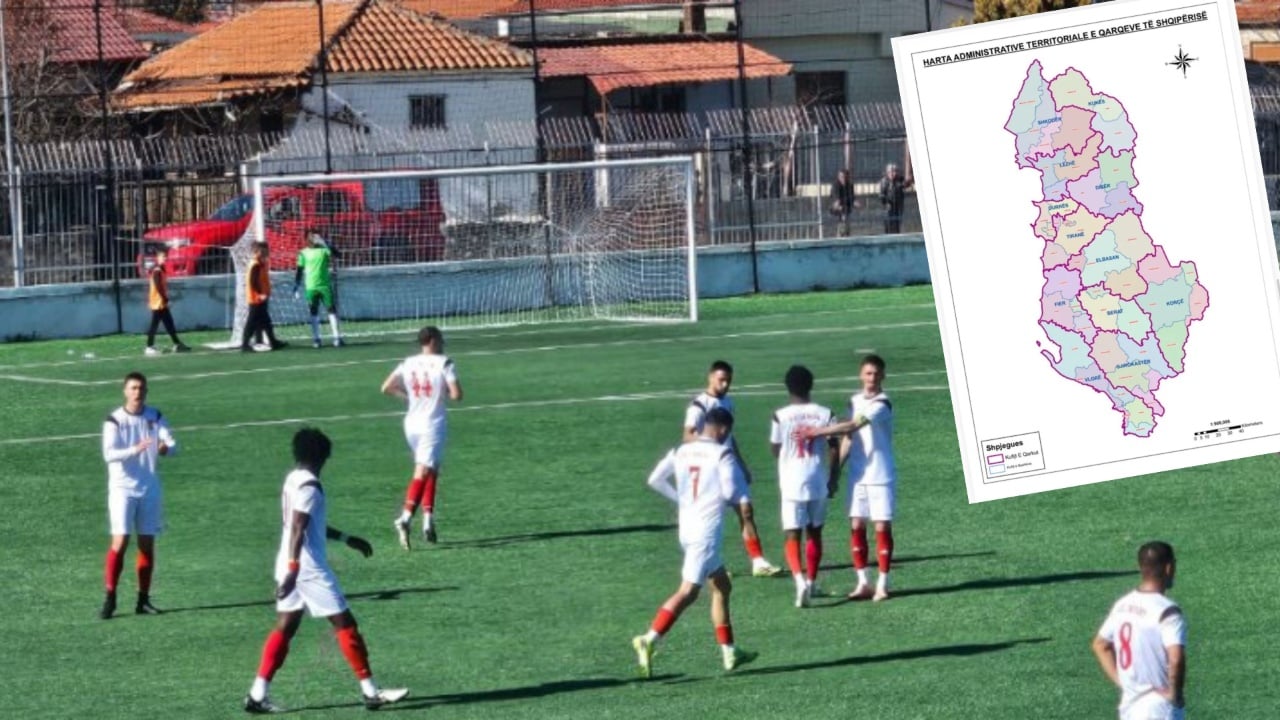
The draft law affects the structure of local government
Socialist Party MPs have submitted a draft law on the reorganization of local government, which foresees reducing the number of municipalities from 61 to 46. The number of counties, under this proposal, remains 12.
The proposed changes include the merger of several local units, among them Fushë-Arrëz, Klos, Rrogozhinë, Dimal, Poliçan, Patos, Divjakë, Selenicë, Maliq, Këlcyrë, Memaliaj, Libohovë, Cërrik, Belsh and Përrenjas.
After the new map, questions over club funding
The effect is not limited to administration. Under the draft, municipalities that currently support football clubs could be dissolved or folded into new structures, immediately raising the question of how public funds for local sport will be allocated.
In this scenario, six teams appear to be facing uncertainty over their existence or the way they will be funded, as they are currently supported directly by their respective municipalities.
Lower-division clubs remain the most exposed
The problem especially affects lower-division teams, which in many cases have no independent sources of income and rely almost entirely on local budgets to sustain their activity.
If municipalities are merged and financial priorities are revised, sport could be among the first items to be cut, especially where a club lacks private backing or a stronger economic structure.
The case of Rrogozhinë falls outside the scheme
Not every club in the affected areas is in the same position. The case of Rrogozhinë appears different, as Egnatia is privately owned by president Agim Demrozi and does not depend on municipal funding.
This makes the club less vulnerable to the administrative changes, unlike teams that survive thanks to direct support from local government.
The debate over the new territorial division is therefore expanding beyond administrative boundaries and is also affecting the way public money is used in sport.
If the draft law passes without a clear solution for clubs that depend on municipalities, the reform could produce not only larger municipalities on paper, but also fewer teams on the field.