
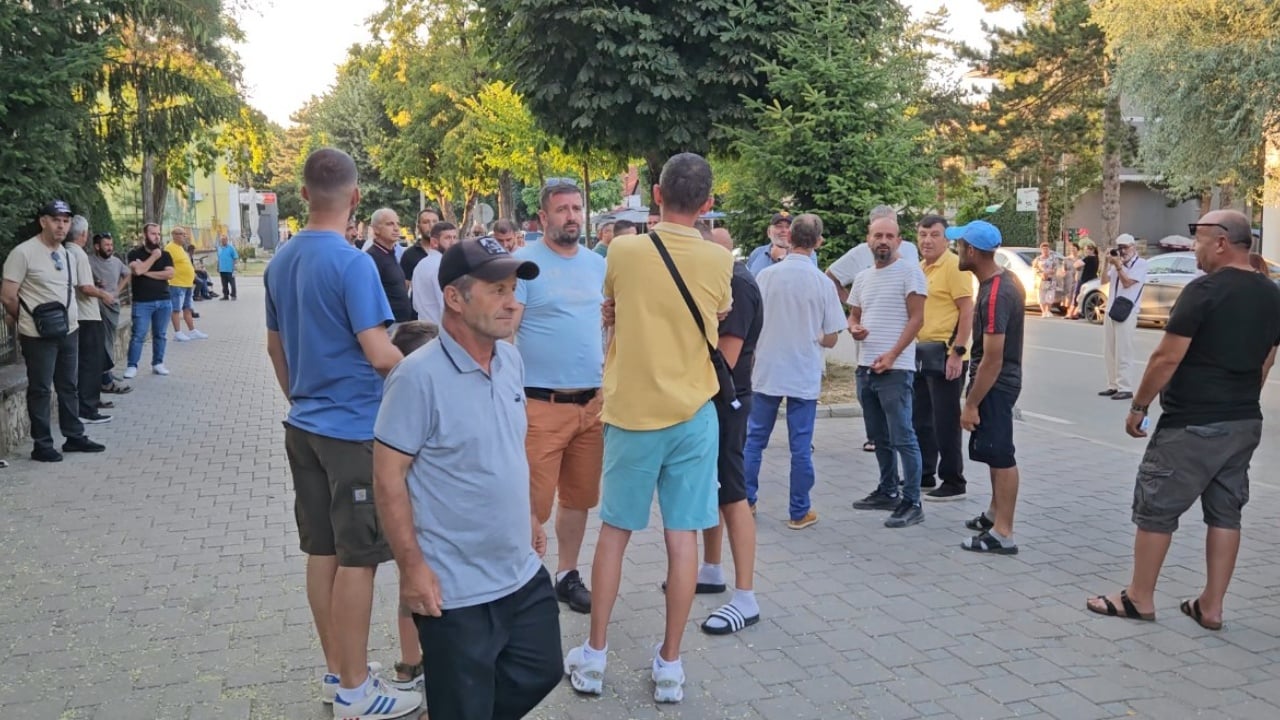
A protest was held in Maliq against the Socialist Party’s proposal for Territorial Reform, with residents and administration employees gathering in front of the municipality to oppose its dissolution. The reaction comes amid fears that such a decision would distance citizens from services and weaken investment in the area.
Open opposition in front of the municipality
The protest took place today in front of the Municipality of Maliq, where local residents and administration employees publicly came out against the proposed changes to the territorial map.
At the center of the opposition was the possibility of dissolving the Municipality of Maliq, a move residents see as the removal of a local structure they consider vital for everyday problems.
Fears over services and investment
Residents expressed concern that if the municipality is dissolved and its functions transferred to Korçë, the area could be left farther from public services and less included in investment.
According to opponents of the proposal, a municipality with 81 villages and around 31,000 residents cannot be easily annexed without concrete consequences for the community.
Political message from the protest
One resident also linked the opposition to political support, openly declaring dissatisfaction with the socialists and asking why citizens should have to go to Korçë when they have their municipality in Maliq.
This reaction shows that the debate over the “Territorial” reform is not being read only as an administrative issue, but also as a direct clash with the way decisions are being pushed from above.
Official position sought from the municipal council
Representatives of the municipal council said they had requested an extraordinary meeting to formalize their position against dissolving the Municipality of Maliq.
The move signals that the opposition is not remaining only at the level of a citizens’ protest, but is also seeking to take institutional form within local structures.
The protest in Maliq turns the debate over Territorial Reform into a concrete issue for citizens who risk losing close access to services.
Beyond political formulas, the opposition on the ground highlights the central question: who truly benefits from such an administrative redistribution, and who is left more vulnerable by it?