
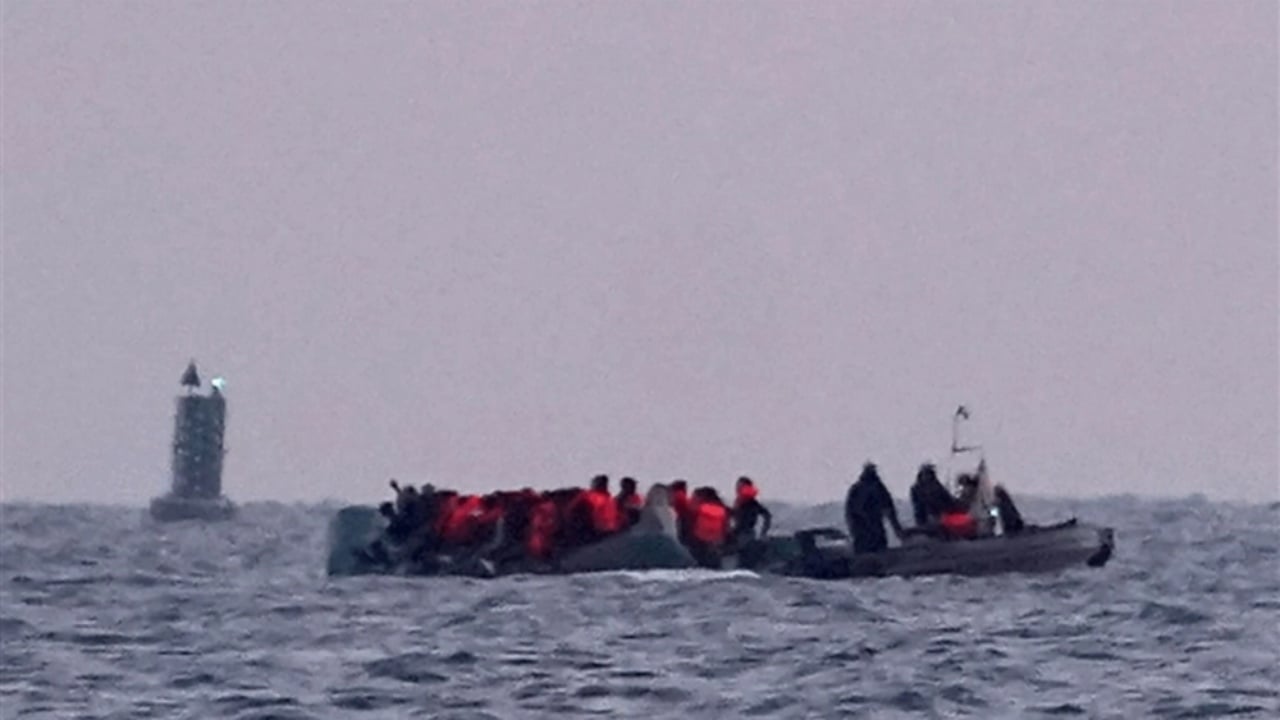
Another alert in the English Channel ended without casualties after a boat carrying migrants caught fire during an attempt to cross from France to Britain. According to the official account from French maritime authorities, 157 people were rescued in time by emergency teams.
The engine caught fire during the crossing
French maritime authorities said the fire broke out after the boat’s engine caught fire while the vessel was in the English Channel. According to them, the situation worsened quickly and required immediate intervention.
French and British coast guards took part in the operation, in another episode highlighting how dangerous these improvised journeys remain in one of the busiest shipping lanes in Europe.
157 rescued, five had been taken off earlier
According to data reported by the authorities, 157 people were rescued by emergency teams. Five others had been taken off the boat during Monday night.
So far, no deaths have been reported from the incident, while the full circumstances remain under investigation.
Departure near Boulogne-sur-Mer and monitoring by authorities
The boat had departed from the area near Boulogne-sur-Mer. According to the authorities, it was being monitored because of the high risk associated with illegal crossings in the English Channel.
This type of monitoring shows that such movements are known to be high-risk, but despite this, such attempts continue and expose hundreds of people to drowning, fire or collision at sea.
The toll in recent years remains heavy
Data from the Migration Observatory show that 162 people have died while trying to cross the Channel in migrant boats from 2018 to 2025.
This rescue avoided a fatal toll this time, but not the crisis that has been repeating for years in this sea corridor between France and Britain.
The latest incident ends without loss of life, at least according to the information so far from the authorities.
What remains unchanged is the extreme danger of these crossings and the inability of state mechanisms to stop a chain of events that continues to produce emergencies at sea.