
The United States has officially announced the approval of a $302 million loan agreement for Albania under the Foreign Military Financing program, FMF. According to the US announcement, the agreement has been ratified and signed by the Albanian side, and the funds are intended for the defense sector.
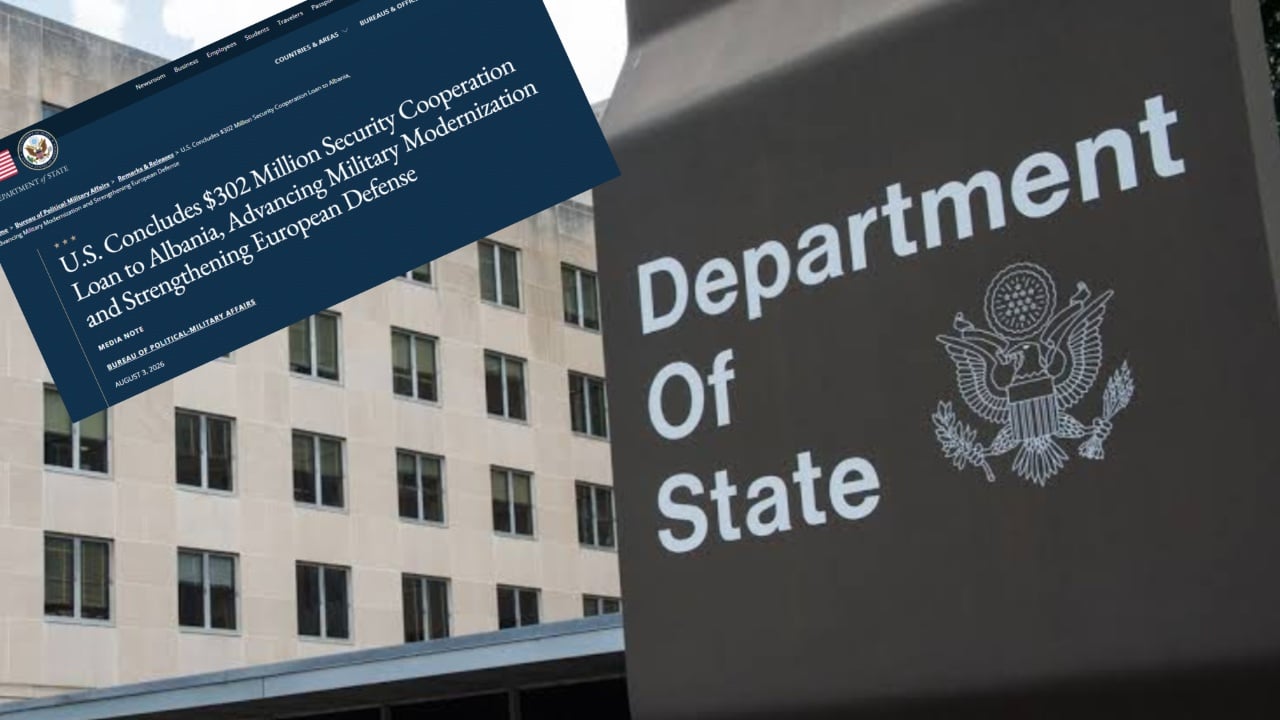
New loan for armament and modernization
According to the US side, the loan will be used to modernize Albania’s Armed Forces. The announcement says the funds will be used to purchase key capabilities originating from the United States.
The wording used by Washington presents the agreement as part of strengthening Europe’s defense capabilities, but at its core it is a new loan that adds to the Albanian state’s financial commitments in a high-cost sector with limited public transparency over concrete procurement priorities.
The Hague target and rising spending
According to the announcement, the agreement is linked to Albania’s efforts to meet the so-called Hague Defense Commitment, which foresees increasing defense spending to 5% of Gross Domestic Product by 2035.
This is an ambitious target with a direct impact on public finances. So far, no details have been made public in this announcement on how exactly this loan will translate into contracts, timelines, additional costs, or to what extent the burden will weigh on the long-term budget.
Strategic partnership, according to Washington
The US announcement presents the loan as part of the close strategic partnership between the United States and Albania. According to this version, Tirana is valued for cooperation on security and foreign policy issues as a NATO member state.
Along the same lines, the United States also highlights Albania’s role in international security structures, including participation as a founding member of President Trump’s Peace Board. This political positioning is mentioned as part of the broader framework of bilateral relations.
What is known so far
So far, public information remains limited to the official announcement on the ratification and signing of the loan. No further details have been given on the financial terms of the loan, the equipment to be purchased, or the procedures that will be followed for its implementation.
For an amount of $302 million, the weight of transparency becomes just as important as the security argument. In the absence of this data, the agreement remains more of a political and strategic signal than a clearly explained plan for the public.
The $302 million military loan agreement places Albania even more clearly on the path of increasing defense spending, in line with the targets announced by Western allies.
What is missing for now is a full explanation of how much this loan will actually cost the country and how its use will be justified to the public and the state budget.