
A commemorative ceremony for Major Abaz Kupi was held in Krujë with the participation of right-wing representatives, members of the Kupi family, and citizens. At the center of the event was a reassessment of his figure, while criticism was also voiced by the Democratic Party over the lack of institutional recognition.
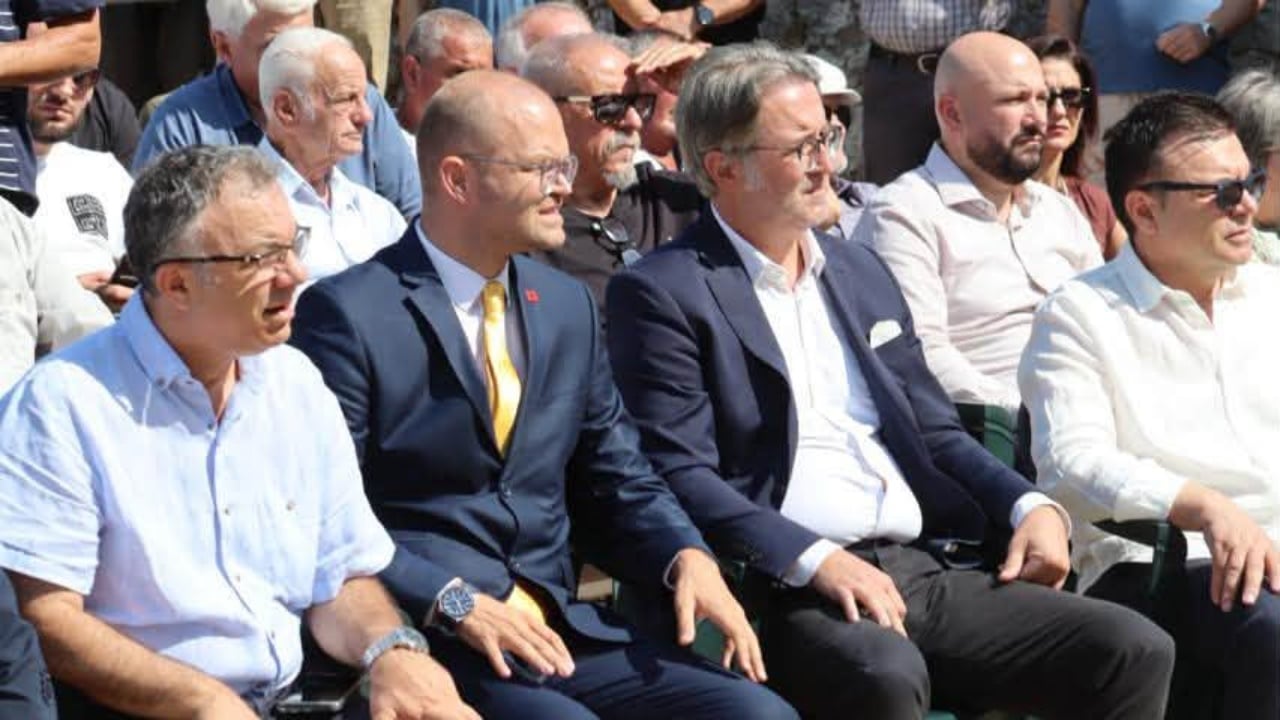
Ceremony for the figure of Major Abaz Kupi
The Democratic Party in Krujë organized the ceremony in honor of Major Abaz Kupi on the occasion of his birthday. The event was attended by right-wing political representatives, family members, and citizens.
During the commemoration, Abaz Kupi’s contribution to the history of Albania was emphasized, while his figure was presented as one of the names that, according to the organizers, has not received the attention it deserves in public and institutional memory.
Kalaja calls for greater institutional recognition
Through a post on social media, Democratic Party parliamentary candidate Aulon Kalaja called for Abaz Kupi’s figure to be treated differently by institutions. He proposed the erection of a statue in Krujë and a review of the way his role is presented in Albanian history.
Kalaja linked this demand to what he considers political neglect toward the city’s historical figures, arguing that Krujë honors its sons, but politics has not always done the same.
Political statement and comparison with the Serbian consulate
In his statement, Kalaja also used a direct political comparison, saying that Shkodër does not need the Serbian consulate, while Krujë needs a statue of Abaz Kupi. His statement shifted the tone of the event from ceremonial commemoration to a broader political and identity-based message.
He also added that, in his assessment, Abaz Kupi’s house in Western European countries would have been turned into a museum, raising questions about the way Albanian institutions administer and valorize historical heritage.
The debate over his place in history
Kalaja claimed that the anti-fascist resistance in Durrës was organized by Major Abaz Kupi and called for this role to occupy a clearer place in historical texts and in the education of younger generations.
His demand brings renewed attention to the long-standing debate over how politics and institutions choose which figures are officially promoted, which remain on the margins, and how much political convictions influence this filter.
The ceremony in Krujë once again brought the figure of Abaz Kupi to the center of discussion, not only as part of local history, but also as a name now used in a broader debate over historical memory and the standard of institutional recognition in Albania.