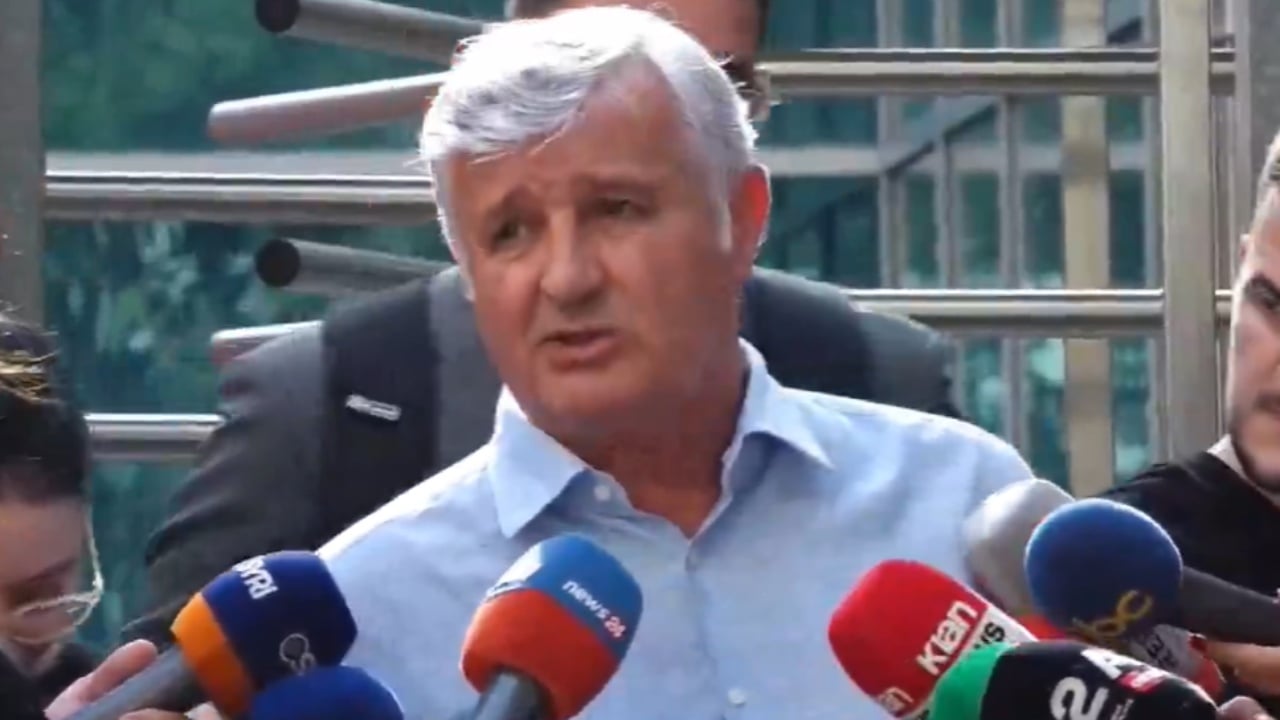
The Special Court has upheld the “arrest in prison” security measure against Ergys Agasi, despite defense objections based on the charges and evidence presented so far. After the hearing, lawyer Maks Haxhia said that one of the charges no longer stands, while raising doubts about the new passive corruption charge and the evidence that, according to him, is lacking.
Security measure remains in force
The GJKKO decision leaves in force the “arrest in prison” measure against Agasi, rejecting the defense requests at this stage of the proceedings.
After the hearing, public debate focused not only on the security measure, but also on how the charges are being presented and how well they are supported by evidence at this procedural stage.
Defense: unlawful deprivation of liberty charge no longer stands
According to lawyer Maks Haxhia, it was confirmed during the hearing that the charge of unlawful deprivation of liberty against his client no longer stands.
In its place, according to the defense version, a charge of passive corruption has been added, a move that is expected to be at the center of the clash between the parties as the proceedings continue.
Questions over the new passive corruption charge
On the new charge, Haxhia claimed that no evidence was presented at the hearing to show that Agasi received money or benefits in exchange for his influence.
This is the defense position at this stage. On the other hand, SPAK’s arguments and evidence on this charge are expected to be weighed as the judicial process continues.
Denials of involvement in AKSHI tenders
The defense also challenged claims of Agasi’s involvement in AKSHI tenders. According to Haxhia, his client did not take part in tenders, did not benefit from public funds, and had no financial relationship with former AKSHI director Mirlinda Karçanaj.
In a case where any mention of public tenders automatically generates high public interest, it remains essential for the charges and objections to pass the test of evidence in court, beyond post-hearing statements.
Debate also over the period when he was wanted
Another point raised by the defense concerns the period when Agasi had been declared wanted. According to the lawyer, this cannot automatically be read as evidence of a flight risk.
Despite these objections, the court decided not to change the security measure, while the defense has made clear it will continue its legal battle both over the measure and the charges.
In his statement after the hearing, Maks Haxhia insisted that his client was not part of the tenders and did not benefit from them.
For now, the GJKKO decision leaves the jail detention measure in force, while the real clash over the evidence and charges remains open in the next stages of the proceedings.