
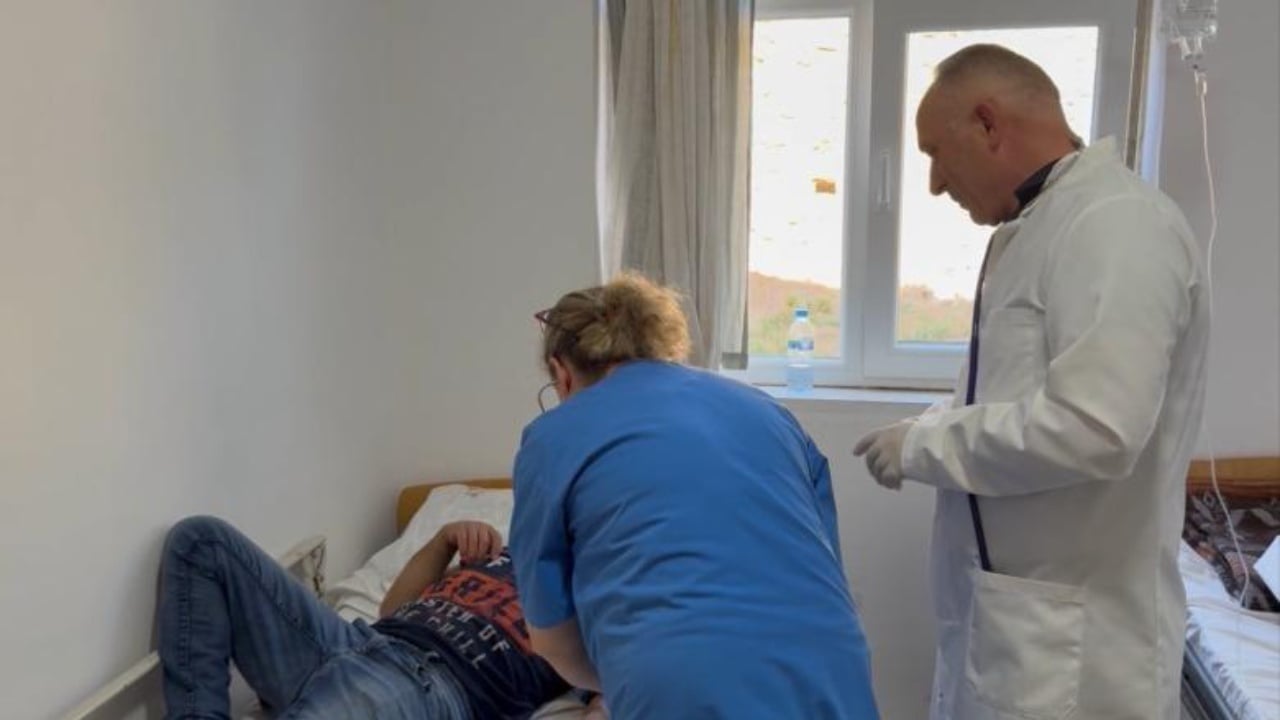
139 people sought medical help in Fushë-Arrëz with diarrhea, vomiting and fever, while a report by the Institute of Public Health links the incident to the drinking water system. The findings raise serious questions about water quality control and how disinfection of the network was administered.
What the report says about the reported cases
According to the ISHP report, during the period from August 24 to September 3, 2026, 139 people with gastrointestinal symptoms presented at the Fushë-Arrëz Health Center.
Of these, 128 cases, or 91.7 percent, are residents of Fushë-Arrëz, mainly concentrated in the “Demokracia” and “Nushaj” neighborhoods. All of those affected had diarrhea, 128 reported vomiting, and 81 had fever. The age groups range from 2 to 94 years old, indicating wide spread in the community.
Suspicion centered on the water supply network
The epidemiological investigation placed the water supply system at the center, as those affected stated that they consume water from the public network and are supplied by the same system.
During the same period, according to the report, the water supply was not continuous, but provided on a schedule. This detail makes the problem even more serious, as interruptions and restorations in the network are considered risk factors for compromising drinking water safety.
Tests found microbiological contamination at several points
Laboratory results identified microbiological contamination at several points in the supply system. At Reservoir No. 1, coliforms, E. coli and enterococci were found.
At one endpoint near the former park, coliforms, E. coli, enterococci and Pseudomonas aeruginosa were detected. These findings, according to the official version of the report, reinforce the suspicion that the common source of exposure was the drinking water network itself.
Problems also found with the chlorination agent
Another critical element in the report concerns the sodium hypochlorite used for water disinfection. Analysis showed that the active chlorine level was 9.04 percent.
The report states that the required limit is 13 to 15 percent, meaning the substance used did not meet the requirements for chlorination and disinfection of drinking water. This finding adds to suspicions of a lack of standards in a basic service with a direct impact on public health.
How ISHP classifies the incident
Meanwhile, 17 clinical samples taken from those affected tested negative for the bacterial and viral pathogens being sought, including Norovirus, Rotavirus, Adenovirus, Astrovirus and Sapovirus.
Despite this, ISHP assesses that the concentration of cases in the area supplied by the same water system, the impact across different age groups and the microbiological contamination found in the water are strong indicators of a common source of exposure. In conclusion, the report classifies the incident as a “waterborne outbreak” and links it to the incorrect implementation of hygiene-sanitary practices for drinking water safety.
The report recommends cleaning and disinfecting reservoirs and supply lines, strengthening chlorination, systematic monitoring of residual chlorine and ensuring safe alternative water supplies until the situation improves.
Beyond the recommendations, the incident raises a broader question: how was it possible for such a problem to affect 139 people before the condition of the network and shortcomings in disinfection became clearly apparent.