
The European Commission has unveiled a new package to prepare the European Union for enlargement with the six Western Balkan countries, including Albania. The document is presented as a policy review and as a signal for the next phase of the process, but it also shows that Brussels is considering stronger control mechanisms after accession.
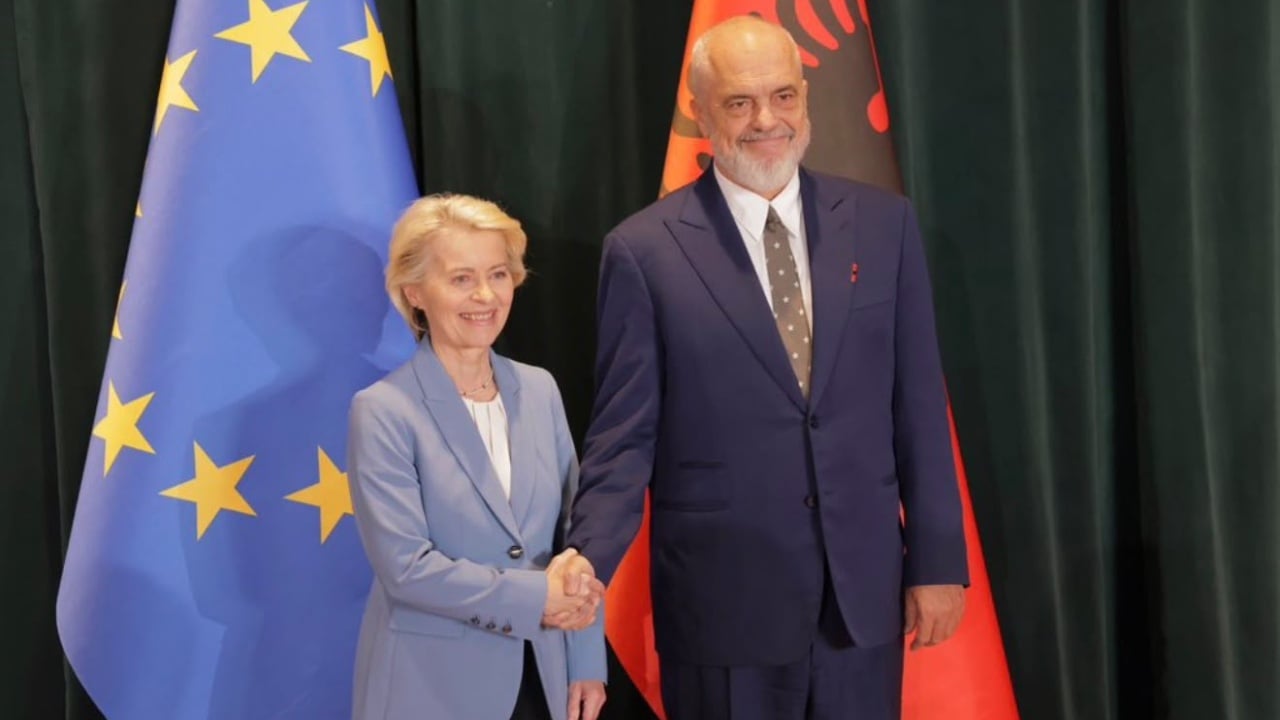
The European Commission’s new package
According to the European Commission’s announcement, the package published this Tuesday summarizes the policy guidance and actions considered necessary to prepare the union for future enlargement.
The focus is on the six Western Balkan countries, including Albania, and the document comes at a time when the accession process remains slow and conditional in several respects.
What the document contains
The Commission says the package provides an in-depth assessment of EU policies in light of future enlargement. In essence, it concerns how the bloc plans to adapt its rules and functioning before admitting new members.
The document also sets out how the existing Treaty framework, as well as future accession treaties, can be used to prepare the Union for a broader composition.
Stronger safeguard measures
One of the most important elements of the package is the proposal for safeguard measures in future accession treaties. According to the official version, these measures are intended to ensure that commitments made during negotiations do not remain only on paper after entry into the EU.
Among them are stronger sectoral safeguard measures, as well as a new institutional safeguard clause. This shows that enlargement is being treated not only as opening the door to candidate countries, but also as a process with additional filters and tougher oversight instruments on the part of the union.
What it means for Albania
For Albania, inclusion in this package means the country remains part of the EU’s enlargement map, but not that membership is near or guaranteed. The package speaks of preparing the union and of sustainable conditions after accession, suggesting that the process will continue with a high degree of political and institutional caution.
In practice, Brussels’ message appears to be twofold: the door remains open in principle, but the standards and verification mechanisms are expected to be strengthened even further.
The European Commission’s new package places the emphasis on enlargement, but just as much on control over how the EU will function with more members.
For countries such as Albania, this translates into a process that remains politically important, but still far from any triumphalist reading.