
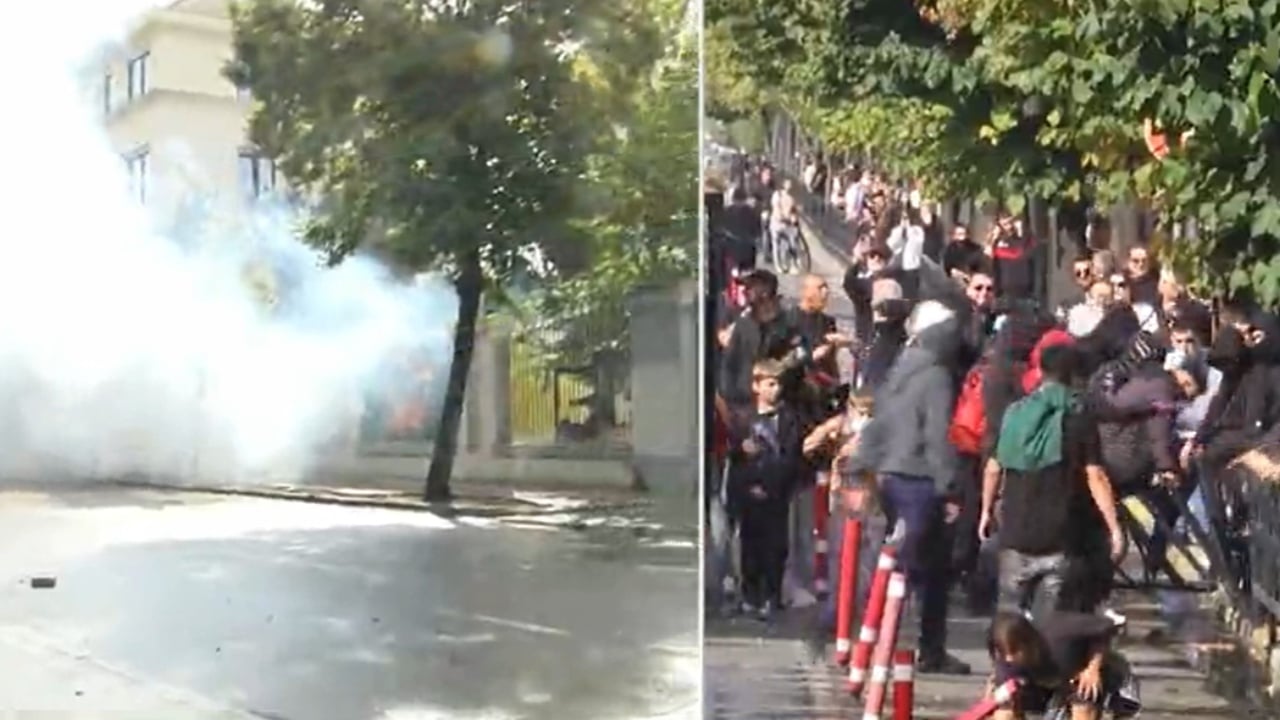
The student protest entered its third day this Thursday, with a boycott of classes in high schools and faculties in Tirana, as well as in other cities across the country. In the capital, the gathering began in the early morning hours in front of Parliament, in a tense situation after the events of the previous day.
The boycott spreads beyond Tirana
Pupils and students responded to calls for protest that circulated on social media. Besides Tirana, the boycott of classes has also been reported in several other cities, showing that the movement is not remaining confined to the capital.
The participation of high school pupils and university students in the same wave of protest is expanding public pressure, at a time when institutions are facing growing discontent and questions about how the situation has been managed.
The consequences of a day of tensions
Thursday’s protest comes immediately after Wednesday’s tensions in Tirana, where clashes, fires and material damage were reported on streets, at institutions and at businesses.
These episodes have further strained the atmosphere in the capital and increased concern about an escalation of the situation, while it remains to be seen how the authorities will respond to new crowds of protesters.
Parliament pulls back, session canceled
In a politically significant development, lawmakers canceled the plenary session scheduled for this Thursday. The decision comes on a day when public attention is focused on the student protest and the tensions created in the country.
The cancellation of the session is seen as a direct indication of the unusual political climate, while institutions appear to be moving under pressure from the situation on the ground.
Rama accuses the opposition and rules out resignation
After Wednesday’s protest, Prime Minister Edi Rama reacted by accusing the opposition of trying, according to his version, to block Albania on its path toward Europe. He also stressed that the country will not turn back.
Along the same lines, Rama made clear that he will not resign, shifting the confrontation onto the political plane as well. So far, the government has chosen to read the crisis mainly as a confrontation with its opponents, while the anger in the streets appears broader than a simple party-political narrative.
With the boycott expanding and Parliament withdrawing the day’s session, the student protest is entering a phase in which the political and institutional cost is becoming more visible.
Beyond official statements, what remains central is the fact that discontent has taken to the streets and is challenging the sense of normality that the government is trying to project.