
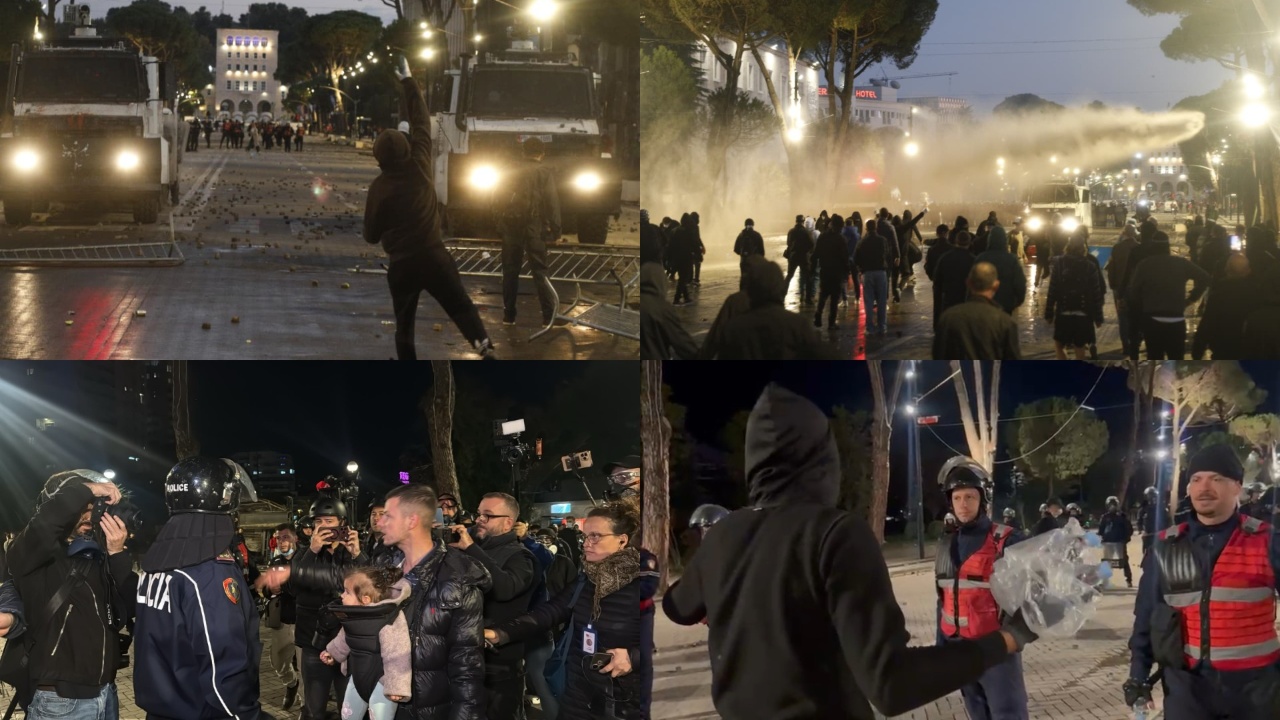
Corruption, the high cost of living and education, as well as the lack of prospects for young people, are being cited as the main drivers of the wave of discontent in the country. In this reading, the protests are not seen simply as a reaction of the moment, but as a sign of a deeper social and political crisis that could also produce costs for the European integration process.
Discontent that goes beyond a single cause
In a television interview, analyst Gabriel Partos said that behind the protests lies a combination of factors: corruption, high education costs, rising living costs, and the inability many young people see to build their future in Albania.
According to him, these elements have fueled a wave of discontent that is not limited to a single group, but more broadly affects the relationship between citizens and the way the country has been governed.
Students and the lack of prospects
Partos focused in particular on young people and students, whom he said face a heavy financial burden for education and uncertainty about the future after graduation.
He also linked this to the departure of young people abroad, placing the phenomenon of the so-called “brain drain” at the center of the debate over the lack of real opportunities in Albania.
Corruption as a persistent scourge
In his assessment, corruption remains a long-standing problem and one of the main sources of public mistrust. Although over the years there has been talk of efforts by justice institutions against corruption, public dissatisfaction, according to him, has not eased.
This is an indication that the official narrative on reforms and standards is not enough when citizens’ perceptions continue to be dominated by the cost of living, inequalities, and a lack of trust in institutions.
Political pressure on the government and rejection of the entire political class
According to Partos, the current protests constitute the biggest challenge for Prime Minister Edi Rama’s leadership during 13 years in power. He also assessed that the movement stands out not only for its scale, but also for the violence displayed.
At the same time, he stressed that the discontent has not been directed only at the ruling majority. According to him, the protest has also shown rejection of the opposition, making it a broader reaction against the political class that has dominated the country in recent decades.
Risk to the path toward the European Union
Partos also raised the alarm about the effects this situation could have on the objective of membership in the European Union by 2030. According to him, there is a risk that the process could be hindered or delayed.
He also referred to the position of the EU delegation on the need for order and the law to be enforced proportionately. In this context, the message remains clear: Albania is not measured only by political promises of integration, but by its ability to guarantee the rule of law, curb corruption, and manage crises without exceeding the limits of force.
Partos’s warning comes at a time when social tension is also being read as a test of the country’s institutional resilience.
If the grievances related to corruption, the cost of living, and the lack of prospects remain without a convincing response, the political cost may not remain only within the country, but could also affect Albania’s European ambition.