
Tirana entered the seventh day of the protest that began on October 13 with students and later expanded with the participation of other citizens. At the center of Monday’s developments were the gathering in front of the Ministry of Education, tensions with police, and the sharp political clash accompanying the events.
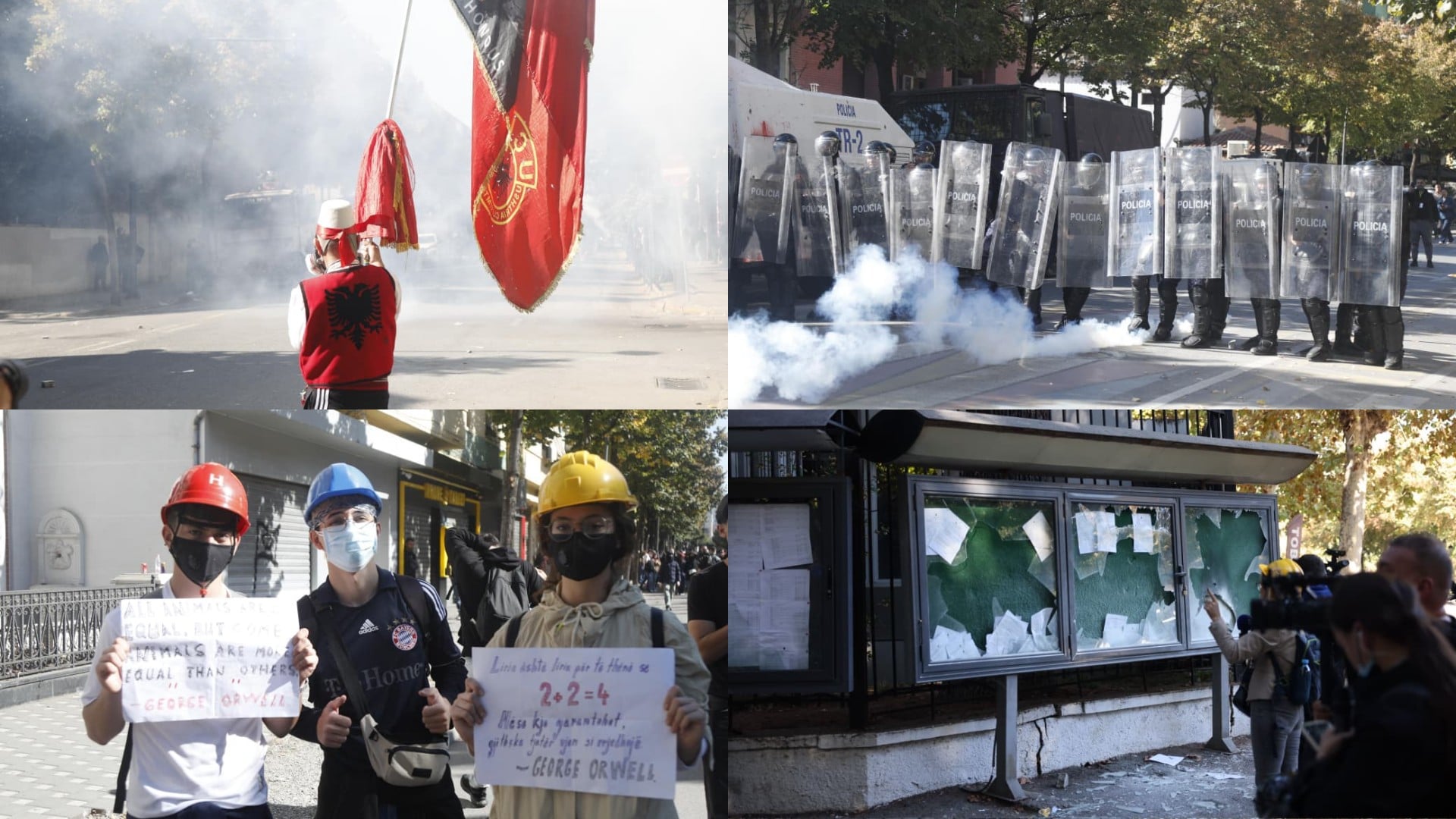
The gathering again began at the Ministry of Education
As on the previous day, protesters gathered in front of the Ministry of Education, where the protest initially was accompanied by songs and dancing.
The rally comes after several days of escalation in Tirana, while the official version has described the protest as violent. Meanwhile, tensions on the ground and police intervention to disperse protesters were reported.
Rama hardens his tone toward protesters and the opposition
Before the gathering began, Prime Minister Edi Rama reacted publicly again, warning that parents would be held responsible for damage caused by minors taking part in acts of violence during the protest.
In the same reaction, Rama accused the Democratic Party of sheltering masked protesters and linked the situation to a climate of political incitement. These are claims articulated by the head of government at a time when tensions in the streets are also being used as a weapon in the clash between the sides.
Political response from Berisha
On the other side, Sali Berisha also reacted, declaring that Sali Berisha himself is the cause of the violence.
The statement comes in a heated political climate, where each side is trying to impose its own version of responsibility for the escalation of the protest.
Clashes spread beyond Tirana, incidents in Kurbin
The protest did not remain only in the capital. Its expansion into several districts was accompanied by incidents, while the most serious reported case was in Kurbin.
There, according to published information, Molotov cocktails were thrown toward the Municipality building, causing flames at the entrance to the building.
The seventh day of the protest confirmed that the situation remains tense, with clashes on the ground and political language that is growing harsher in parallel with developments in the streets.
Amid official reactions, mutual accusations, and police interventions, the main question remains whether the institutions will provide real solutions or continue to address the crisis only through pressure and political narrative.