
The protest by students and lecturers once again moved to central Tirana, this time with open tension outside the Prime Minister’s Office. What the government presented as an invitation to “dialogue” was demonstratively rejected by the protesters, who tore up the papers placed on the chairs and knocked them over onto the boulevard.
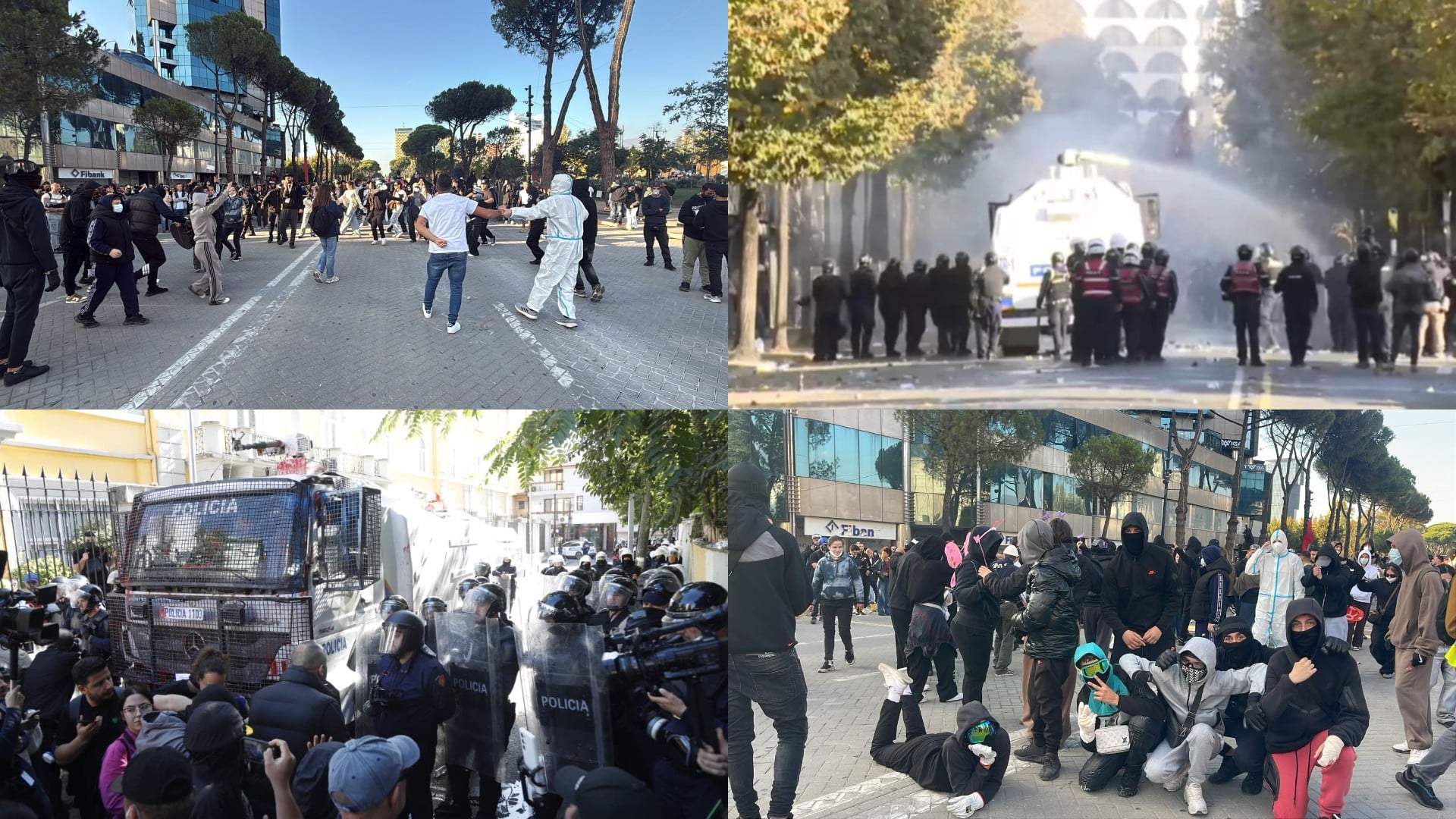
Chairs placed by Rama became a flashpoint
In the morning, several chairs were placed outside the Prime Minister’s Office building, each with a paper bearing the message “dialogue.” The gesture was presented by the government as a sign of openness toward the protesters.
As the protest began, students marched toward the Prime Minister’s Office and immediately reacted against what had been staged at the entrance to the institution. They tore up the papers and knocked over the chairs, publicly rejecting the formula offered by the majority.
Verbal confrontation with the head of the MIA
During the protest, there was also a confrontation with Manjola Hasa, director of the Media and Information Agency. According to the official version conveyed by her, she was there to receive the demands of students who wanted to speak with the prime minister.
Hasa said the prime minister is open to dialogue and that anyone who wants to speak is welcome. But on the ground, protesters did not receive that line as a real solution.
Direct accusations of police violence
One of the protesters demanded answers from the government representative over claims of violence exercised by police against unidentified students. The reaction clearly showed the protesters’ distrust of calls for dialogue, at a moment when, in their view, the clash with uniformed officers was the first issue requiring answers.
This shifts the debate from political symbolism to institutional responsibility: not simply whether there will be talks, but in what climate they are being sought and who bears responsibility for interventions on the ground.
Message from the majority and an attempt to control the narrative
On the same day, another political tone also came from the government camp. After the meeting of the Socialist Party parliamentary group, Taulant Balla reacted to the violent protests with the statement that “the blood of police officers is the blood of the state” and that minors should not be used as “cannon fodder.”
This kind of framing from the majority seeks to shift attention from the causes of the protest to public order and the clashes in the street. However, on the ground, the tension outside the Prime Minister’s Office showed that the crisis is not being defused by symbolic messages or one-sided invitations to dialogue.
Scenes from the boulevard made it clear that the confrontation between protesters and the government has entered a phase in which political gestures are no longer producing trust.
The rejection of the “dialogue” chairs was read as a direct response to the way the authorities are trying to publicly manage the protest.