
Discontent over schools, rents, wages and prices is no longer just a matter of statistics. In several European countries, thousands of citizens, especially young people, have taken to the streets to oppose what is seen as a failure of public policies on education, housing and coping with daily living costs.
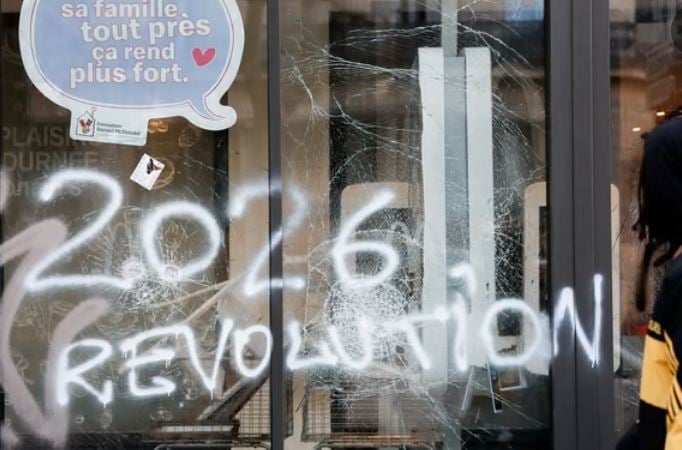
France: anger starts in schools and spreads to prices
In France, high school students have protested over a lack of teachers, poor conditions in schools and difficulties with university admissions. Other citizens have also joined the protests, opposing rising prices, especially fuel prices, and worsening economic conditions.
One of the country’s largest unions, the General Confederation of Labour, has backed these movements by calling for lower prices, higher wages and improved pensions. For its part, the French government has announced the deployment of 3,000 substitute teachers in response, a measure that comes amid growing pressure on the education system.
Spain: the housing crisis turns into a social revolt
In Spain, the focus of the protests has shifted to housing. Activists have demonstrated against rising rents and evictions, calling for a price freeze and greater protections for tenants.
Discontent deepened after the case of an 87-year-old woman who was evicted from her home after the investment fund that owned the property raised her rent by 230%. She died two weeks later, after being admitted to hospital.
Pedro Sánchez’s government tried to pass emergency housing measures, including limiting evictions and regulating short-term rentals, but the initiative did not receive the necessary support in parliament. Activists have warned that protests will continue and have called for a general strike on November 11.
Portugal and Italy: from unaffordable homes to street clashes
In Portugal, hundreds of citizens gathered in Lisbon to protest against high housing prices. According to official data cited in the report, property prices doubled from 2015 to 2024, at a pace around twice as fast as the European Union average.
In Italy, economic discontent has taken a harsher form. In Milan, Turin and Bologna, unrest has been recorded, with reports of clashes with police, stones and other objects being thrown, and barricades being set on fire.
In response to the situation, the Italian government is considering new security measures, including sending an additional 500 military troops to Milan.
Albania also on the map of discontent
The protests have also reached Albania, where demonstrations against Prime Minister Edi Rama have continued for several days. At the center of the discontent are perceived corruption, a lack of jobs, problems in the education system, and tensions surrounding economic developments and major construction projects.
Although the causes vary from one country to another, the broader picture remains the same: a higher cost of living, public services under pressure and growing distrust over how institutions are addressing these crises.
In some cases, the protests began peacefully but were later accompanied by violent clashes, looting and property damage, sharpening the confrontation between citizens and the authorities.
What is being seen in several European countries does not appear to be an isolated outburst, but rather a sign of a broader social crisis, in which education, housing and economic affordability are becoming a direct test for governments.