
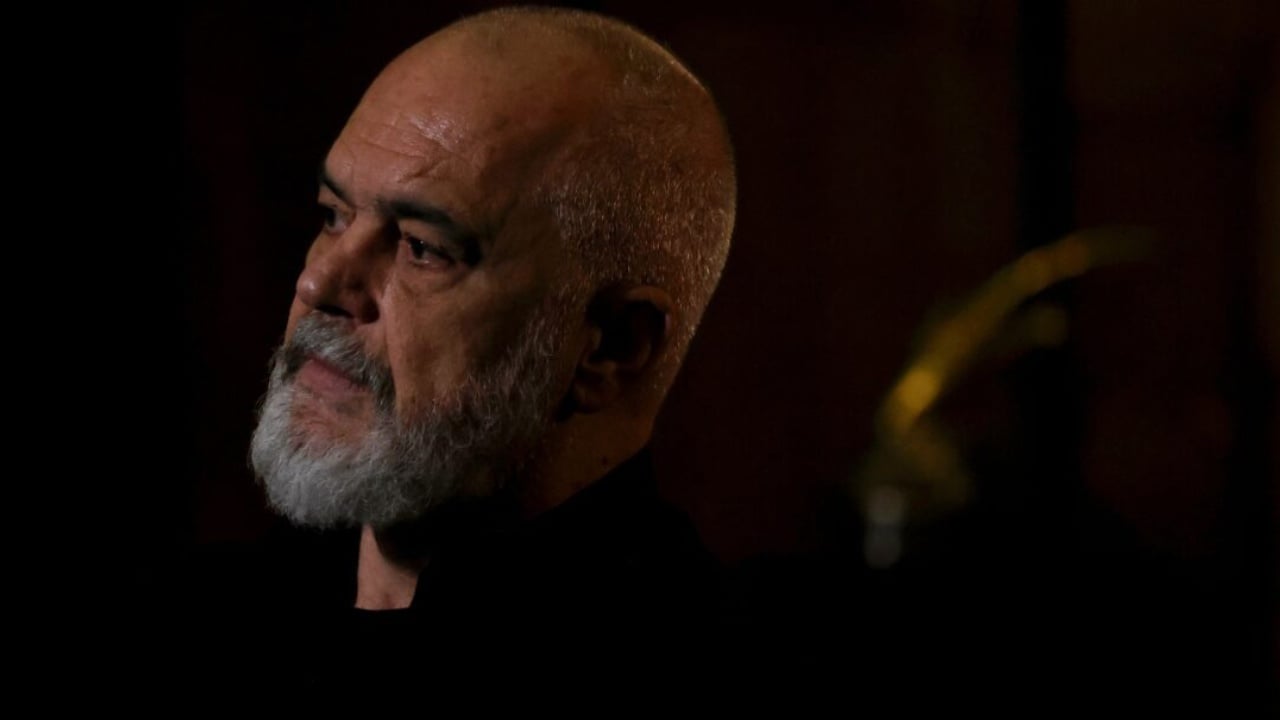
Prime Minister Edi Rama has ruled out resigning amid political tensions and recent protests in Tirana, presenting demands for his departure as legitimate only within the rules of democracy. In an interview with Greek outlet Kathimerini, he said governments are changed by vote and not, in his view, through violence in the streets.
A firm message on leaving office
Rama said he has no intention of stepping down from his post, despite the pressure created by protests in the capital in recent weeks. He insisted that calls for his resignation are a normal part of political life, but rejected any attempt to impose it through an escalation of violence.
According to the prime minister, the mandate he received from the most recent elections remains the basis of his political position. In the same vein, he presented his stance as a defense of democratic order rather than a concession to pressure from the street.
The distinction Rama makes between protesters
In the interview, the head of government drew a distinction between students and citizens seeking more opportunities, better education and a lower cost of living, and people who, he said, are using the protest for political objectives.
He focused in particular on protesters with covered faces, claiming that among them are individuals linked to the Antifa movement. This remains an accusation voiced by Rama in the interview, without being accompanied here by evidence or additional details.
He acknowledges grievances, but points back to the budget and dialogue
In response to questions about education, corruption and the cost of living, Rama acknowledged that the concerns of young people are real and that not everything in the country has been done properly. He said these demands require substantive answers, not simply political justifications.
According to him, the 2027 budget will include additional measures for families, students and public services. Rama also said he has invited students and lecturers to an open dialogue, expressing readiness to consider serious proposals, including from the government’s harshest critics.
Corruption, justice and the government’s narrative
On the issue of corruption, Rama said the fight against it falls under the authority of justice institutions. With this wording, the political responsibility for one of the most sensitive public issues is shifted to the justice system, while the government keeps its distance from demands for direct accountability.
In the end, he repeated that his duty is to listen to well-founded concerns, protect citizens’ rights and continue working for Albania’s integration into the European Union. But the main message of the interview remains political: Rama does not accept violent protest becoming a mechanism for changing power.
The interview comes at a time when the government is facing strong public discontent over the cost of living, education and the political climate in the country.
Rama’s position makes it clear that, at least according to the government’s official line, there is no room to discuss his departure from office outside the electoral process.