
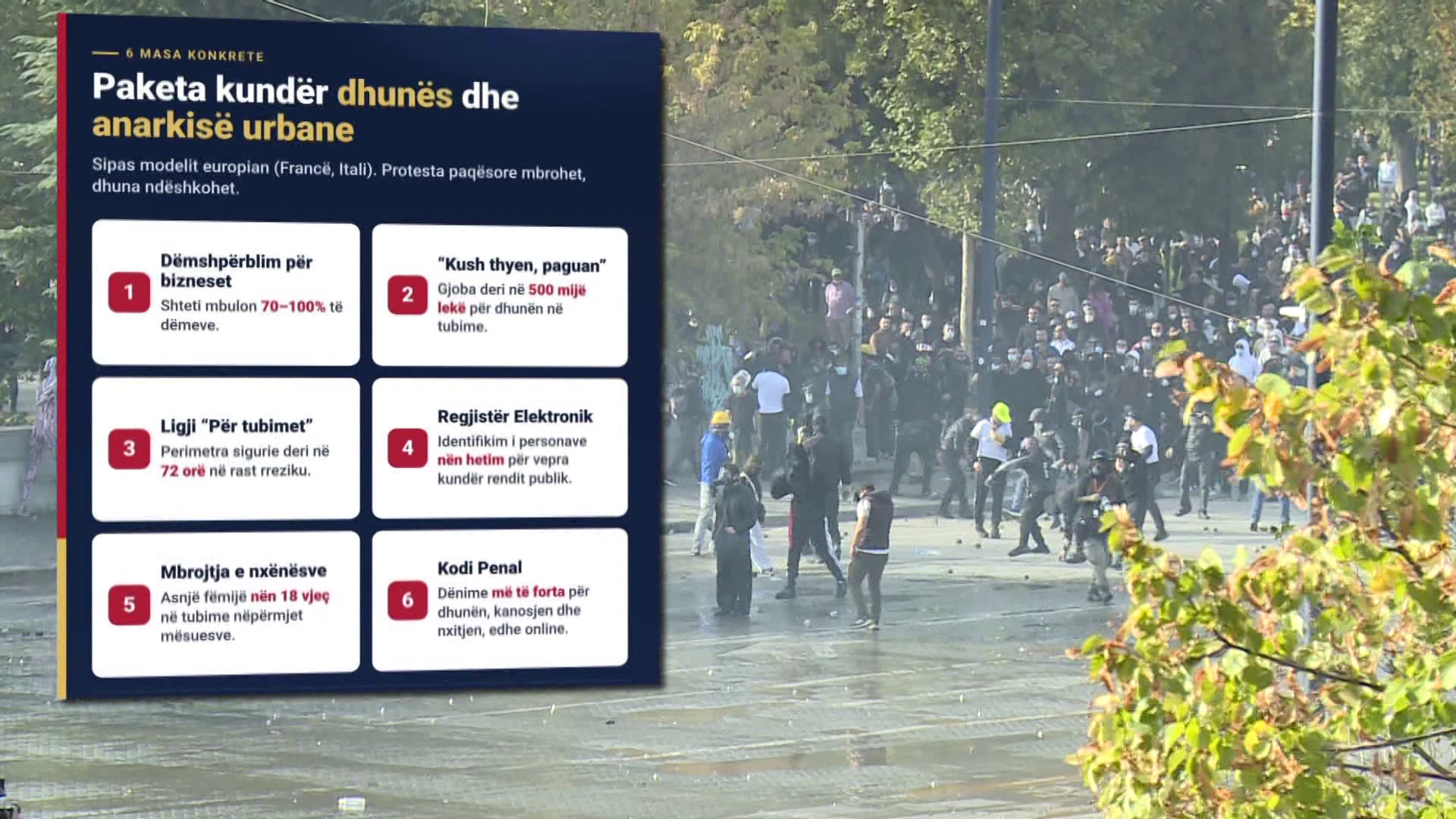
The government is making a two-track move that raises political and legal questions: on one hand, it has strengthened its punitive approach to assemblies through the anti-violence package, while on the other it has opened for consultation a draft that, according to the official version, aims to protect public participation from unfounded lawsuits and abusive court proceedings.
Justice Ministry draft opens for consultation
The draft law has been opened for public consultation by the Ministry of Justice, as part of the alignment of Albanian legislation with European legislation. According to the government, the initiative aims to protect freedom of expression and public participation in matters of public interest.
At its core, the draft addresses the use of courts as an instrument of pressure against critical voices, a practice that can produce self-censorship even when cases do not end in the plaintiff’s favor.
Not only the media, but also citizens who protest
The scope of protection is not limited to journalists or media entities. According to the draft, protection also extends to activists, researchers, academics and citizens who engage publicly, including those who protest.
The definition of public interest is presented broadly and includes fundamental rights, public health, security, the environment, climate, corruption, fraud, criminal offenses, administrative violations and issues related to the functioning of the rule of law.
What measures are envisaged against unfounded lawsuits
According to the draft, the court may intervene to dismiss manifestly abusive lawsuits at an early stage. It also provides for the plaintiff to bear court costs and compensation for damages when the proceedings are deemed to be a means of pressure against public participation.
Another element is a fine for the plaintiff, from 50,000 to 300,000 lek, on the grounds that not only punishment is needed, but also a deterrent effect to curb the repetition of such practices.
The chilling effect even without a final ruling
The logic of the draft rests on the idea that harm to freedom of expression comes not only from a court ruling, but also from the process itself: cost, duration, procedural burden and reputational consequences.
It is precisely this chilling effect, according to the reasoning of the draft law, that may affect not only the person being sued, but also anyone else considering speaking out, reporting wrongdoing or taking part in public debate on issues of public interest.
The draft opens an unavoidable debate on the coherence of the government’s approach to freedom of expression and protest.
If one hand promises protection from lawsuits that silence criticism, while the other tightens the rules on assemblies, it remains to be seen how real this guarantee will be in practice and not only in the text of the law.