
A fierce debate over protests, political responsibility and relations between generations erupted in the studio of the program “Topin e kam unë,” where Nora Malaj and Ilir Demaliaj faced young people who openly opposed their positions. At the center of the clash was not only the reading of the social and political reality, but also the direct accusation that critical voices in the studio were relativizing poverty, police violence and the government’s responsibility.
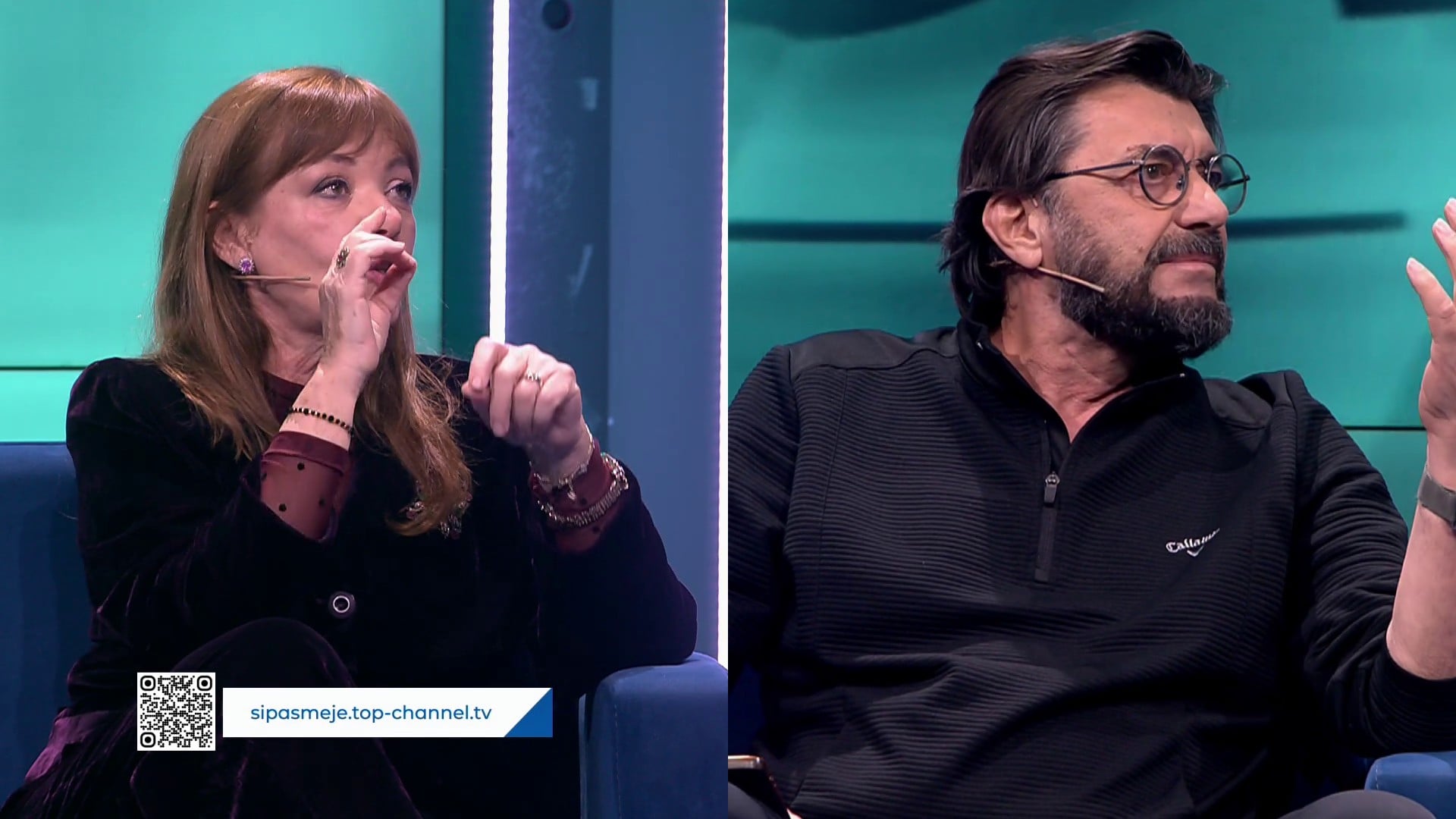
Malaj: Our generation left the country in transition
Nora Malaj admitted in the studio that her generation bears heavy responsibility for the way the country’s political system has ended up. She called it a “fault,” not simply a “mistake,” that Albania, according to her, remained in transition for 36 years and failed to build a functioning state.
Malaj also brought up her personal experience from the clashes of the difficult years, recalling tear gas and the chaos of 1997. In her argument, the failure to close the transition and political fear produced a distortion of the system, while citizens’ withdrawal from voting paved the way for the concentration of power in a single force.
Young people object: Poverty and violence are being relativized
The most heated part of the debate came when the young people on the panel strongly challenged the way political developments and the protests were being interpreted. Artemisa spoke about scenes of poverty and police violence, accusing the panelists of maintaining a defensive line toward the Socialist Party.
According to her, social problems cannot be denied, nor can responsibility be shifted onto citizens who are protesting. Danjeli reacted along the same lines, mocking the approach to “likes” and influence on social media, while drawing attention to the government’s mass political communication on online platforms.
Demaliaj clashes with Kejdi
Ilir Demaliaj had direct exchanges with Kejdi, labeling her an “influencer” and accusing her of using the debate for the benefit of her public profile. He also said that others do not know who pays him and stressed that he has not been in Albania for 35 years.
Kejdi replied that the expectation had been for a debate between generations, not a confrontation with people who, according to her, defend Edi Rama. The debate escalated further when Demaliaj told her that he had seen her earlier on the program and that she seemed to think very highly of herself.
Debate representative of a polarized climate
The moderator intervened after the tone of the discussion clearly sharpened. She asked that the clash remain focused on arguments rather than personal insults, recalling that public debate presupposes disagreement, but not silencing others.
Beyond the raised voices, the confrontation in the studio highlighted a real gap between generations in the way the transition, the protests and relations with power are interpreted. On one hand, the failure of the old elites to build a system was acknowledged; on the other, suspicion was raised that part of the public debate continues to move within frameworks that serve those in power.
The debate ended without common ground between the sides, but with a clear message: dissatisfaction with the transition, distrust toward politics and suspicion toward public voices remain open issues in Albanian society.
When discussion about protests and political change slips into personal labeling, the crisis of representation that many young people openly articulate today becomes even more visible.