
The leader of the Democratic Party, Sali Berisha, has made political accusations over the way the protest in Tirana was used, according to him, to strike the opposition. In his version, after the civic movement began, there was an attempt to introduce a scenario to weaken the DP and build up a controlled opposition.
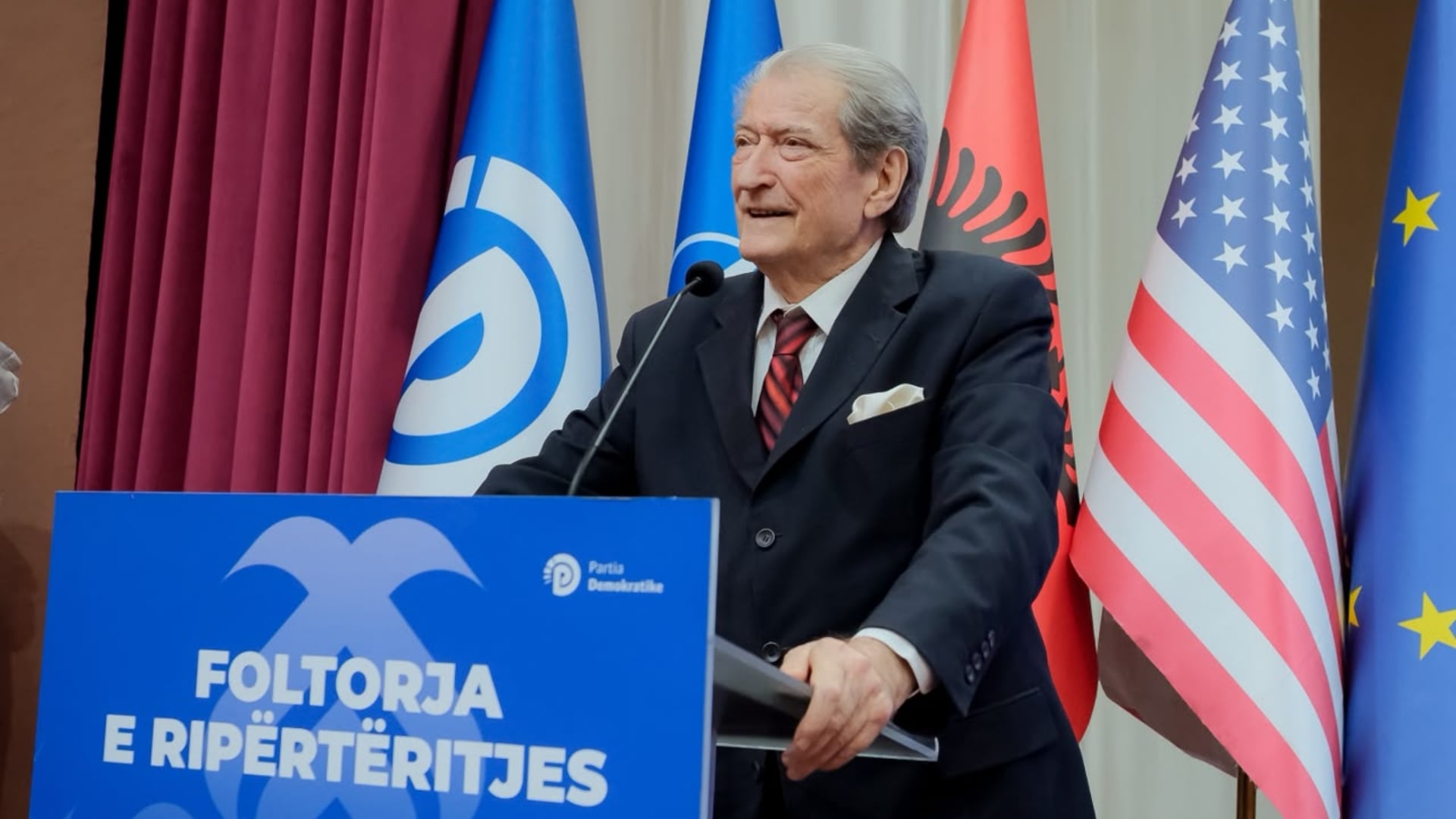
Berisha speaks of attempts to replace the opposition
In a public statement, Berisha said that political opponents and people he described as enemies of the Albanian opposition sought to replace the Democratic Party with a controlled opposition.
He also mentioned Prime Minister Edi Rama, linking this, according to him, to a scenario designed to weaken the real opposition in the streets and squares. These remain political accusations made by the head of the DP, with no other elements presented publicly in this statement.
The claim about slogans against Rama and Berisha
Berisha said that chants such as “Rama in prison, Berisha in prison” and accusations against the Democratic Party as a “sold-out party” were part of an attempt to strike the DP.
According to him, these messages were not spontaneous, but directed in order to create the perception that the opposition should be bypassed or replaced. He presented this as a direct clash with the Democratic Party, not simply as political criticism of it.
How the DP presents its role in the protest
Berisha stated that Democrats supported the protest and, according to him, after the first days they became the numerical majority in the square.
He insisted that the DP’s position was to stand by citizens without setting conditions and without trying to take control of the protest. At the same time, he said that other parts of the movement that attacked the DP were regarded by him as open opponents of the party.
Between support for the protest and harsh political language
Berisha’s statement tries to maintain two lines in parallel: support for the protest and for citizens on the one hand, but strong language toward those who, according to him, tried to turn the protest into a tool against the DP on the other.
In essence, the opposition leader is reading that episode as a battle for control of the narrative and opposition representation, presenting the Democratic Party as the target of an organized political blow.
Berisha concluded his position by emphasizing that the DP, according to him, did not withdraw from the protest even when it faced chants against it.
The statement comes in a tense political climate, where protests and the representation of civic discontent remain a key arena for clashes between the opposition, the majority, and other political actors.