
An unusual security procedure was reported aboard Air Force One after Donald Trump’s visit to China, where phones used during the stay were isolated in signal-blocking bags. The version made public links the measure to the risk of electronic espionage and device compromise.
Phones were collected after departure from Shenzhen
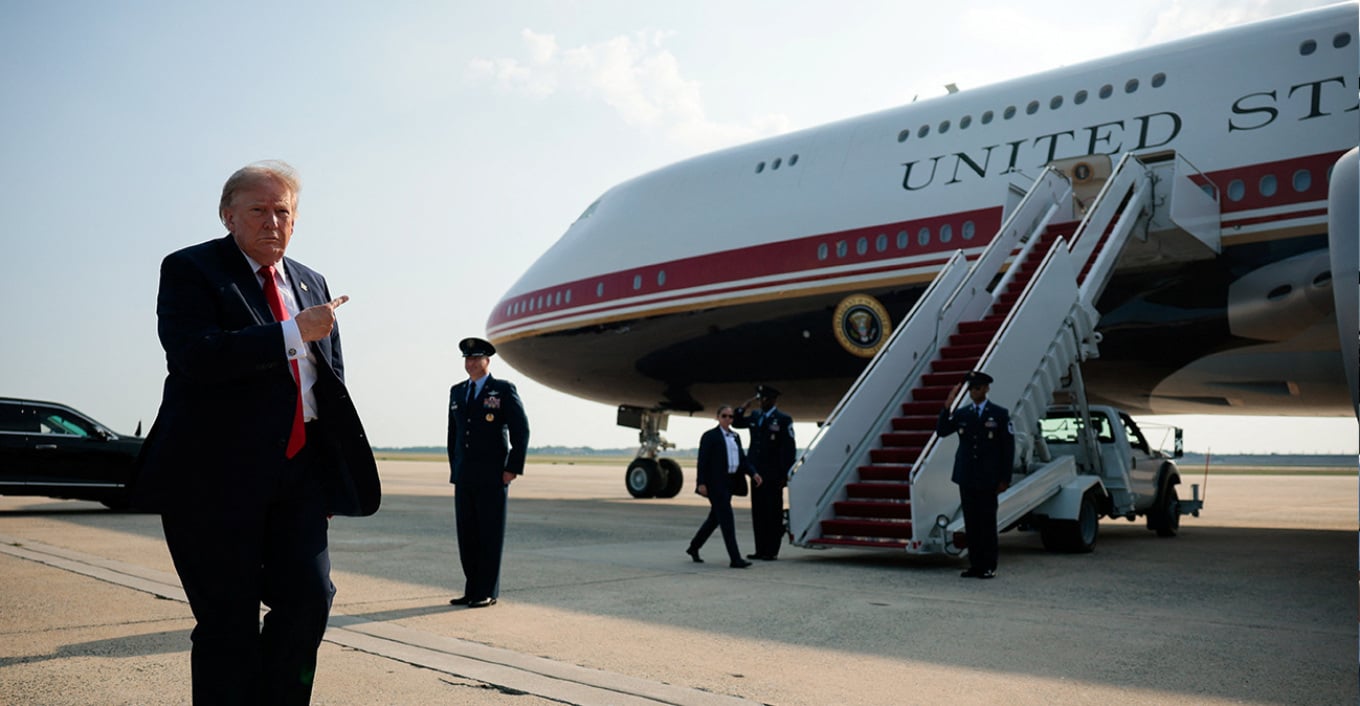
According to reporting by the Jerusalem Post, the measure was applied during the U.S. president’s return flight from China. At first, the move prompted speculation about a possible change in itinerary or an unplanned stop by the presidential aircraft.
Later, CBS White House correspondent Jennifer Jacobs clarified from aboard Air Force One that it was a preventive security procedure, not a new development in the itinerary. According to her, immediately after the plane took off from Shenzhen, a crew member collected the backup phones that officials had used during their stay in China.
The devices are expected to be wiped or destroyed
According to this report, the phones used during the visit were to undergo a process of data wiping or destruction. This indicates the high level of distrust that accompanies such trips, especially when the concern is related to possible access to sensitive information.
The official claim is that the measure falls within protocols for protecting information and minimizing the risk of cyber interference on devices that had been active during the visit.
Reporters were required to place their phones in blocking bags
Reporters accompanying the delegation were also asked to place their phones in special Faraday bags, designed to block electromagnetic signals and cut off connections to external networks.
According to the published information, the devices could be retrieved only after arrival in the United States. For those who had used their regular phone during their stay in China, this meant no access until the end of the journey.
Not all devices were treated the same
The report clarifies that the measure did not include every device aboard Air Force One. Exempted were devices that had been placed earlier in protective cases on the plane, before arrival in China.
During the visit, some reporters and photojournalists had avoided using personal phones, laptops or smartwatches, keeping them switched off and isolated. Some had brought backup phones for use only during the stay, which allowed them to return to their personal devices on the return flight.
In essence, the case shows that even when trips are presented as routine state missions, the real level of technological insecurity remains high.
The measure taken aboard the U.S. presidential aircraft makes it clear that fears of electronic surveillance and data collection are not being treated as a theoretical scenario, but as a concrete operational risk.