
The clash within the Socialist Party has entered an open phase, as Elisa Spiropali, just one day after being expelled from the parliamentary group, publicly came out against the party leadership and Edi Rama himself. She described the decision against her as illegitimate, refused to give up her parliamentary mandate, and called for the opening of a race for the leadership of the SP, targeting what she said was a model of concentrated power that has dominated for years.
The expulsion, the mandate and the political challenge to the SP leadership
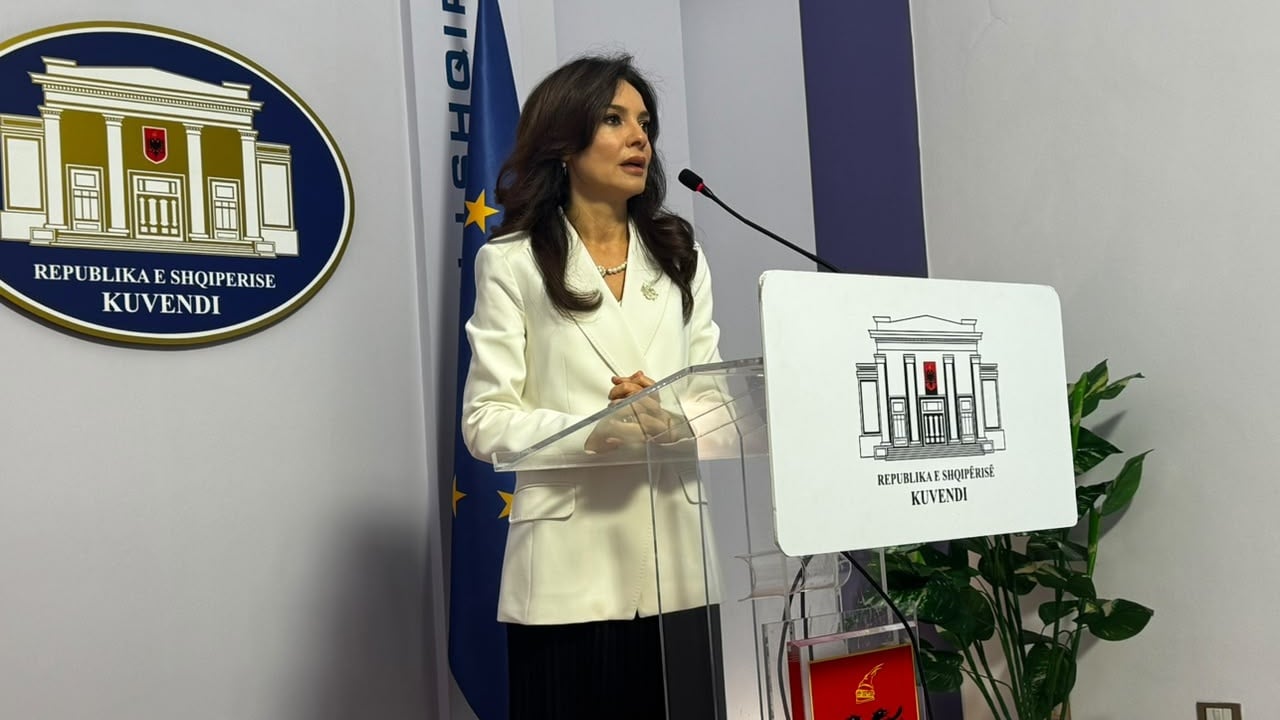
Spiropali said she will not withdraw from her mandate as an MP, despite the decision to remove her from the Socialist parliamentary group. Speaking to the media, she presented the expulsion as an act without legitimacy and turned her response into a direct challenge to the party’s top leadership.
She called for the SP to open a contest for the party leadership after 17 years, arguing that there cannot be an “eternal chairman.” At the center of her message was opposition to a structure in which, she said, party power, government power and decision-making have been concentrated in the hands of one man.
Accusations of a closed procedure and a decision made without hearing her side
According to Spiropali, the decision to expel her was made without a vote in the National Assembly and without giving her the opportunity to present her position, even though, as she said, some Socialist colleagues had requested this. The accusation raises questions not only about the procedure, but also about how the forums of a political force that for years has spoken about standards and representation actually function.
In her statements, Spiropali presented the process as a sign of fear of a critical voice within the party and said that women cannot be used as a façade during campaigns only to then be left out of real decision-making. She compared the way the decision was made to arbitrary practices in closed meetings, significantly sharpening her tone toward the SP leadership.
A political “decoration” and acceptance of responsibility for the model created
Spiropali said that the fact that she is, in her words, the first woman in 35 years to be expelled from the SP is something she takes as a political “decoration.” The statement seeks to turn the expulsion from an organizational blow into personal political capital, at a moment when the clash with the leadership appears to be going beyond an ordinary conflict within the group.
At the same time, she acknowledged that she bears her share of responsibility for consolidating the current model, admitting that she too contributed to the extreme concentration of power. This is one of the strongest political elements of her appearance, because the criticism of the system comes from a figure who has been part of it at high levels.
Balluku as a “victim” of the system and the attack on the model of governance
At the press conference, Spiropali also mentioned Belinda Balluku, for whom she expressed regret and said she sees her as a victim of the same model of power, not as an exception to it. According to her, the problem does not simply lie with the names that emerge on the front line of the conflict, but with a mechanism that sets individuals against one another in order to keep power standing.
She argued that the current system has produced a lack of oversight, the exclusion of Socialists from decision-making, and a distortion of the SP’s political legacy. Along these lines, Spiropali called for the “uprooting” of the current model of governance, saying the party should not be mobilized to defend decisions in which the membership and structures have had no real role.
Beyond the personal conflict with the SP leadership, Spiropali’s statements expose a broader crisis over how decisions are made within the majority. When accusations of arbitrariness, closure and concentration of power come from within the ruling camp itself, the political cost does not remain merely individual.
It remains to be seen whether her challenge for a party race will produce real debate within the SP, or whether it will be treated as another case of disciplining dissenting voices in a structure that, according to her version, has long functioned without effective internal control.