
Amid the grim scenes from the floods in Nepal, a three-story building in Dhunge Bazaar has become the most talked-about symbol of survival. As water, mud and debris swept away homes, markets and infrastructure, the Pyakurel family’s house remained standing, although the damage to the lower floors remains significant.
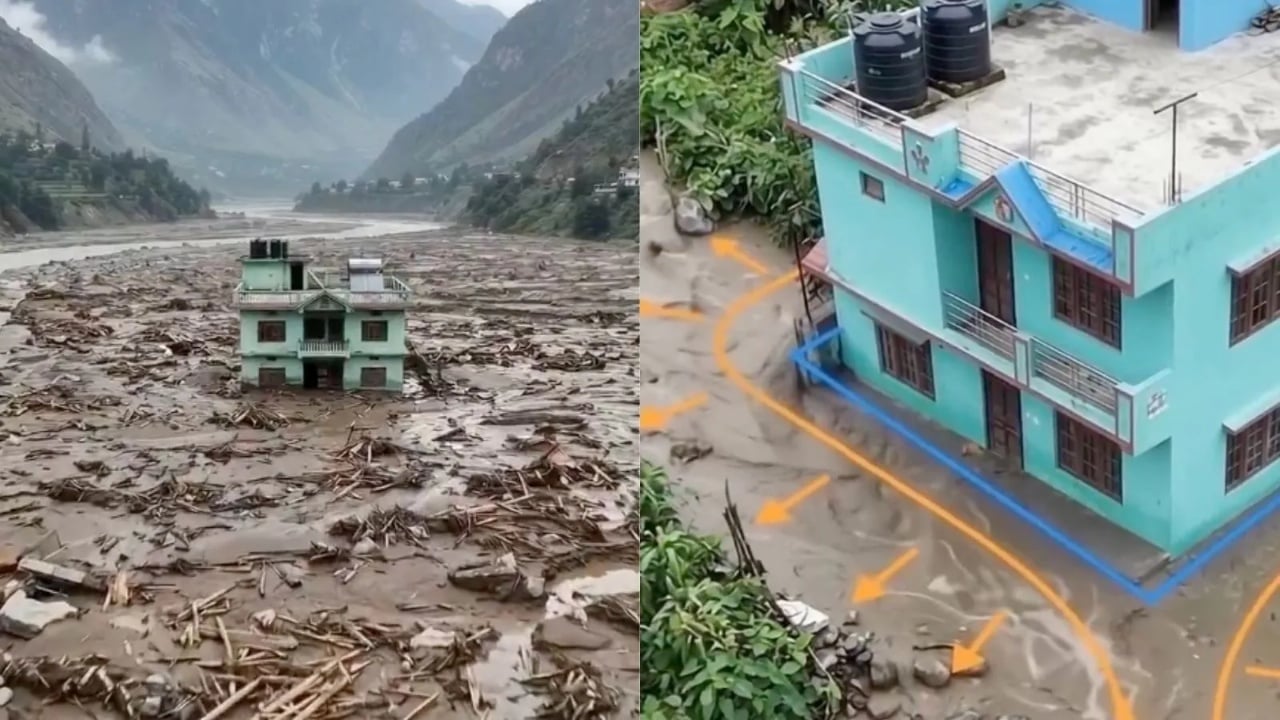
The video that spread across the internet
Footage widely shared on social media showed the Pyakurel family on the third-floor balcony, facing a powerful current that was striking their home directly. Online, the building has been described by different users as the “miracle house” and the “viral house.”
In a landscape devastated by water, the fact that the building did not collapse turned it into a point of special interest, to the extent that it has even been tagged on Google Maps as a “flood-resistant” attraction.
The owner’s account: one hour at the mercy of the water
Chhatra Bahadur Pyakurel, 67, said he had just taken his grandson to the school bus when the flood reached the house. According to reports, the torrent was caused by the collapse of a glacier in the Himalayan region between Nepal and Tibet.
For more than an hour, the family had no option but to watch the wall of water and debris rise, first from the balcony and then from the roof. The greatest concern, according to the head of the family, was the fate of his grandson, while for a period they thought their survival depended only on luck.
Why the building did not collapse
Pyakurel explained that the ground floor was built in 1995, at a time when he ran a grocery shop. As the business expanded, the family added the other floors over the years.
According to him, the building’s stability may be linked to deep foundations set into rock. Other residents in the area believe a hill positioned opposite the current may also have played a role by softening the force of the water. The owner himself also linked the escape to what he called a “divine factor.”
Rescue from the roof and extensive damage
After the water level dropped, neighbors helped the family climb down from the roof using metal pipes as improvised ladders. Although the upper part of the house remained almost untouched, the lower floors suffered severe damage.
Among the losses were important family documents, including certificates and passports. For the family, the greatest relief was that the grandson was safe at school, in a higher area, and that the following day they were able to reunite.
The heavy toll of the disaster
Beyond the story of this house that escaped collapse, the scale of the catastrophe in Nepal remains dramatic. The reported death toll has surpassed 1,100, while about 4,000 people are still missing. In Tibet, hundreds of others remain unaccounted for.
Rescue operations are being hampered by continued rainfall and soft mud, although more than 11,000 people have been rescued. In Nuwakot district alone, more than 1,200 houses have been completely damaged and more than 1,000 partially damaged, while bridges, roads and energy structures have been hit hard.
One building that remained standing cannot diminish the picture of widespread damage left behind by the flood. In Nepal, the survival of the “green house” is the exception that underscores the scale of the tragedy even more strongly.