
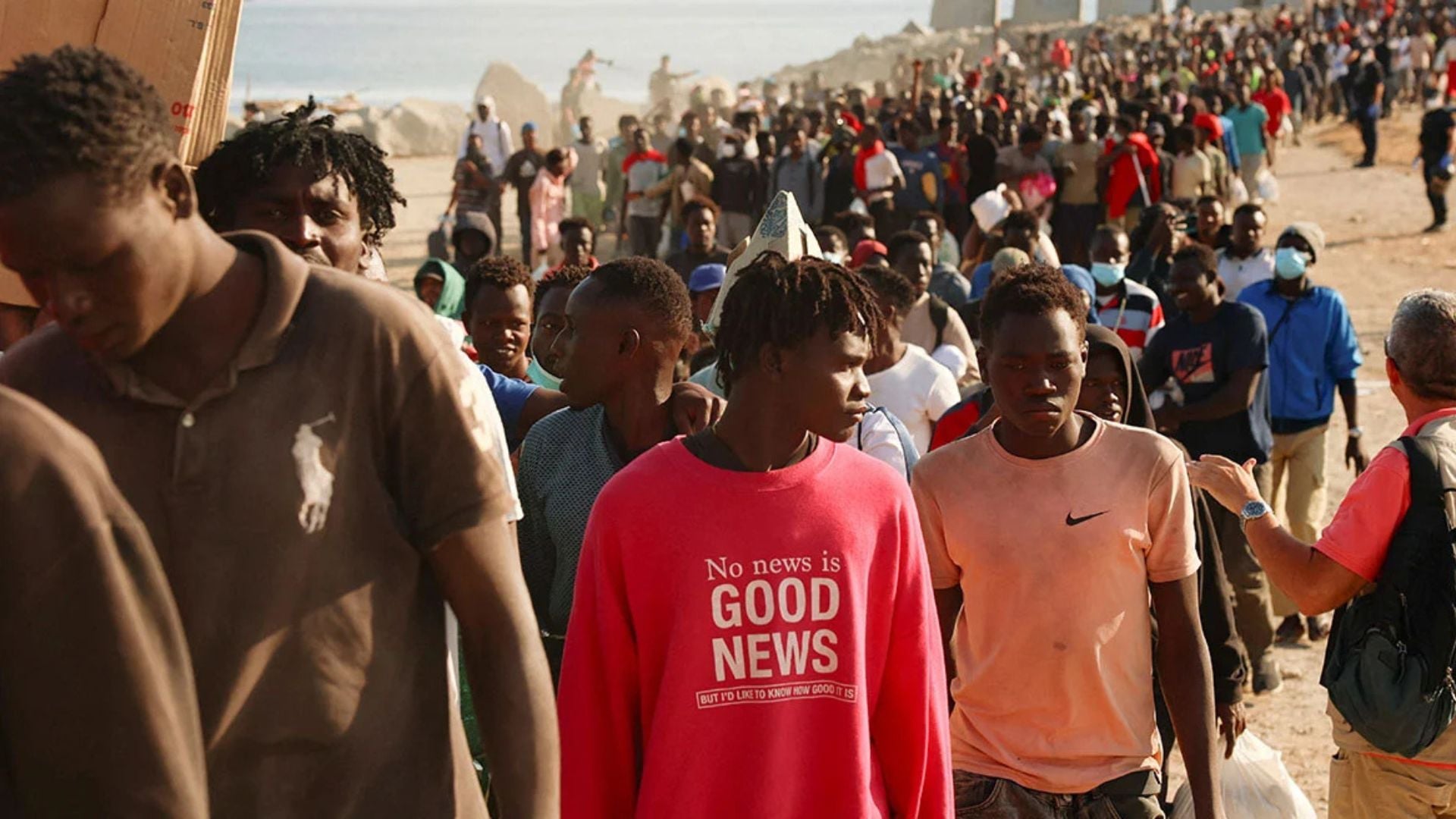
Ceuta is facing intense migration pressure, as Spanish authorities have acknowledged that around 13,000 people remain stranded in the autonomous city after the wave of arrivals at the end of July. Within that number, the most sensitive burden remains that of children and adolescents, in a situation that is testing local capacities and the response of the central government.
Official figures highlight the scale of the crisis
According to Spanish authorities, the massive wave of arrivals on July 30 and 31 left around 13,000 migrants in Ceuta, including adults and minors.
Spain’s Minister for Youth and Children, Cira Rego, said that about 2,100 of them are minors, while the number of adults is approaching 11,000. Of the reported minors, nearly 700 are girls.
Pressure to transfer minors
According to the Spanish government, there is a need to speed up the transfer of minors to mainland Spain, with the aim of reducing the burden on the local community in Ceuta.
Meanwhile, the responsible structures are continuing to identify children who have not yet been included in the official protection system, indicating that the situation on the ground remains fluid.
Return to Morocco and security checks
Some of the procedures are also being carried out for minors who, according to the official version, have expressed the wish to return to their families in Morocco.
However, their return is not presented as an automatic step. Authorities are seeking strict checks to confirm whether there is a safe family environment that can support this process.
The government aims for new facilities and faster repatriations
Faced with this pressure, the Spanish government is planning the creation of new dedicated facilities in Ceuta to increase management capacity.
According to the announced plan, the objective is greater control over the movement of arrivals and an acceleration of repatriation procedures for people considered not to qualify for international protection. This is the direction announced by the authorities, while the humanitarian crisis on the ground remains unresolved.
The figures published by the Spanish authorities show a severe situation in Ceuta, where the scale of the migration flow is colliding with the real limits of the reception and protection system.
At the center of the debate remain the treatment of minors, the institutional capacity to manage them, and the way the planned returns will be implemented.