
Ali Ahmeti reacted sharply after The Hague ruling on four former KLA leaders, describing the judgment as “unjust and deeply disappointing.” In his reaction, the leader of DUI called for tensions and divisions to be avoided after the sentences were announced, while insisting that the legal battle is not over.
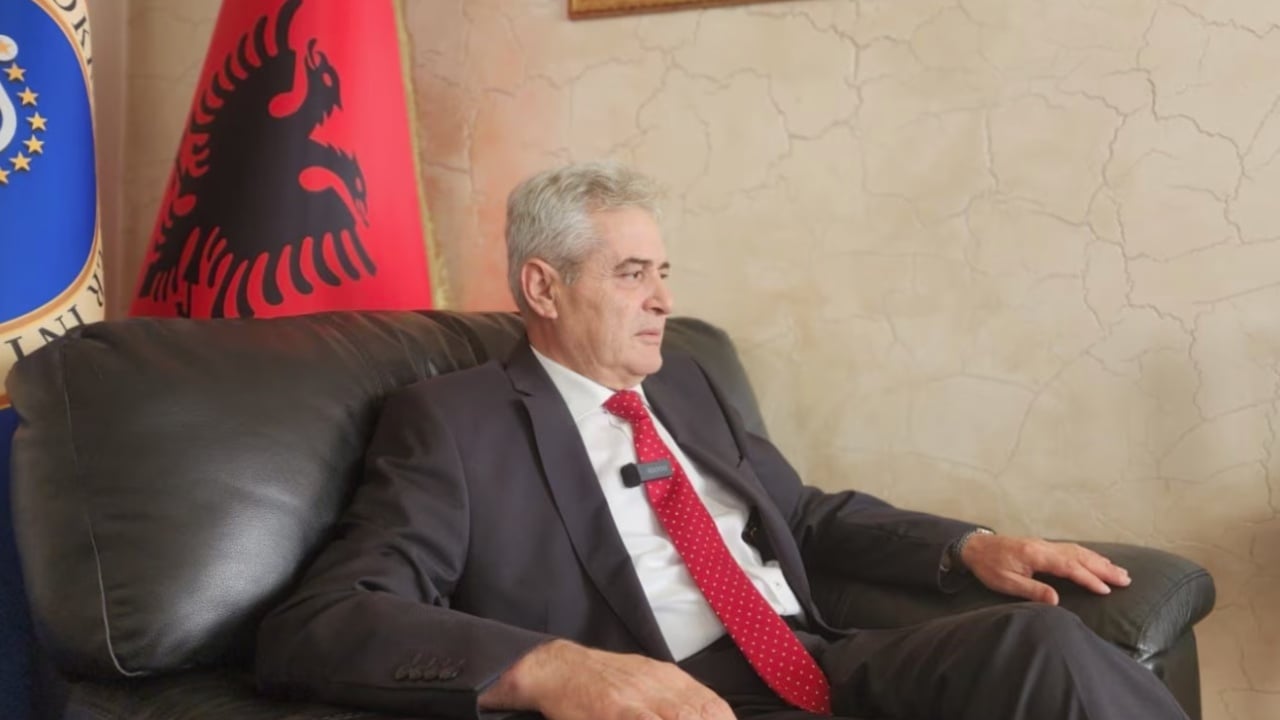
Ahmeti’s reaction after the ruling was announced
Ali Ahmeti, the leader of the Democratic Union for Integration in North Macedonia and one of the co-founders of the KLA, publicly came out against the judgment against Hashim Thaçi, Jakup Krasniqi, Kadri Veseli and Rexhep Selimi.
In his position, Ahmeti described the ruling as unjust and deeply disappointing, placing his reaction on a clear political and public line against the way the case was interpreted at first instance.
Call for calm and avoiding divisions
Despite his strong tone toward the ruling, Ahmeti called for restraint and unity. He asked that tensions and divisions be avoided following the announcement of the sentences.
This appeal comes at a sensitive moment for Albanian public opinion, where every development concerning former KLA leaders produces strong political and emotional reactions.
What he stressed about the charges and the ruling
Ahmeti pointed out that all four were acquitted of charges of crimes against humanity. He also underlined that earlier claims of organ trafficking were not included in the charges in this trial.
According to him, these are elements that should be kept in mind whenever there is an attempt to present the KLA as a criminal enterprise.
Attention now on the appeal
Ahmeti expressed confidence that the findings for which the four former KLA leaders were found guilty will be challenged in the appeals process.
In the reaction published on social media, he stressed that the process does not end with this ruling and that the defense is expected to continue the legal battle in the Court of Appeal, contesting the conclusions of the first instance.
Ahmeti’s reaction shifts the focus to the next phase of the case, where the weight of public and legal debate is expected to concentrate on the appeal of the ruling.
For now, his message is twofold: strong opposition to the judgment and a call not to turn the judicial development into a source of political or social division.