
Prime Minister Edi Rama used provocative language from Brussels to comment on protests against a development project with environmental impact, also including singer Dua Lipa’s name in his statement. In his version, the debate should not be seen as a clash between development and nature conservation, while public reactions to the project were treated as part of a discussion that, according to the government, can be resolved with transparency and “science” on the table.
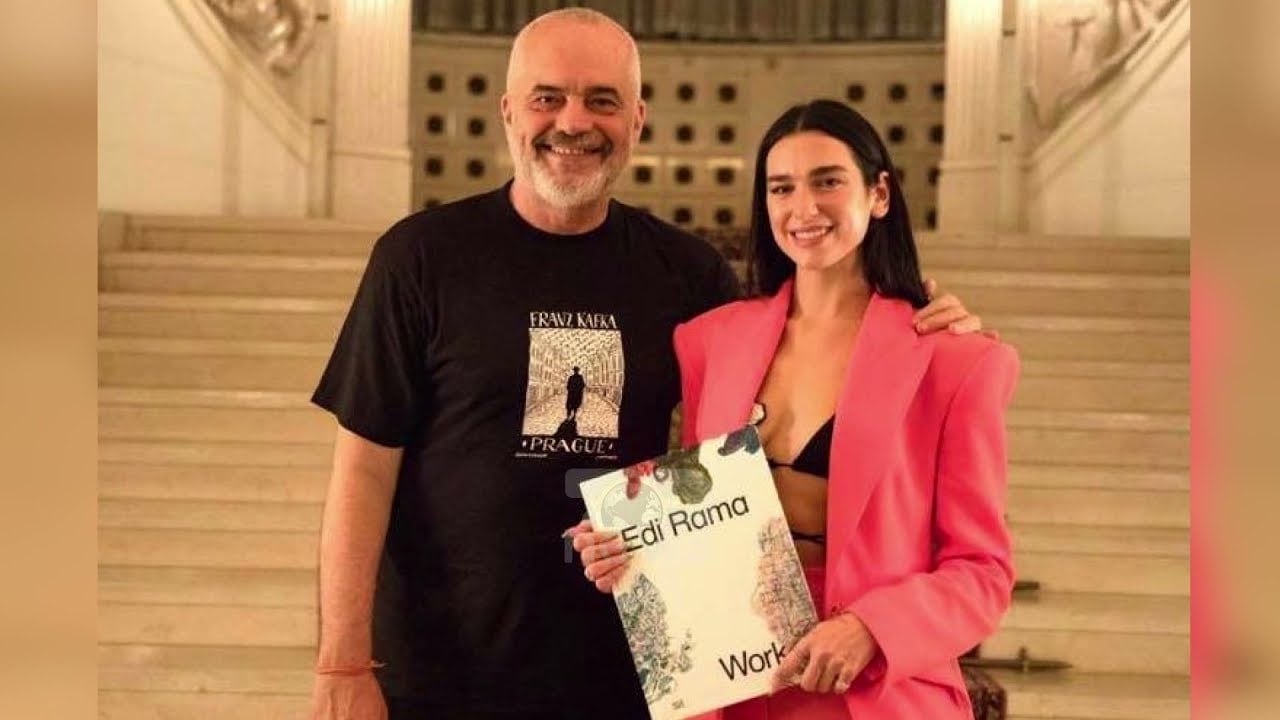
The statement from Brussels and the reference to Dua Lipa
Rama said that “Dua loves the protest, I love Dua,” referring to public positions linked to reactions to the project. He then added: “She is a singer, she is not the Pope,” a formulation that shifted the debate from the substance of the objections to the weight of public figures speaking out on the issue.
The government insists on coexistence between development and conservation
According to Rama, there is no reason to draw a dividing line between development and conservation. He argued that the two can coexist and called the “either development or conservation” viewpoint ideological.
Along these lines, the prime minister implied that the government does not accept the protesters’ narrative as a given and is trying to present the project as compatible with environmental protection. However, up to this point, this remains a political position, not a full public clarification of all the questions raised by the project’s opponents.
The message on the protests: from empathy to relativization
Rama said he comes “from the side of the protesters” and recalled that he had risked his life for free speech. At the same time, he suggested that it is not right to take it as a given that protesters are always right and the government is always wrong.
He also made a strong political comparison when he said that 10 years ago protesters were more likely to be killed on the boulevard. This part of the statement again shifted attention from the core objections to the project to a broader political reading of protest and of the relationship between power and the street.
The promise of documents and the “smart dashboard”
According to Rama, the government will publish every document and every piece of data it has on the project through what he called a “smart dashboard.” He said that every new element would be included there and that if “science says it should not be touched,” then the issue is not a personal battle.
This is precisely where the real test remains for the institutions: not in political formulas and quips involving well-known names, but in the full publication of documentation, criteria, studies and concrete responsibilities linked to the project and its consequences.
The statement from Brussels once again placed the debate on a political and symbolic plane, with Dua Lipa used as a reference point in the polemic. But beyond the rhetoric, the weight of the issue remains with the transparency the government claims it will provide and with the facts that must prove whether development and environmental protection can truly go hand in hand.