
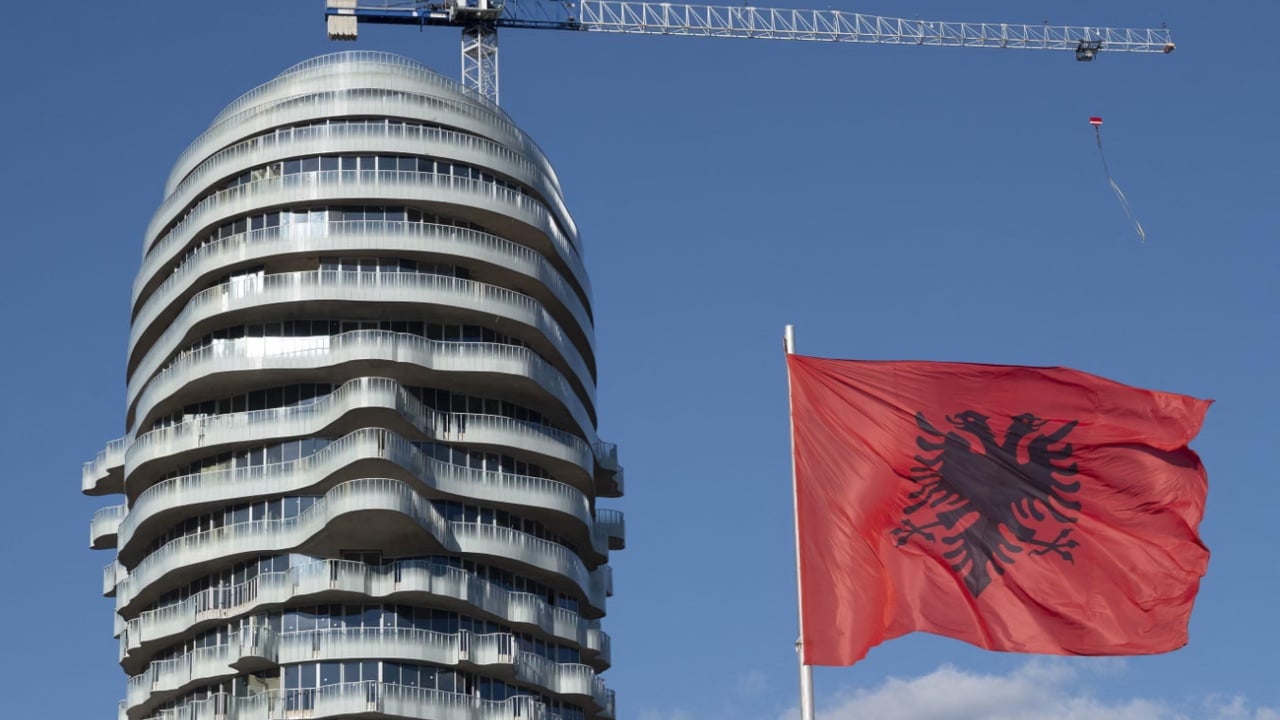
Albania’s construction boom has returned to the center of international debate, this time through an analysis by The Guardian, which highlights not only spectacular projects and the involvement of world-renowned architects, but also the shadows accompanying them: a lack of transparency, pressure on the environment and repeated suspicions about the entry of capital of questionable origin into the real estate sector.
A book with 500 projects and many question marks
At the center of the article is “The Albanian Files,” a voluminous publication of around 800 pages, presenting more than 500 projects from 60 international architecture studios. According to the analysis, the book is presented as evidence of a rapid urban and tourism transformation, but for critics it also serves as a reflection of a process closed to the public.
One of the elements raising the most questions is the fact that the book includes no Albanian studio, while many of the projects appear to be little known or not known at all to the communities affected by them. More than 40% of the projects, according to the reporting, do not even mention the name of the client.
Star architects, protests and accusations of closed-door decision-making
The Guardian also describes the tension created in Tirana during an event linked to the promotion of the book, where there were protests with slogans against “star architects” and the lack of public involvement. The main criticism is tied to the idea that decision-making on projects with major public impact is taking place away from the public eye and with unclear standards of accountability.
According to critical voices cited in the analysis, a narrow group of foreign architects is said to have been contacted directly and favored because of proximity to the prime minister’s office. The government’s official version denied these accusations, describing them as unfounded claims, while the prime minister insisted that competition juries are independent and free of political influence.
The coast and protected areas at the center of the conflict
The analysis focuses extensively on projects proposed along the coast and in environmentally sensitive territories, from Gjipe to Rana e Hedhun, Divjakë-Karavasta, Zvërnec and Sazan. It is precisely here that the clash becomes sharpest: on one side, luxury investments and bold architecture are promoted; on the other, warnings are increasing about damage to habitats, protected landscapes and natural heritage.
The Guardian recalls that a 2024 law allows the construction of five-star resorts in protected areas, a development that has triggered strong opposition. European institutions have also raised concerns: an EU report criticized this legal framework, while a European Parliament resolution called for an immediate moratorium on new permits and interventions in protected areas.
Suspicions of money laundering still hang over the sector
Beyond aesthetics and the propaganda of development, the heaviest question remains financing. The Guardian revives long-standing suspicions that the pace of construction and high property prices cannot easily be explained by wage levels, mortgage lending or purchasing power in the country.
The analysis mentions assessments and reports identifying Albania’s construction and tourism sectors as exposed to money laundering. It also mentions SPAK seizures and investigations that, according to the cited reporting, also affect companies or projects linked to major developments in the real estate market. There is no claim that the architects mentioned committed wrongdoing, but the picture that emerges is of a sector in which luxury, lack of transparency and questionable capital continue to collide on the same stage.
The Guardian analysis does not view Albania’s construction boom simply as an urban success story. It presents it as a potent mix of political ambition, the lure of the luxury market and a decision-making system that continues to produce more questions than answers.
When projects extend along the coast, into protected areas and into a market where suspicions of dirty money have been present for years, the debate no longer remains a matter of architectural taste. It becomes a test of transparency, the rule of law and the way public territory is used in Albania.