Ahead of the 2027 local elections, the opposition is putting forward two demands that directly affect how mayors and local councillors are elected. The PD is seeking the return of runoff voting for municipal leadership and a shift to open lists for municipal councils, in a climate of distrust over how the majority is pushing institutional changes.
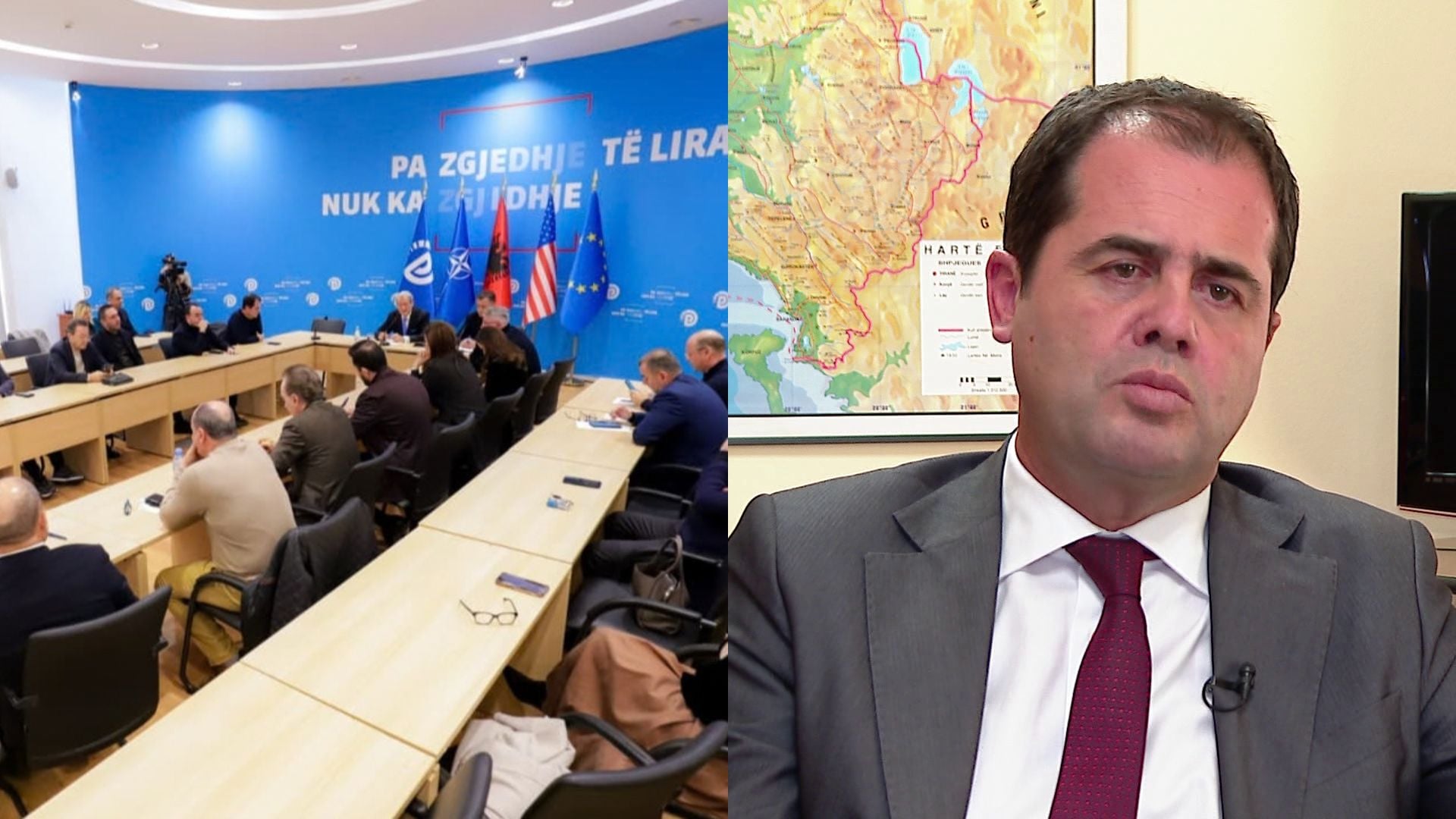
PD seeks the return of runoff voting for mayors
The Democrats propose that mayors should not be declared winners by a relative majority, but only if they receive more than 50% of valid votes in the first round.
If no candidate reaches that threshold, the race would move to a runoff between the two most-voted candidates. This model was used in Albania until 2003 and is also applied in Kosovo today.
According to Oerd Bylykbashi, a mayor elected with 20 or 30 percent of the vote, in a fragmented race, does not represent the majority of citizens. His position is that the head of a municipality should have broader political and civic legitimacy.
The second goal: open lists for local councils
Currently, municipal councils are elected under a proportional system with closed lists, where mandates are distributed according to the votes won by each political subject.
The PD proposes changing this system to open lists, so that the voter is not limited only to the party label, but can directly choose the councillor candidate they prefer.
Bylykbashi has said he would support 100% open lists for local councils, although this, according to him, complicates the process of election administration.
The clash with the majority goes beyond the voting formula
The debate is not only about electoral technique. The Socialists, according to the plan made public, aim for next spring’s elections to be held in a reconfigured territory with 46 municipalities.
For the opposition, the majority’s insistence on approving the new territorial map with its own votes in the October 8 session is a signal that electoral reform, too, could pass under the same logic of numerical force, without real consensus.
This heightens political suspicion that the rules of the race are being discussed on ground where the side that has the cards can also decide alone on the electoral architecture.
What would really change if the proposals are accepted
Restoring runoff voting would raise the threshold of legitimacy for mayors, making it harder to win with a low percentage in areas where the vote is split among many candidates.
On the other hand, open lists for municipal councils would give voters more influence over the specific names that win mandates, and not only over the ranking set by the parties.
In essence, the opposition is trying to shift the debate from party control over lists and victories by relative majority to more direct representation. But it remains to be seen whether these demands will be treated as part of a real reform or will collide with the wall of the parliamentary majority.
The clash over the 2027 local elections is starting early and is touching not only the way the vote is counted, but also the bigger political question: who writes the rules of the race and in whose interest.
If the majority chooses to pass the changes only with its own votes, the debate over the standard of local elections will be as intense as the campaign itself.