Kosovo enters a critical deadline on October 6 for the election of a new president, but the knot is not only whether there will or will not be a name at the head of state. Equally problematic remains the question of who exercises presidential powers if the deadline expires, the Assembly is automatically dissolved, and the country is pushed into early elections without a clear constitutional solution.
The constitutional deadline ends on October 6
The Constitutional Court found in rulings KO256/26 and KO258/26 that the 60-day deadline for electing the president began on August 8 and ends on October 6.
This is linked to Article 82 of the Constitution, which provides that the Assembly is dissolved if the president is not elected within 60 days from the start of the procedure. Under this reading, if the vote fails by the end of the deadline, no new political decision is required to dissolve the Assembly: the constitutional mechanism takes effect on its own.
The Court had also clarified earlier that failure to elect the president leads to early elections, which must be held within 45 days. So the timeline for dissolution is clearer than the authority that is supposed to administer it.
Who remains at the head of state?
Under normal circumstances, the president’s powers would pass to the speaker of the Assembly as acting president. But in this case, the situation collides with the six-month constitutional limit.
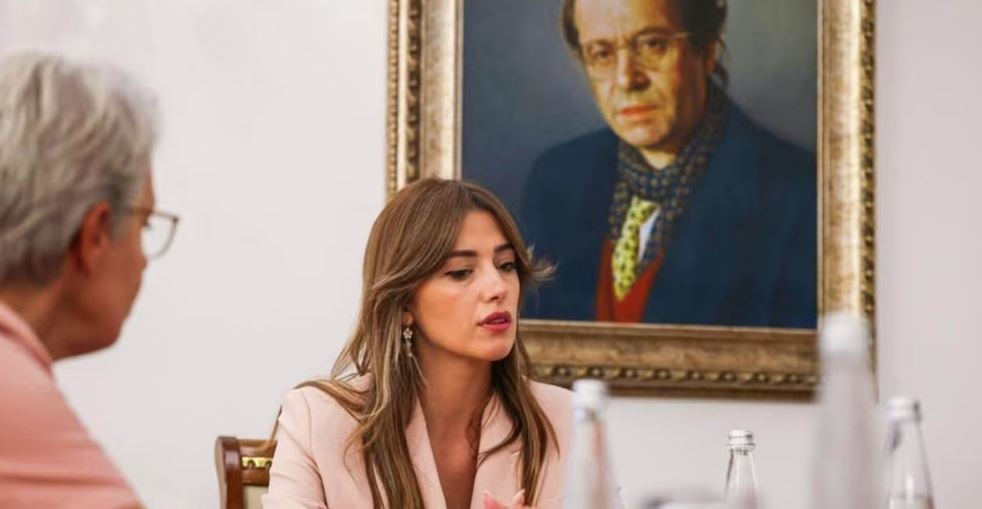
Albulena Haxhiu assumed this role after Vjosa Osmani’s term ended on April 4. Article 90, paragraph 3, provides that the post of acting president cannot be exercised for longer than six months.
This is where the gap appears that the Constitution does not clearly resolve: what happens after that deadline expires while a new president still has not been elected?
Warning of an institutional crisis
According to interpretations by some civil society organizations in Kosovo, the six-month limit is absolute and cannot be bypassed simply because the parties have failed to reach an agreement.
Naim Jakaj of the Kosovo Law Institute argued to Radio Free Europe that, after the expiry of this deadline, the country could be left without an acting president. According to him, this creates the risk of constitutional chaos, as some important state functions could remain unperformed.
The issue is not symbolic. The president is also the Supreme Commander of the Kosovo Security Force, and also has a key role in calling Assembly elections and convening the first session of the new legislature.
KDI seeks clarification from the Constitutional Court
In an analysis published on October 2, the Kosovo Democratic Institute assessed that the Constitution does not clearly provide who exercises presidential powers after the end of the six-month period.
KDI called on Albulena Haxhiu, in her capacity as acting president, or other authorized parties, to turn to the Constitutional Court for clarification on the exercise of powers after October 4 and on the authority to call elections in the event of the Assembly’s dissolution.
So far, there has been no explicit solution from the Court for this vacuum. Questions sent to the Office of the President on the continuation of Haxhiu’s powers and the procedure for early elections have also gone unanswered.
Elections may be called, but the dilemma remains over who signs off
According to publicly stated assessments, the problem is not limited to the election date, but to the authority that must decree them in a situation where the post of president remains unresolved.
Jakaj argued that, if the political parties are unable to reach an agreement, the Assembly should have carried out the voting process even in the event of failure, so that the acting president could summon the parties and set the date of the new elections as an emergency route out of the deadlock.
Without a new constitutional interpretation, Kosovo risks entering a crisis in which the Constitution determines the dissolution of the Assembly, but does not with the same clarity provide the hand that must activate the subsequent steps.
If the president is not elected by the expiry of the deadline, the dilemma will not be only political. It immediately becomes a functional question of the state: who exercises presidential powers and who bears responsibility for moving the electoral process forward.
It is precisely at this point that the constitutional gap leaves the realm of legal debate and becomes a direct institutional problem.