
Kosovo could face one of its most severe institutional deadlocks in recent years after October 4. The six-month period during which the post of president may be held by an acting officeholder is coming to an end, while the political institutions have still produced neither a constituted Assembly nor an agreement on the new head of state.
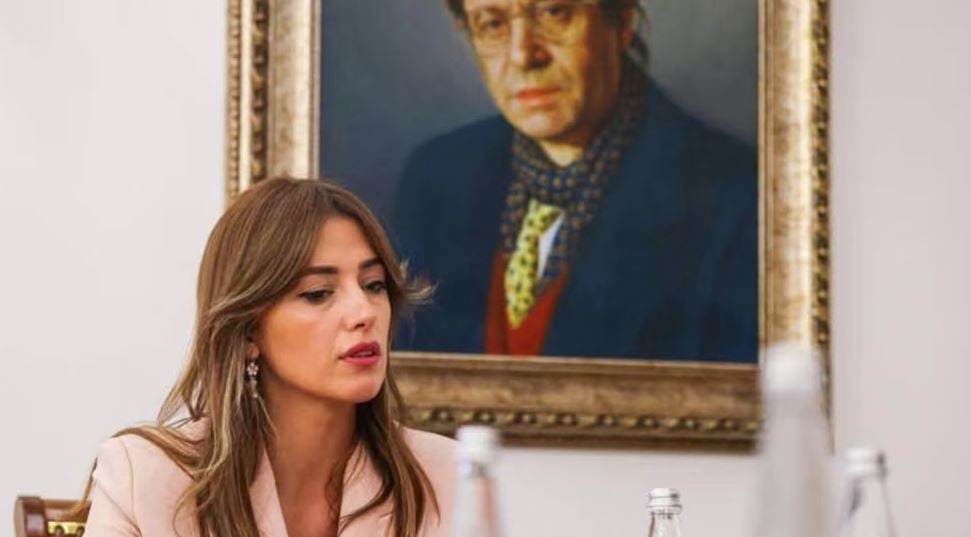
The deadline is nearing, institutions remain in limbo
On October 4, the six-month period that Kosovo’s Constitution provides for the exercise of the president’s duties by an acting officeholder comes to an end. Albulena Haxhiu took on this role on April 4, after Vjosa Osmani’s five-year term expired.
The political deadlock over the name of the new president led the country to early parliamentary elections. But even after the June 7 vote, the new Assembly has not been constituted, although the constitutional deadline has passed, further delaying a resolution to the crisis.
Lawyers: after October 4 begins a territory with no clear basis
Interpretations of what happens after October 4 are divided, because such a situation is not clearly foreseen in the Constitution. According to Eugen Cakolli of the Kosovo Democratic Institute, the six-month deadline is absolute and cannot be repeated under any scenario.
Melos Kolshi of the Kosovo Law Institute holds the same line, arguing that any continuation of the exercise of the president’s duties beyond this deadline would be without constitutional basis and would undermine the institutional order.
According to these assessments, the absence of a president with a constitutional mandate is not merely a formal problem. It affects the functioning of institutions, state representation, powers in security and defense, as well as other procedures that the Constitution reserves for the head of state.
LVV’s version: the deadline could restart with the new Assembly speaker
Another interpretation comes from Vetëvendosje. MP Adnan Rrustemi has said that the exercise of the president’s duties is linked to the post of Assembly speaker and, according to this reading, the election of the new speaker of the Assembly would also trigger a new six-month deadline until the president is elected.
This interpretation is challenged by the lawyers cited in the debate. According to them, such a solution would relativize the constitutional obligation itself to elect the president and would create the possibility for the post to be held for an extended period by an acting officeholder.
Two deadlines that no longer move together
The debate has been further complicated by the 60-day deadline for electing the president, which begins only after the Assembly is constituted. This is precisely where the knot lies: the more the constitution of the Assembly is delayed, the more this deadline is pushed beyond October 4.
According to legal assessments, this creates a clash between two constitutional deadlines that no longer run in parallel. If the president is not elected in time, the country could be left without the authority that decrees the prime minister-designate, without the army’s supreme commander, and without the link that intervenes in several key state processes.
Kosovo’s Constitution provides that the president is elected by the Assembly through secret ballot. In the first two rounds, 80 votes are required from 120 MPs, while in the third, 61 votes are needed from at least 80 MPs present. If the third round also fails, the Assembly is dissolved and new elections are announced within 45 days.
Eyes on the Constitutional Court, but the solution remains political
In the absence of a clear rule for the scenario after October 4, the legal solution being mentioned most often is intervention by the Constitutional Court. According to this position, at least ten MPs could turn to the court to clarify the legal effects of the failure to elect the president within the six-month deadline.
However, before the issue goes to constitutional arbitration, responsibility remains with politics. Even the camps that read the Constitution differently acknowledge that the safest path is an agreement on the new president, so that Kosovo does not enter an institutional vacuum that the Constitution does not clearly resolve.
The crisis is linked not only to a name for president, but to the ability of the political system not to push the state into a constitutional gray zone.
If the deadlines expire without an agreement, the debate will no longer be simply political, but about the legitimacy of the functioning of the institutions themselves.