
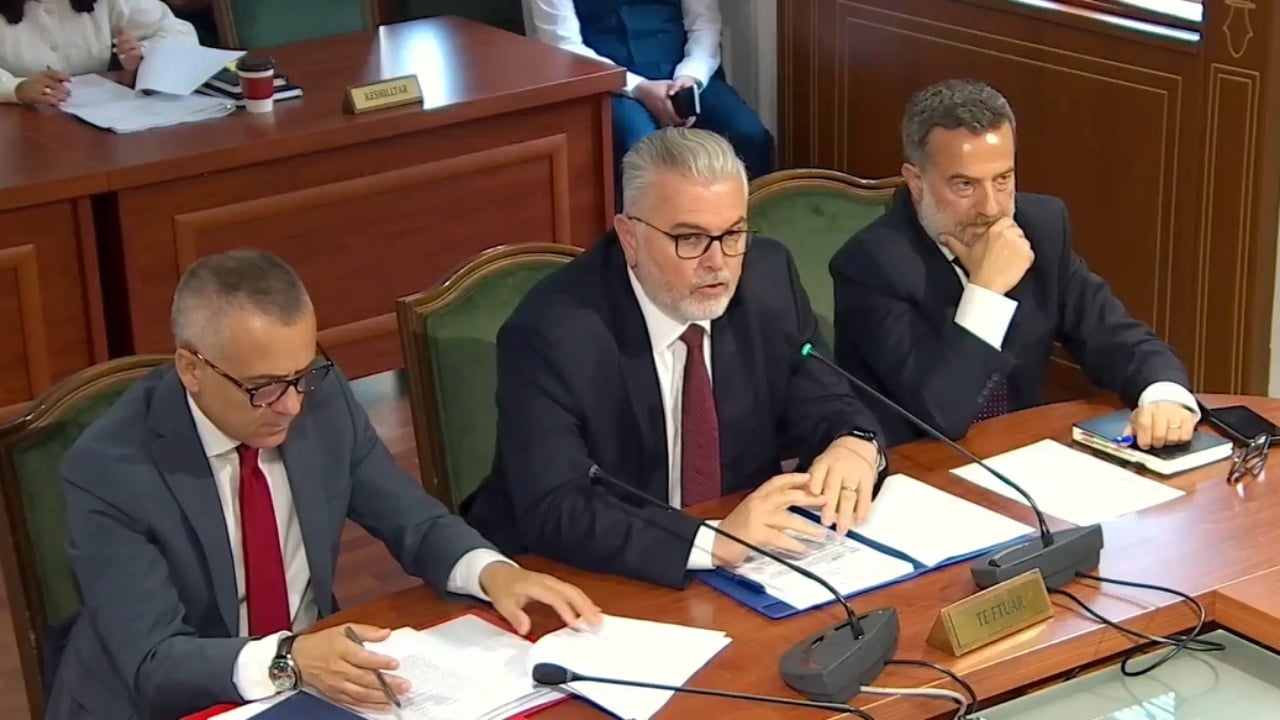
The GJKKO regulation, criticized over restrictions affecting lawyers and journalists in courtrooms, has turned into a political and institutional issue. In the Laws Committee, Justice Minister Toni Gogu signaled that ratification of the Council of Europe Convention for the Protection of the Profession of Lawyer could force a review of existing acts, including those of justice institutions.
The question that put the regulation in the spotlight
The debate was opened by MP Arjan Ndoja, who directly raised the question of whether the regulation approved by GJKKO on the conduct of lawyers could conflict with the Convention now under discussion for ratification.
He asked whether the Ministry of Justice had carried out an analysis of the possible clash between the new standards and the court’s regulation. At its core, the issue concerns whether an internal act of GJKKO can limit rights that the Convention seeks to protect more clearly.
What the minister acknowledged in the Committee
According to the version presented by the minister, once the Convention is approved all institutions will have to review their legal and sub-legal acts in order to align them with the European standard.
Gogu said the Ministry of Justice has the obligation to ensure compliance with standards and that parties are not obstructed in access to the courts, but stressed that for the specific regulation the primary role remains with the court itself and the High Judicial Council. This means the government acknowledges the need to reflect the new standards, but without directly assuming responsibility for the act that caused the clash.
Blocked proceedings and pressure on rights
Ndoja linked the debate not only to the content of the regulation, but also to the consequences it is producing in practice. According to him, the boycott by the Chamber of Advocacy has led to proceedings not being held, with consequences affecting pretrial detention deadlines and the rights of defendants.
This is the most sensitive element of the debate: when a clash between institutions and legal professionals turns into an obstacle to the conduct of trials, the cost does not remain procedural, but shifts to citizens and the fundamental guarantees of due process.
Who bears responsibility for the review
The minister said he is ready to sit down with the parties if they consider the Ministry of Justice the right institution to help with a solution, but underlined that the ministry cannot overstep its constitutional and legal competences.
At the same time, he said that after ratification of the Convention, the state must notify institutions of the obligations arising from it. So, according to the government, the burden of adapting acts falls on each institution, while it remains to be seen whether this will translate into concrete changes to GJKKO’s contested regulation.
For now, the government is speaking about standards that must be embodied in acts, while the practical conflict over the GJKKO regulation remains open.
So far, no position has been made public clarifying whether the current regulation truly conflicts with the Convention, although the debate itself in the Committee showed that the issue can no longer pass as an internal procedure without public consequences.