
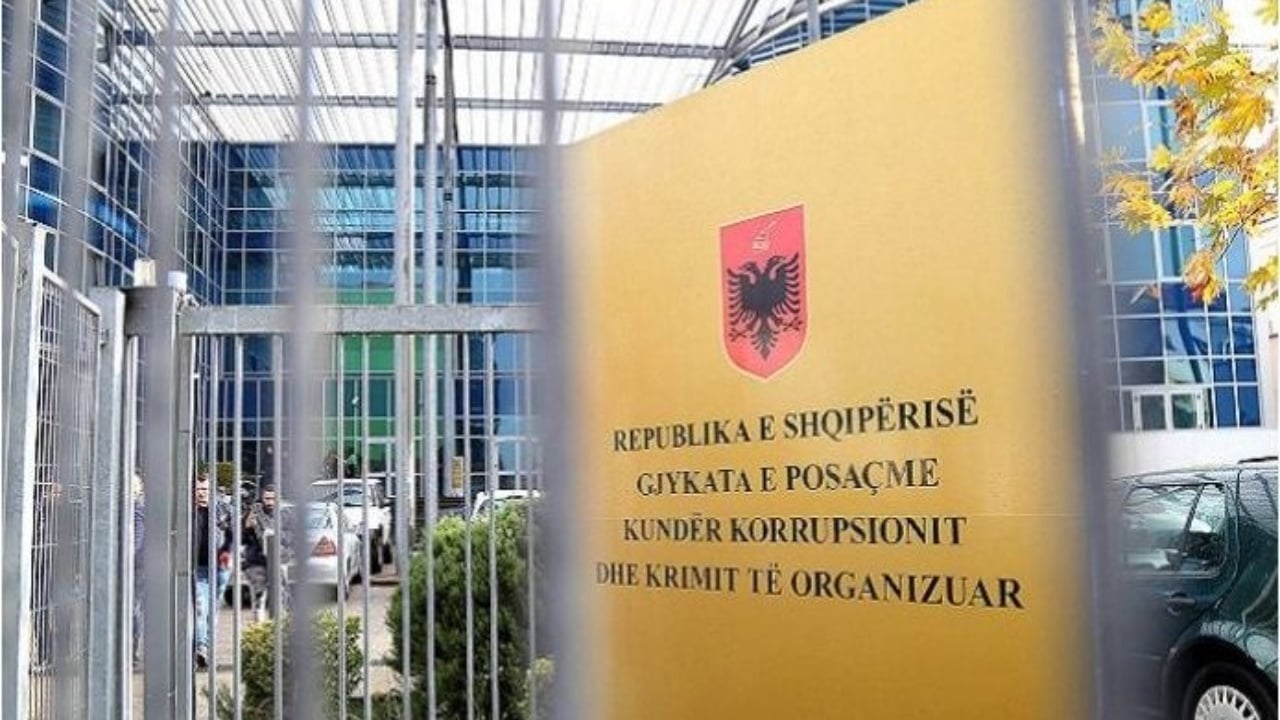
The new internal regulation at the Special Court against Corruption and Organized Crime has opened a new debate over the boundaries between security and transparency. Following criticism over restrictions on media access and concerns also raised by lawyers, the European Union Delegation in Tirana says it is aware of the situation and is following it within the framework of standards related to the judicial system.
What the EU Delegation said
In an email response to journalist Anila Hoxha, the EU Delegation said it is aware of the new internal regulation on security, order and rules of conduct on the premises of GJKKO, which entered into force on September 1, 2026.
According to the version conveyed by the EU, the regulation is linked to the specific organizational, operational and security characteristics that accompany this court and its judicial proceedings. However, the response does not close the debate over the concrete effect these restrictions may have on the public’s right to information.
The balance between security and transparency
The EU Delegation said it is ready to provide specialized expertise both for the judicial system and for the media community, with the aim of finding a balance between security measures and access to information.
In the same response, the EU stresses that these issues will also be closely monitored within the framework of Albania’s accession negotiations. This wording suggests that the concern is not being treated as a routine administrative matter, but as part of broader standards affecting the functioning of justice and public transparency.
Lawyers announce urgent meeting
The head of the National Chamber of Advocacy, Maksim Haxhia, has announced that an urgent meeting will be held in Tirana on Tuesday at 12:00 on the restrictions which, according to him, also affect lawyers under this regulation.
According to the information made public, a decision is expected to emerge from this meeting. Tensions have also risen because the restrictions are not being challenged only by the media, but are also being seen as a problem by other actors in the judicial process.
A boycott scenario also on the table
A source close to the General Council has said that the possibility cannot be ruled out that lawyers may move toward a boycott, not only of main hearings, but also of personal security measures.
If such a step materializes, the clash over the regulation would move from public debate to a direct impact on judicial proceedings. So far, there has been no public clarification to dispel doubts over how these rules will be applied in practice and where the line is drawn between security and closing institutions off from the public.
Reaction also from media freedom organizations
The Safe Journalists network has also publicly called for the regulation to be reviewed, arguing that it harms the work of journalists and the media.
This reaction adds to the list of objections to an act that, although presented with security arguments, is raising serious questions about access, public oversight and the standard of transparency at one of the country’s most sensitive justice institutions.
The debate over the GJKKO regulation is going beyond an internal administrative issue. When both the media and lawyers are restricted at the same time, the issue directly affects how public oversight of justice functions.
For the moment, the EU’s position remains at the level of monitoring and offering expertise, while the real pressure is shifting to how Albanian institutions will justify these restrictions in the face of demands for transparency.