
Sali Berisha used a meeting with the chairs and secretaries of the Democratic Party branches to once again push the idea of the broadest possible opposition unity against Edi Rama’s government. In his political framing, the PD should not only lead this process, but is also presented as the main force in the country.
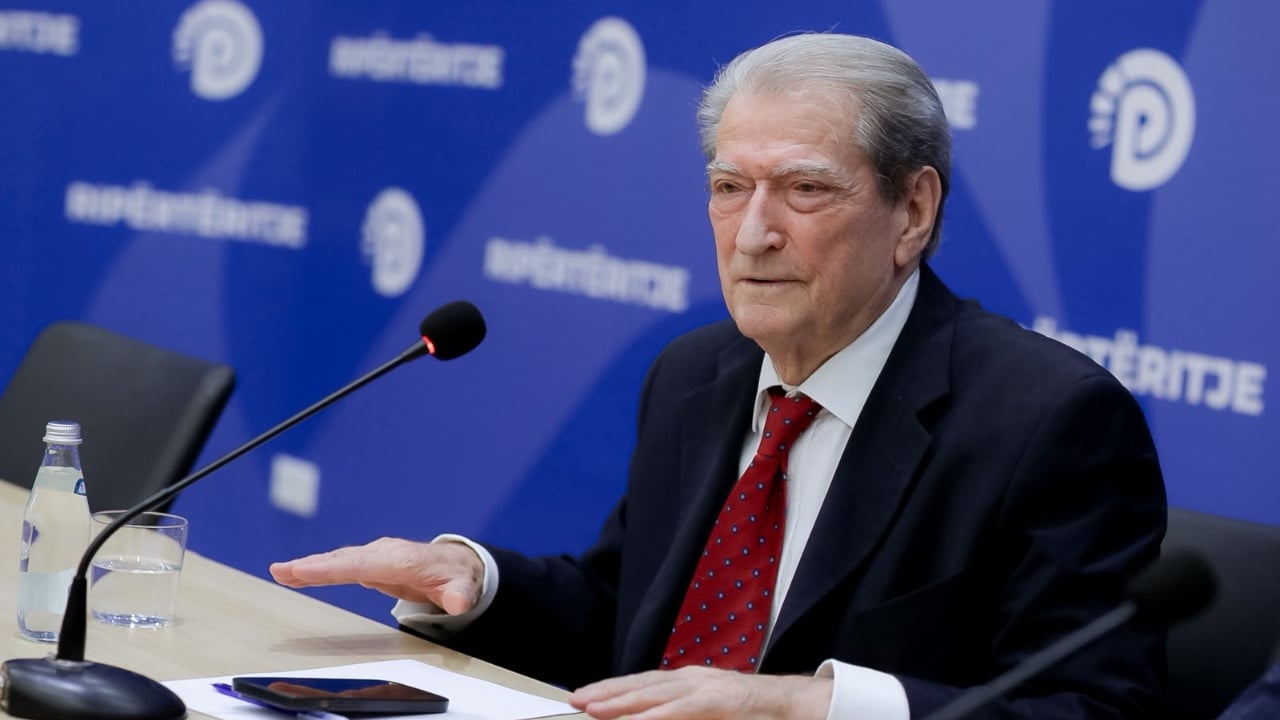
Call for opposition unity
During the meeting with local PD structures, Berisha called for engagement in every county, district and city to build a common opposition front. He urged local leaders to work to bring together all forces and individuals who are against the government.
Berisha presented this as a political obligation of the PD, arguing that his party should take the leading role in building bridges of cooperation across the entire opposition spectrum.
Claim of a political majority
In his remarks, Berisha claimed that the opposition is the majority both in Tirana and nationwide. This is a political assessment articulated by him at the meeting, and not data accompanied by concrete indicators in this statement.
On that claim, he also built the argument that the PD is now the main political force in the country and, as a result, according to him, should take the initiative to broaden the opposition front.
References to protests and students
Berisha also focused on the recent protests, using them as an example of the need for a stronger opposition front. He spoke about their public resonance and the impact they had, in his view, in denouncing the government.
Along the same lines, he praised the student movement and the role of Democrats in supporting it. According to Berisha, the PD and its supporters joined the students from the start and served as political protection for them during the protests.
Harsh rhetoric toward the government
Berisha’s speech was accompanied by strong political language against Edi Rama and the government, placing the entire message on a clear divide between the opposition camp and the majority.
This rhetoric comes at a time when the opposition is seeking to repackage its causes and create the idea of broader political mobilization, although it remains to be seen whether the call for unity will produce concrete alliances beyond the latest statements.
Berisha’s main message to PD structures was direct: broaden the opposition front and have his party take the leading role.
Politically, the statement serves as a signal for internal alignment and as an attempt to persuade that the opposition has a numerical advantage, although this thesis remains, for the moment, part of Berisha’s own narrative.